Choosing the right saddle is the most personal and critical component decision you'll make. A poor saddle can derail your training, cause chronic pain, and even lead to long-term health issues. As an engineer and long-distance rider, I've seen too many cyclists endure a costly, painful trial-and-error process. It doesn't have to be that way. You can systematically evaluate a saddle for true comfort and anatomical safety before you commit. Here's your actionable guide.
Understand the Core Principles: Support vs. Pressure
First, discard the myth that comfort equals softness. A quality saddle is a support platform, not a pillow. Its primary job is to bear your weight on your ischial tuberosities (your "sit bones"), thereby lifting pressure off the soft tissues and nerves of your perineum.
Health safety, particularly regarding numbness and potential circulatory issues, is directly tied to eliminating perineal pressure. The goal of any test is to confirm: does this saddle support my bones and relieve my soft tissues in my specific riding position?
Pre-Test Homework: Know Your Numbers
You can't test effectively in a vacuum. Do this groundwork first:
- Find Your Sit Bone Width: This is your foundational measurement. Use a memory foam pad or a specialized tool at a shop. Sit on it in a riding posture (lean forward slightly) to simulate the pelvic rotation of cycling. Measure the center-to-center distance of the indentations. Your saddle's rear width should closely match or slightly exceed this.
- Define Your Riding Discipline: Your position—aggressive road race, aero triathlon, upright gravel—dictates saddle shape. A saddle for an aero tuck is fundamentally different from one for an upright tour. Know what you're optimizing for.
The In-Store or At-Home Test Protocol
When you have a saddle in hand, follow this multi-step evaluation.
Step 1: The Static Bench Test
Place the saddle on a bench or table at roughly the height of your bike's saddle. Sit on it in your riding posture.
- Feel for Bone Support: You should feel firm, distinct support under each sit bone. There should be no sense of "bottoming out" or feeling the hard rail through excessive padding.
- Check for Perineal Contact: This is critical. There should be zero noticeable pressure on your perineum (the soft tissue between your legs). If you feel any direct pressure or "bridging" in the center, the saddle's shape or cut-out is not sufficient for you. This is a major red flag for potential numbness.
Step 2: The Hand-Pressure Test
With the saddle on a flat surface, press down firmly with the heel of your hand in the central, forward section (where a traditional saddle nose would be).
- Assess Flexibility: Some flex in the nose is beneficial for comfort, but the rear third supporting your sit bones should be very firm and stable. A saddle that's too flexible overall can cause instability and chafing.
Step 3: The Visual & Tactile Inspection
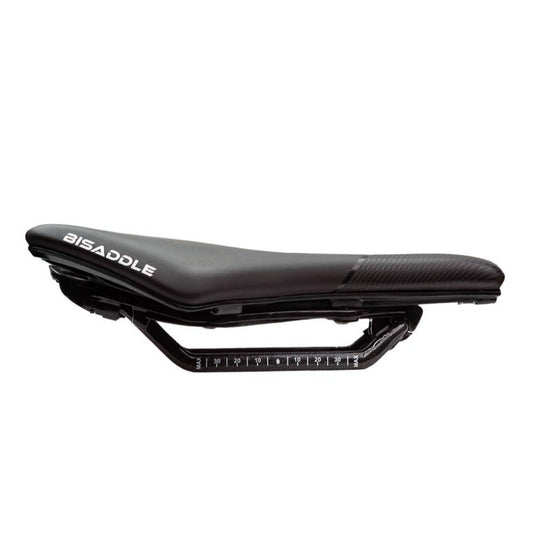
- Profile: Look at the saddle from the side. Does it have a flat profile, a curved "hammock" shape, or a dip in the middle? A flat-to-slightly-curved profile often allows for easier positional adjustments on the bike.
- Cover Material: Feel the cover. It should offer a slight grip to prevent sliding, but not be so abrasive it causes chafing. Seams should be flat and positioned away from high-friction areas.
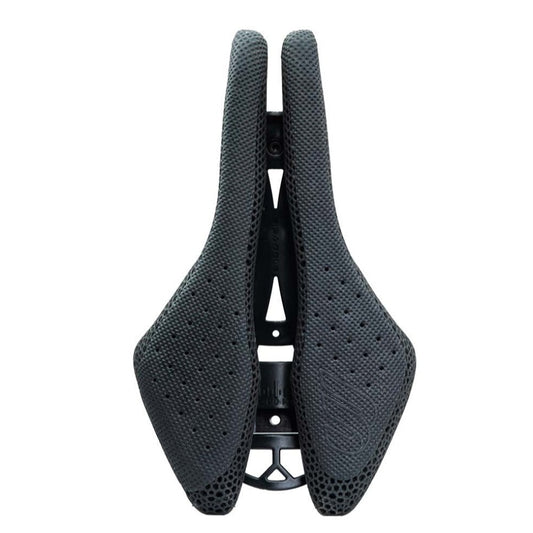
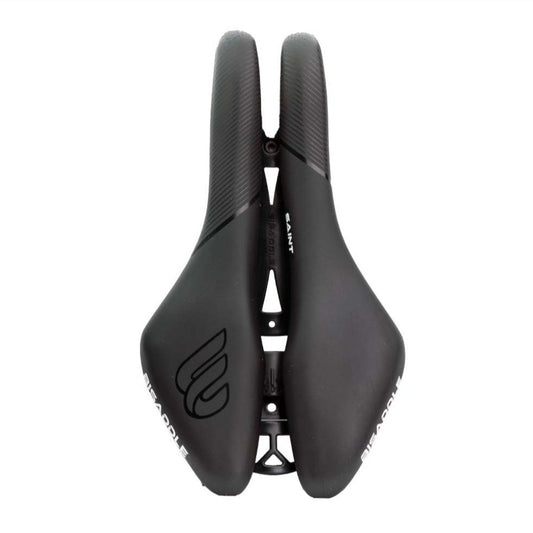
- Cut-Out/Channel: If it has a relief channel or cut-out, ensure it is wide and long enough to fully encompass the sensitive area in your riding position. A cut-out that's too small or poorly placed is worse than none at all.
Step 4: The Short Ride Test (If Possible)
If you can install the saddle on a demo bike, trainer, or a loaner program, even a 15-30 minute ride is invaluable.
- Focus on Sensation, Not Just Comfort: Discomfort from a new support point is normal. Numbness or tingling is not. This is your body's non-negotiable warning sign. If you experience any numbness, the saddle fails the health safety test.
- Test Your Riding Positions: Move between the hoods, drops, and tops (or aero bars if applicable). Does the saddle allow you to move and rotate your pelvis freely, or does it create a hot spot or pressure point in any position?
- Feel for Chafing: Pay attention to your inner thighs. Do the sides of the saddle interfere with your pedal stroke? A saddle that's too wide or has bulky wings will cause chafing.
The Ultimate Test: An Adjustable Solution
The fundamental flaw with traditional saddle testing is that you're evaluating a fixed shape. If the width is 2mm off or the curvature isn't quite right, you're forced to start over with a new model. This is why the most advanced approach is to test a saddle with built-in adjustability.
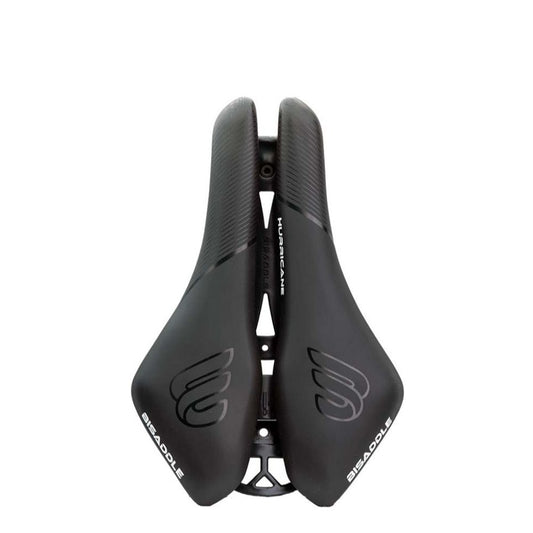
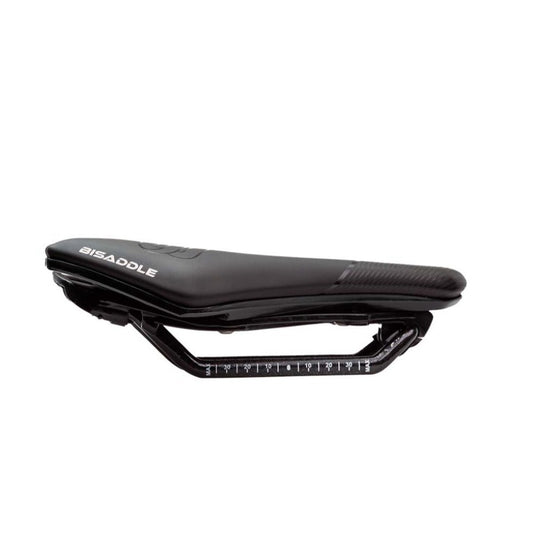
A saddle with a mechanically adjustable width allows you to dial in the exact sit bone support in real-time. You can fine-tune the central relief channel's width to match your anatomy perfectly, ensuring no soft tissue pressure. This turns the testing process from a guessing game into an engineering problem: you adjust, you ride, you assess, and you iterate until the pressure map is ideal. It's the difference between buying a pre-made suit and getting one tailored—the latter simply fits correctly because it's made for you.
Red Flags to Walk Away From
During your testing, if you encounter any of the following, consider the saddle a poor fit:
- Any sensation of numbness or tingling during a short test ride.
- Sharp pressure on your pubic bone or tailbone.
- A feeling that you are "perched" on top of the saddle rather than being supported by it.
- Excessive movement or sliding as you pedal.
Final Verdict: Test with Purpose
Don't just hop on and hope for the best. Test systematically: know your anatomy, inspect the design, and listen ruthlessly to your body's feedback, especially regarding numbness. The ideal saddle disappears beneath you, becoming a stable, supportive platform that lets you focus on the ride, not the pain.
Investing time in this process is an investment in your long-term health and performance on the bike. Your body—and your riding log—will thank you.