Finding the right saddle isn't about hunting for a mythical "perfect" firmness. It's about engineering the interface between your unique anatomy and your bike. A saddle that's perfect for one rider can be a source of misery for another. As someone who's spent more hours than I can count analyzing fit and biomechanics, I can tell you that testing saddle firmness is a systematic process of listening to your body and understanding a few non-negotiable principles.
The Core Concept: It's About Support, Not Cushioning
Let's reframe the question right now. Your goal isn't a "soft" saddle; it's a supportive one. Your weight must be carried by your sit bones (ischial tuberosities). A good saddle provides a firm, stable platform for these bones. If the saddle is too soft, it deforms under load, allowing your sit bones to sink and the padding to push up into the sensitive soft tissue of your perineum. This is a prime cause of numbness. If the saddle is too hard, it offers no dampening from vibration, leading to bruising and hot spots on the sit bones themselves. We're looking for the Goldilocks zone of structural support.
The Initial Diagnostic Tests
Before you even hit the road, you can gather valuable intel. This is your pre-flight check.
The Hand Test
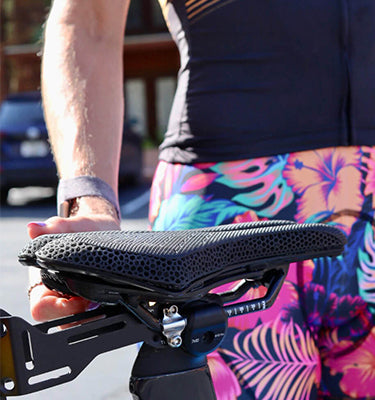
Press firmly on the saddle with the heel of your hand. A well-designed saddle should have a firm base that resists bottoming out. If you can easily compress the padding all the way to the shell with moderate pressure, it's likely too soft for sustained riding. It should feel supportive and resilient, not squishy or vague.
The Short-Ride Audit (The First Hour)
Go for a controlled, focused ride of 30-60 minutes. Your mission is to collect data, not set a personal best. Pay acute attention to these signals:
- Signs It May Be TOO HARD: Distinct, sharp pressure or bruising on your sit bones within the first 10 miles. Constant shifting to find relief. Feeling every single bump transmitted directly through your pelvis.
- Signs It May Be TOO SOFT: A deep, vague ache or numbness in the soft tissue between your legs (the perineum), not on the sit bones. A feeling of sinking into the saddle, which often leads to instability and inner-thigh chafing.
Decoding Your Body's Feedback
Your body is the ultimate sensor. Over a few rides, it will give you a detailed diagnostic report. Here's how to interpret the data.
If the Saddle is TOO HARD:
- Sit Bone Pain: Localized, aching pain directly on the bony points. It feels like a bruise the next day.
- Hot Spots: A burning sensation on the skin over your sit bones.
- Excessive Vibration Fatigue: You feel jarred and generally beat up in the pelvic region after riding rough surfaces.
- Constant Fidgeting: You cannot find a stable, comfortable position. You're always moving, which wastes energy.
If the Saddle is TOO SOFT:
- Perineal Numbness or Tingling: This is the critical red flag. A soft saddle deforms and intrudes into the central area, compressing nerves and blood vessels. This is not something to "tough out."
- Lack of Support & Power Loss: You feel no solid platform to push against during hard efforts. It's as if your pedaling force is being absorbed by the saddle.
- Increased Chafing Risk: Sinking and moving around on an unstable surface increases friction, a direct path to saddle sores.
- Unusual Muscle Fatigue: Your hip and core stabilizers work overtime because the saddle isn't providing a stable base.
The Critical Role of Shape and Width
Here's the truth: firmness is almost irrelevant if the saddle is the wrong shape or width for your anatomy. No amount of padding will fix a fundamental geometric mismatch.
- Width is Paramount: Your sit bones must be supported on the widest part of the saddle. Too narrow, and your bones hang off the edges, dumping weight onto soft tissue. Too wide, and you'll battle inner thigh chafing.
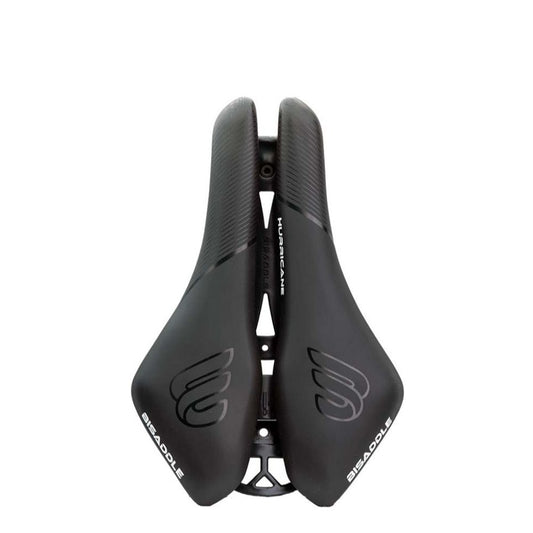
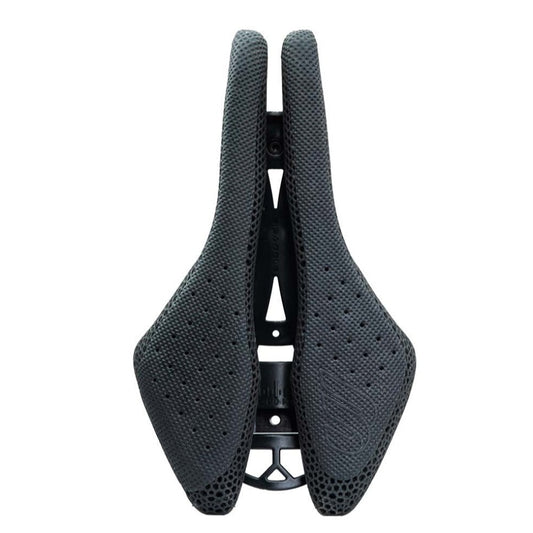
- Cut-Outs/Channels are Essential for Most: For any rider in a forward-leaning position (road, gravel, triathlon), a central relief channel is non-negotiable. It offloads perineal pressure. A soft saddle without a proper channel is often far worse than a firm one with a good one.
Conducting a Discipline-Specific Test
Your test must mirror your actual riding. A saddle that feels okay while sitting upright may fail catastrophically in your real riding posture.
- Road & Gravel Riders: Get into your typical positions—on the hoods and in the drops. Does pressure shift uncomfortably? Does the saddle nose feel intrusive when you're in the drops?
- Triathlon & Time Trialists: You must test in your aero tuck on the aerobars. This rotated pelvis position shifts weight forward. A saddle that is too soft here will cause immediate and severe numbness, as you're essentially sitting on the nose.
- Mountain Bikers: Test on a sustained climb (seated power) and on technical terrain where you move around. A too-soft saddle will feel unstable and can hook your shorts when you get behind it on descents.
The Modern Solution: Eliminating the Guesswork
The traditional method is brutal: buy, try, return, repeat. It's costly, frustrating, and inefficient. This is where modern, adjustable design philosophy changes everything.
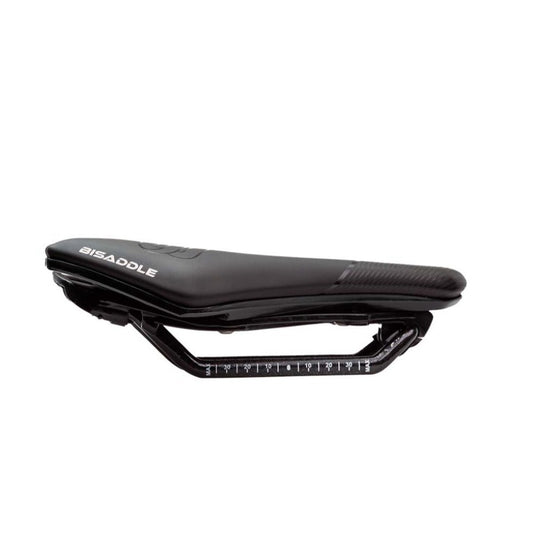
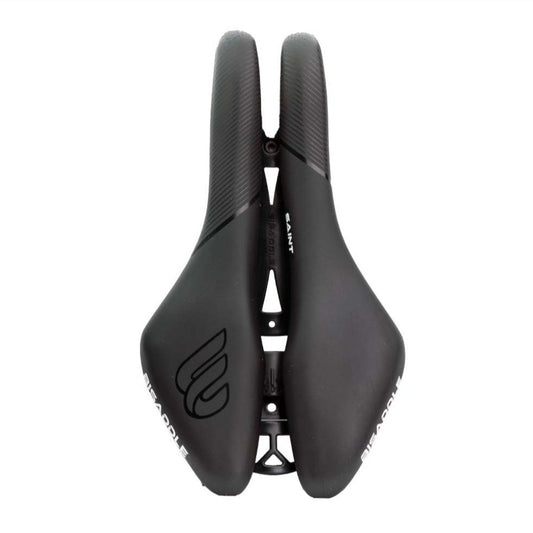
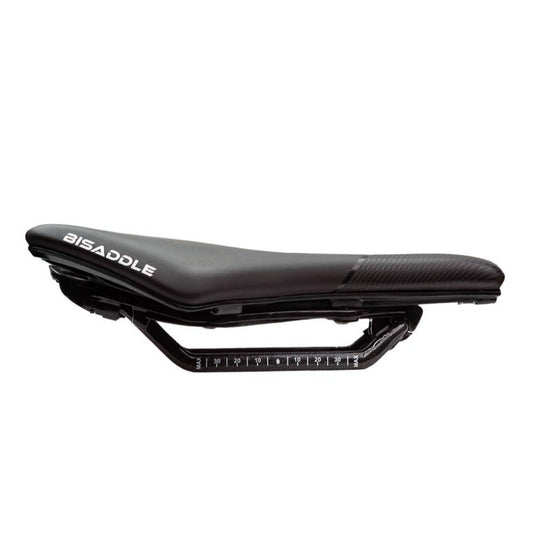
An adjustable saddle lets you perform a real-time, scientific fit test. Instead of wondering if you need a wider or narrower saddle, you can make micro-adjustments to the width and angle during your test ride and feel the pressure distribution change instantly. This transforms the process from a guessing game into an engineering problem you solve on the fly. You can dial out perineal pressure by widening the rear, or fine-tune the profile for a more aggressive rotation. It's the difference between throwing darts in the dark and using a calibrated scope.
Your Action Plan for the Perfect Fit
- Nail Your Bike Fit First: Ensure your saddle height, fore/aft, and handlebar reach are correct. A poor overall fit can mimic saddle-specific problems.
- Know Your Sit Bone Width: Get measured at a quality bike shop. This number is your foundational data point.
- Prioritize Shape and Channel: Choose a shape suited to your riding posture. For performance riding, a quality cut-out or channel is a must.
- Test for Support, Not Softness: Use the short-ride audit and listen for the specific feedback signs. Discomfort is a message. Numbness is a stop sign.
- Consider Intelligent Adjustability: If you're tired of the trial-and-error cycle, an adjustable saddle is the most direct path to dialing in the perfect balance of firm support and precise pressure relief for your one-of-a-kind body.
Remember, the right saddle doesn't announce itself with plush comfort in the shop. It disappears beneath you on the road, providing an invisible, supportive platform that lets you focus on the ride, your breathing, and the rhythm of the pedals—not on your seat. Your comfort is not a luxury; it's the foundation of performance and longevity in this sport. Listen to your body, test methodically, and don't settle.