Getting your saddle width right is the single most important factor for on-bike comfort and performance. A saddle that’s too narrow dumps your weight onto your soft tissue, leading to numbness and pain. One that’s too wide causes chafing on your inner thighs. Professional bike fitters use specialized tools, but you can get a remarkably accurate measurement at home with a few simple household items. Here’s my proven, no-fuss method.
The Core Principle: It’s All About Your Sit Bones
Your saddle’s primary job is to support your ischial tuberosities—your "sit bones." These are the two bony points you feel at the base of your pelvis when you sit on a hard surface. The correct saddle width provides a stable platform under these bones, lifting your weight off the sensitive perineal area and allowing proper blood flow and nerve function. This is non-negotiable for long-term comfort and health.
Step-by-Step Measurement Guide
What You’ll Need:
- A piece of corrugated cardboard (from a box, at least 12" x 12")
- A hard, flat surface like a bench, stool, or step
- A ruler or tape measure
- A pen or marker
The Process:
- Prepare Your "Measuring Device": Place the corrugated cardboard on your hard, flat seat. The corrugated ridges are key—they compress under pressure, creating a clear impression.
- Assume Your Riding Posture: This is critical. Don’t sit upright as you would in a chair. Lean forward slightly, mimicking your riding position on the bike. Place your hands on your knees. This forward tilt rotates your pelvis and brings your sit bones into the same position they’ll be in while cycling. Sit down firmly.
- Create the Impression: Rock side-to-side gently, then lift yourself straight up. Don’t scoot or wiggle off the cardboard—that blurs the impressions. You should see two distinct, compressed indentations.
- Mark and Measure: Use your pen to mark the center of each indentation. Then measure the distance between these two center points in millimeters. This is your center-to-center sit bone width.
From Sit Bone Width to Saddle Width
Your saddle should be wider than your sit bone measurement to provide proper support. A common and effective rule of thumb is to add 20mm to 30mm to your measured sit bone width.
For example, if your sit bones measure 120mm, you should be looking at saddles in the 140mm to 150mm range.
This added width ensures the supportive part of the saddle is under your bones, not just barely touching them. For riders in a very aggressive, aerodynamic position, you may be on the lower end of that add-on range. For a more upright endurance or gravel position, lean toward the wider end.
The "Feel" Test and Final Adjustments
While the cardboard method is highly reliable, your body is the ultimate judge. Once you have a saddle in your target width range, install it level on your bike.
- The Pressure Check: After a 30-60 minute ride, assess. You should feel stable, supported, and free of hot spots or numbness. If you feel like you’re “perching” on top of the saddle or experiencing medial thigh chafing, the saddle may be too narrow. If you feel the saddle pushing your thighs outward, it may be too wide.
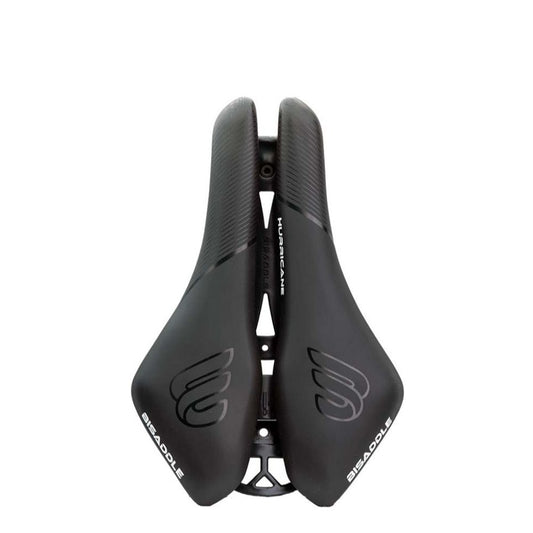
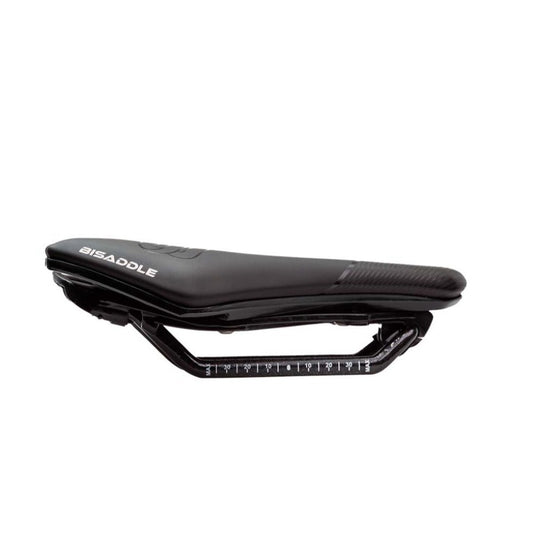
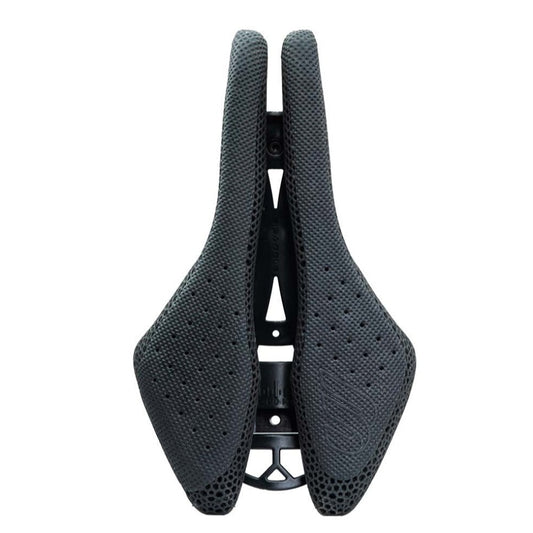
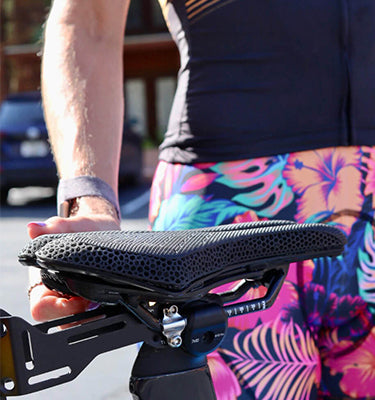
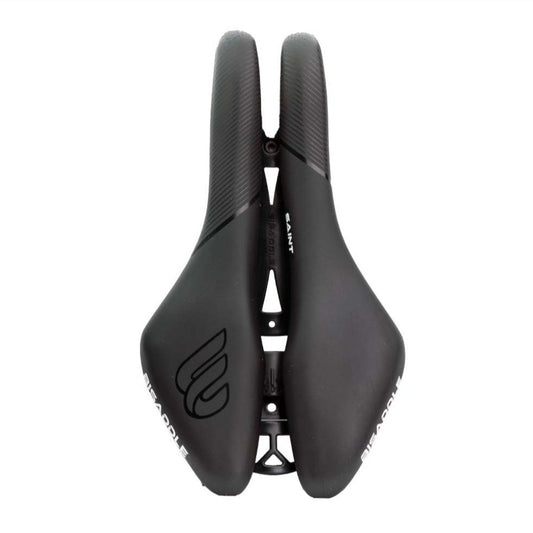
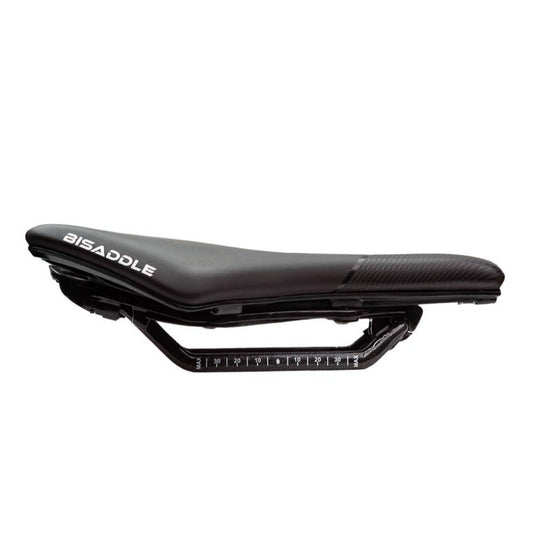
- The Role of Shape: Width is only half the equation. The saddle’s shape—its curvature, cut-out, and padding profile—must also match your anatomy and riding style. This is where the advantage of an adjustable saddle like a Bisaddle becomes clear. Instead of being locked into a single fixed shape, you can fine-tune not only the width but also the angle of each side to match your unique pelvic geometry perfectly, eliminating costly trial-and-error.
Why Getting This Right Matters
An improperly sized saddle isn’t just uncomfortable—it’s a performance and health liability. Research consistently shows that excessive perineal pressure from a poorly supported pelvis can lead to reduced blood flow, nerve compression, numbness, and saddle sores. By taking 10 minutes to measure your sit bones accurately, you’re investing in countless pain-free miles, better power transfer, and the long-term health of your soft tissue.
Take Action: Grab that cardboard box and get your measurement today. It’s the most impactful, zero-cost bike fit adjustment you can make. Your body—and your riding—will thank you.