Selecting the right saddle is arguably the most critical component choice you'll make for comfort and performance. A saddle that doesn't match your anatomy is a direct path to pain, numbness, and lost riding days. The foundational measurement for this choice is your sit bone width. Getting this right isn't just about comfort—it's about ensuring your weight is supported by your skeletal structure (your ischial tuberosities, or "sit bones") and not by the soft tissues and nerves of your perineum.
Why Your Sit Bone Measurement is Everything
Think of your sit bones as your body's natural landing gear. On the bike, these two bony points at the base of your pelvis are designed to bear your weight. A saddle that is too narrow forces your soft tissue to become the primary contact point, leading to compression of nerves and blood vessels. This is the root cause of perineal numbness and the more serious health concerns associated with poor saddle fit. Conversely, a saddle that's too wide leads to inner thigh chafing. The goal is precise alignment: the firm, supportive rear platform of your saddle should sit directly under these bones.
How to Measure Your Sit Bones: Two Proven Methods
You don't need a lab to get this right. With a simple tool or a quick trip to a shop, you can find your key number.
Method 1: The DIY Cardboard Test (Highly Reliable)
This is the at-home gold standard. Grab a piece of corrugated cardboard, a hard chair, and a tape measure.
- Prepare: Place the cardboard on the firm seat. Wear the thin shorts or underwear you'd have under your cycling kit.
- Sit: Sit down upright, but crucially, tilt your pelvis forward slightly as if you're on the bike—don't sit back like you're in an office chair. Rest your hands on your knees and hold your natural riding posture for 10–15 seconds.
- Measure: Stand up carefully. You'll see two clear indentations. Measure the distance from the center of one indentation to the center of the other in millimeters. This is your raw sit bone center-to-center measurement.
Method 2: The Professional Tool Method
Many quality bike shops and professional fitters use a dedicated sit bone measuring device, often a memory foam pad. It's the same principle but can offer a slightly more precise readout. If you're investing in a professional bike fit, this will be part of the session.
Translating Your Measurement into a Saddle Width
Here's the most common mistake: your center-to-center measurement is not your saddle width. Saddles have curvature, and you need a supportive margin.
The universal rule is to add 20mm to 30mm to your sit bone measurement. For example, a 120mm sit bone width suggests a saddle in the 140mm to 150mm range.
- Road & Aggressive Gravel Posture: Lean toward the lower end of the add-on range (~20–25mm). A forward-leaning position rotates the pelvis, bringing the contact points closer together on the saddle.
- Upright, MTB, or Comfort Posture: Use the higher end (~25–30mm+). Your sit bones are planted more squarely on the rear of the saddle.
The Smart Rider's Secret: Acknowledging the Limits of a Static Number
Your body isn't static on the bike. Your effective sit bone spacing can change with your position—compare a deep aero tuck to a relaxed cruise. Fatigue and flexibility also alter how you sit. This is the inherent flaw in the traditional "one-width-fits-all" saddle model and why the trial-and-error process can be so frustrating and expensive.
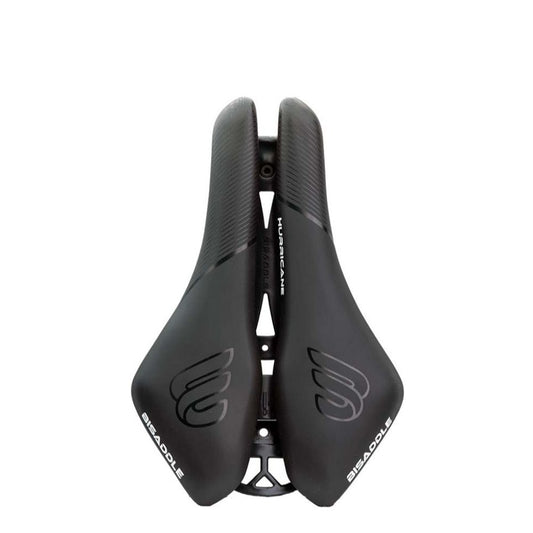
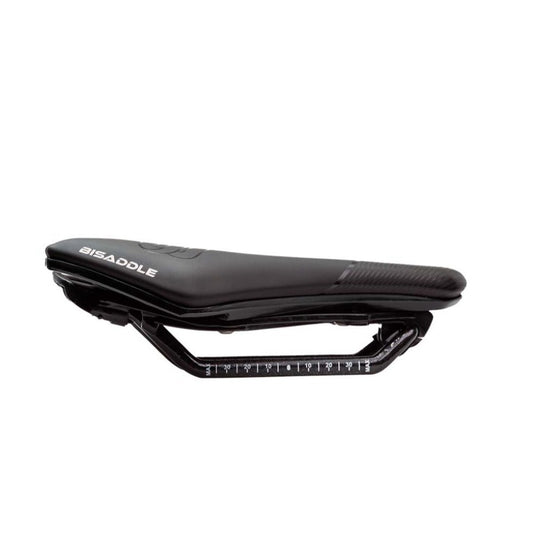
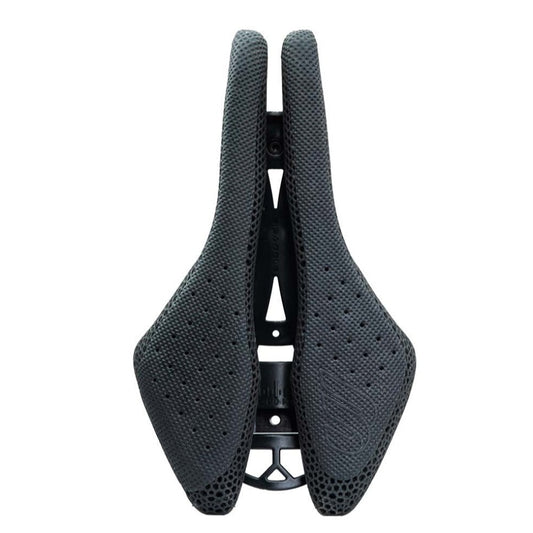
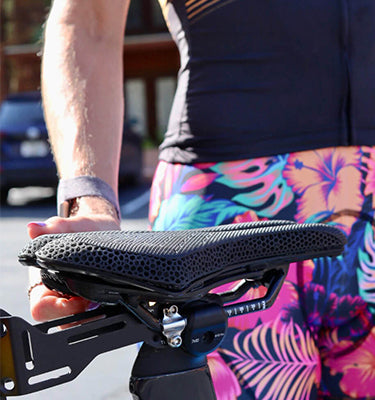
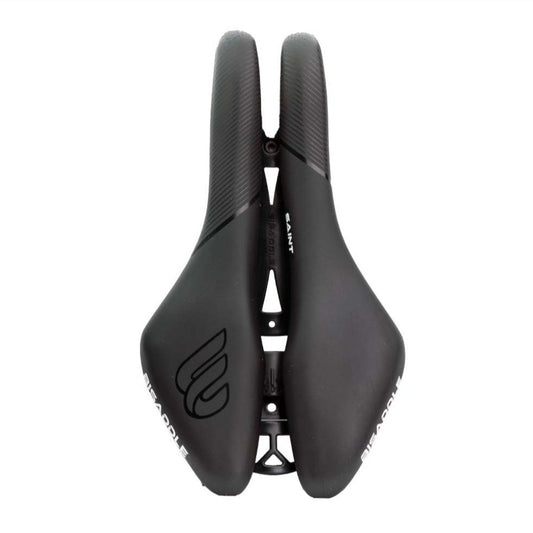
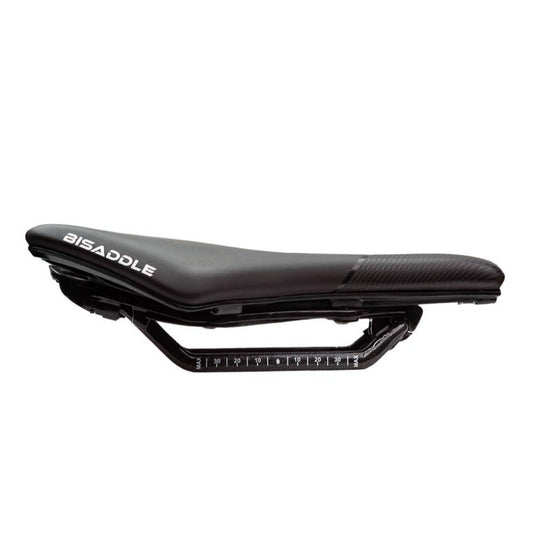
This challenge is precisely what led to the innovation of the adjustable-width saddle. A design like the Bisaddle allows you to set the width to the exact millimeter based on your initial measurement, and then fine-tune it in real-time for different bikes, disciplines, or as your body changes on a long ride. It turns a fixed measurement into a dynamic, adaptable fit.
Your Action Plan for a Perfect Fit
- Take the Measurement Seriously. Don't guess. The 10-minute cardboard test is the best investment you can make in your riding comfort.
- Prioritize Structure Over Softness. The correct width is infinitely more important than extra padding. A wide, overly soft saddle can be just as problematic as a narrow one.
- Use Your Number as a Filter. When shopping, use your calculated width (sit bones + 20–30mm) to narrow down options. This immediately eliminates most ill-fitting models.
- Consider the Future-Proof Solution. If you ride multiple styles, are dialing in a new fit, or simply want to eliminate the guesswork, an adjustable-width saddle represents a sophisticated engineering solution that puts definitive control in your hands.
Mastering your sit bone measurement is the single most effective step toward ending saddle discomfort. It moves you from guessing about your body to making an evidence-based component choice. Get your number, understand what it means, and get ready to ride supported, comfortable, and powerful.