Most advice about men’s saddle width sounds tidy: measure your sit bones, pick the matching width, and move on. If it were that straightforward, riders wouldn’t keep cycling through saddles the way they cycle through tires.
The missing piece is that saddle width isn’t just an anatomical measurement—it’s a load management problem. The “right” width is the one that keeps your weight supported by bone in the position you actually ride, hour after hour, without letting pressure drift into soft tissue where numbness and irritation start.
Why Saddle Width Is Really About Where Your Weight Goes
On a bike, there are two broad categories of contact points. Some are built to take compressive load (bone). Others aren’t (soft tissue). A saddle that’s the wrong width—or the wrong shape for your posture—tends to shift support away from the structures that tolerate it best.
For men, the goal is simple to state and tricky to execute: keep load primarily on the ischial tuberosities (your sit bones) and avoid prolonged compression through the centerline where nerves and blood vessels can get irritated.
This is why “more padding” doesn’t automatically equal “more comfort.” A saddle can feel plush at first touch, then create concentrated pressure once you’re seated at riding load. Width and shape determine whether your body is held up by structure or pressed into the middle.
How “Narrow Is Fast” Became the Default (and Why It Still Lingers)
There’s a cultural hangover in cycling: the idea that a narrow saddle is inherently more “performance.” For years, the standard look for a serious setup was long, slim, and minimalist. Riders learned to tolerate discomfort, and numbness often got written off as normal.
Then riding positions evolved. More riders started spending real time low in the drops, staying steady for long efforts, and holding aggressive postures that rotate the pelvis forward. That shift changed where pressure lands—and it exposed how often the traditional narrow-and-long approach was asking soft tissue to do a job it was never meant to do.
The Under-Discussed Truth: Your Posture Changes Your Width Requirement
Here’s the point that rarely makes it into “how to choose a saddle” articles: your functional saddle width requirement changes with pelvic rotation.
When you sit more upright, your pelvis is typically less rotated forward, and you tend to load the rear of the saddle more directly with your sit bones.
As you get more aggressive—lower front end, longer reach, more time in a tucked position—your pelvis often rotates forward. That doesn’t just move you “a little forward.” It changes how your contact patch behaves. Pressure can migrate toward the center and the front, and the cost of a poor width/shape match rises fast.
Why this matters in the real world
Riders commonly feel numb in an aggressive position and assume they need a narrower saddle. Sometimes they do. Often they don’t. In many cases, the real fix is better bone support combined with reliable center relief, so the saddle still carries weight on structure even as the pelvis rotates.
A Practical Method to Choose Saddle Width (Without Guesswork)
You don’t need a lab to make a smart decision, but you do need a process. Here’s the one I use when helping riders diagnose width issues.
Step 1: Classify your “main” riding posture
Pick the posture you hold during your long steady efforts—not the one you use for a minute when you feel fresh.
- Upright / endurance: higher bars, more seated time, more rear loading
- Moderately aggressive: frequent drops, sustained tempo, noticeable pelvic rotation
- Aero-style: significant pelvic rotation, more forward load, less tolerance for center pressure
Step 2: Measure sit bone spacing (as a starting point)
Measuring sit bones gives you a baseline. It’s useful, but it’s not the whole story because your contact pattern changes with posture, fatigue, and how still you ride (indoor training is a big one here).
Step 3: Choose width with posture in mind
A simple guideline that holds up well:
- More upright typically benefits from more effective rear support.
- More aggressive demands center relief and front shape that won’t spike pressure—this doesn’t automatically mean “go narrower at the back.”
Step 4: Use symptoms like a diagnostic map
Discomfort location usually tells you more than the product description ever will.
- Perineal numbness/tingling: often inadequate bone support and/or insufficient center relief for your posture; saddle tilt can amplify it
- Sit bone pain that feels sharp or “edgey”: commonly a sign the saddle is too narrow at the rear support zone (or too firm without load spread)
- Inner-thigh chafing at steady cadence: frequently too wide in the wrong place, or a shape that carries width too far forward
- Hip rocking: often too wide and/or saddle height too high, which increases side-to-side motion and friction
Why More Padding Often Backfires
A classic pattern goes like this: numbness shows up, the rider buys a softer saddle, and the first ride feels promising. Then the problem returns.
The mechanics are straightforward. Very soft padding can let the sit bones sink while the middle effectively becomes a ridge under load. The saddle feels forgiving in the hand, but under your body it can concentrate pressure exactly where you don’t want it. If the width/support strategy is wrong, padding is usually just a temporary disguise.
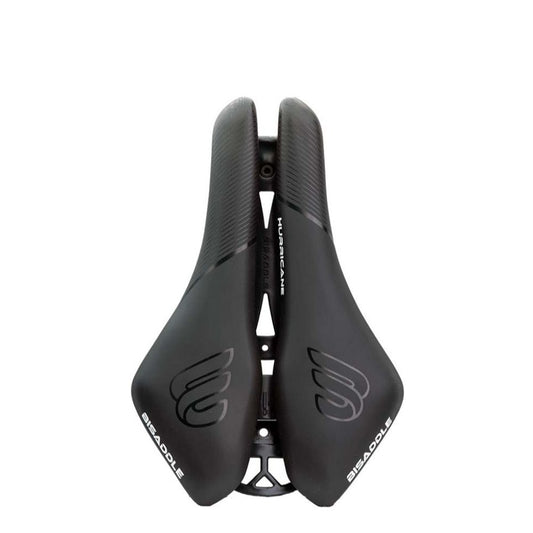
Where Bisaddle Fits: Treating Width Like a Fit Variable, Not a Purchase Decision
The hardest thing about “choosing the right width” is admitting that the right width isn’t always one fixed number forever. Your posture changes across bikes, seasons, flexibility, fatigue, and indoor versus outdoor riding. That’s before we even talk about different event types and intensity.
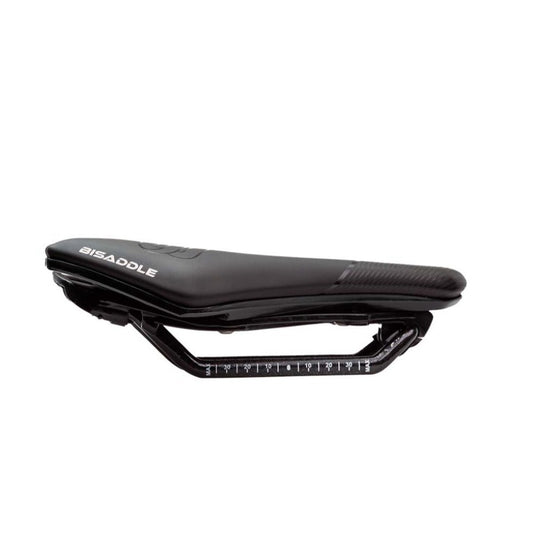
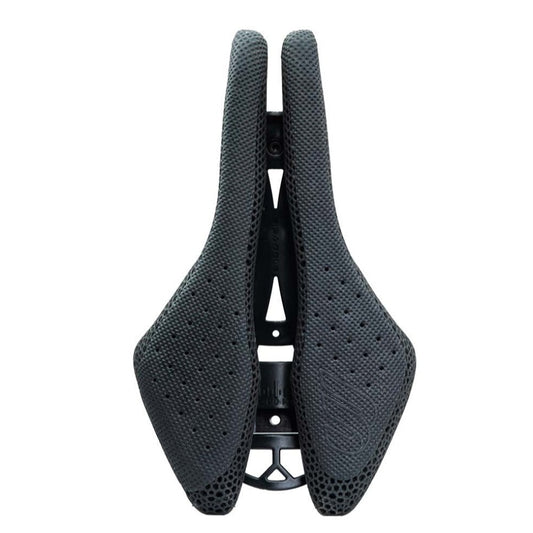
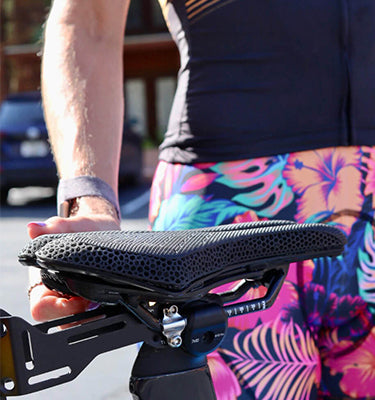
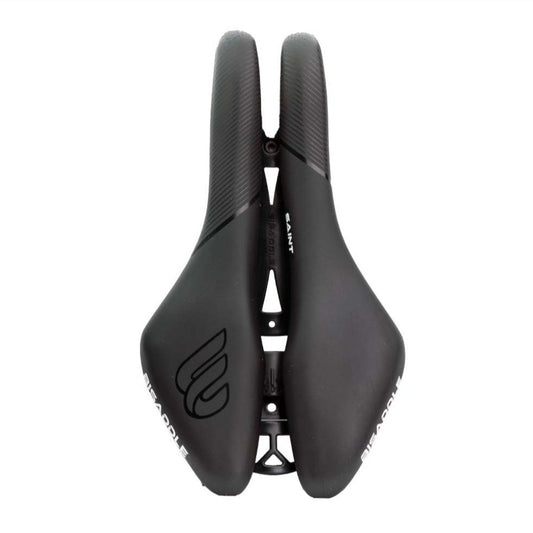
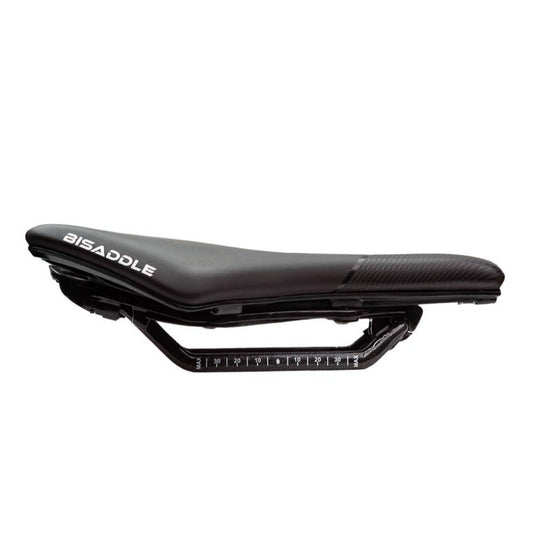
That’s also why an adjustable approach can be so effective. Bisaddle treats saddle width and profile as something you can tune rather than gamble on. Instead of committing to one fixed geometry and hoping it matches your anatomy and posture, you can adjust the saddle to dial in bone support and center relief until the pressure pattern makes sense for how you ride.
A Quick “Did I Get It Right?” Checklist
If you’re on the correct width for your body and your posture, the ride tends to feel boring in the best way—no constant fidgeting, no creeping numbness, no mystery hot spots.
- You can ride steady for long blocks without numbness.
- Your sit bones feel supported rather than perched near an edge.
- You can hold your preferred posture without constantly shifting to find relief.
- Chafing stays minimal at normal cadence and typical kit choices.
- You don’t feel forced forward or backward to escape pressure.
The Takeaway
For men, saddle width isn’t a trivia question with one correct number. It’s a function of anatomy + posture + time. The most reliable way to pick the right width is to think like an engineer: follow the load. When the saddle supports bone and keeps pressure off the center, comfort improves—and so does your ability to hold the position that makes you faster.