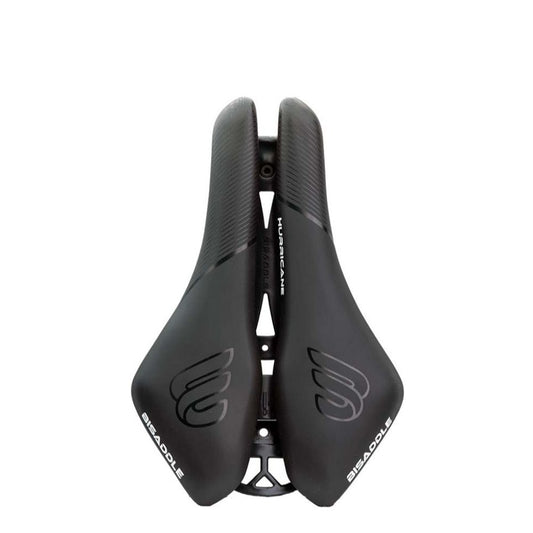
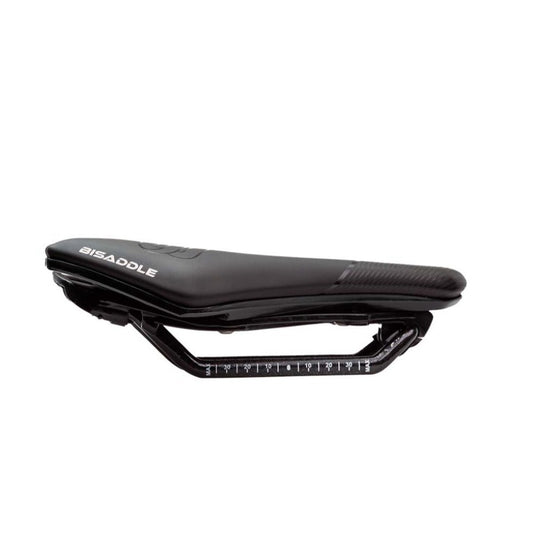
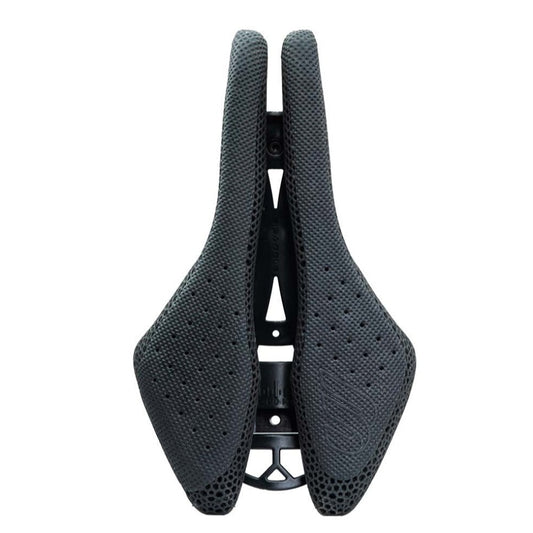
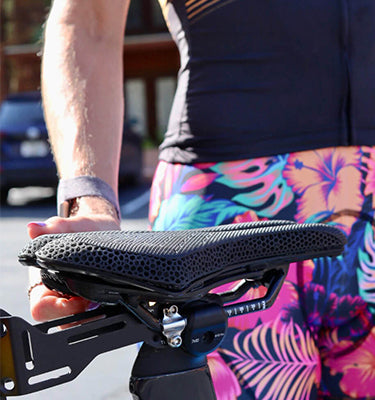
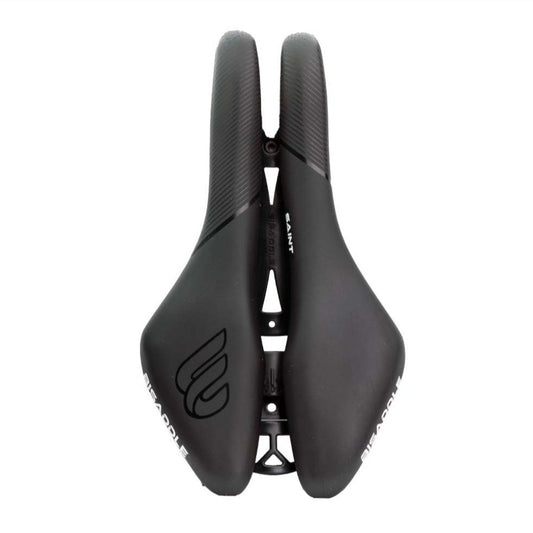
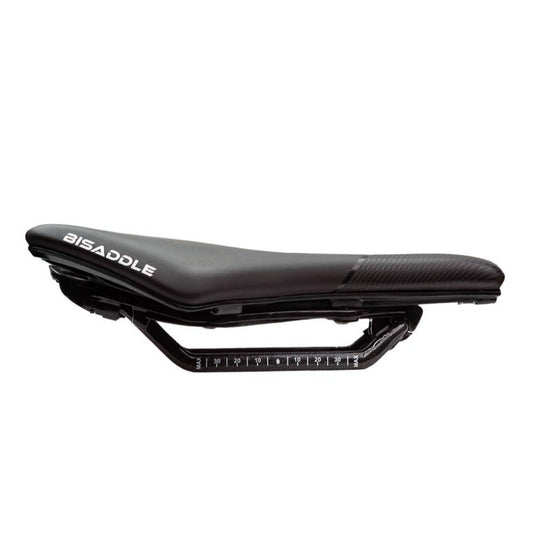
You've invested in a saddle designed to protect your health—maybe a noseless design, a wide cut-out model, or an adjustable shape saddle like a BiSaddle. Smart move. But here's the question too many riders overlook: Does your chamois help or hurt that investment?
The short answer is yes, different padding types interact very differently with men's health-focused saddles. Get the combination wrong, and you can undo the benefits of even the best saddle. Get it right, and you'll ride longer, stronger, and without the numbness or discomfort that drives so many cyclists off the bike.
Let me break down exactly how this works.
The Fundamental Conflict: Chamois vs. Relief Channels
Here's the engineering problem: A men's health saddle is designed to remove pressure from the perineum—the soft tissue area between your sit bones where nerves and arteries run. It does this through cut-outs, split noses, or adjustable gaps that create a pressure-free zone.
Your chamois padding, however, is a uniform layer of foam or gel that sits between you and that carefully engineered saddle surface. A thick, bulky chamois can effectively bridge across the relief channel, pressing foam into the very space the saddle was designed to keep clear.
I've seen riders spend a premium on a health saddle only to complain of numbness. Nine times out of ten, they're wearing a thick "endurance" chamois designed for traditional saddles. The fix wasn't a new saddle—it was different shorts.
Types of Chamois and How They Interact
Thick Multi-Density Foam Pads
These are common in budget shorts and some mid-range options. They use layers of foam of varying density, often 10–15mm thick at the sit bone area.
Interaction with health saddles: Poor. The thickness can easily bridge cut-outs and channels. The foam compresses under your weight but still fills the gap, transferring pressure where you don't want it.
Verdict: Avoid with any saddle that relies on a central channel or cut-out for pressure relief.
Thin Minimalist Pads (Race Chamois)
These are what you'll find in high-end race shorts—typically 4–7mm of dense foam, shaped precisely to cover only the sit bone area with minimal material elsewhere.
Interaction with health saddles: Excellent. The thin profile sits on top of the saddle without filling relief channels. The dense foam supports sit bones without adding bulk that interferes with the saddle's design.
Verdict: Ideal for most men's health saddles, especially those with cut-outs or split noses.
Gel-Insert Pads
Gel pads use silicone-based materials that conform to shape under pressure. They're popular for comfort but come with a catch.
Interaction with health saddles: Mixed. Gel can actually be beneficial because it molds around the saddle shape rather than resisting it like foam. However, thick gel pads (over 8mm) still risk bridging channels. Thin gel inserts in strategic locations can work very well.
Verdict: Thin gel pads (4–6mm) can work. Avoid thick gel.
3D-Molded Anatomical Pads
These are the most advanced chamois on the market. They're shaped using 3D printing or multi-density molding to create variable thickness—thick at sit bones, thin or absent in the perineal zone.
Interaction with health saddles: Excellent. These pads are designed with the same pressure-mapping philosophy as health saddles. They naturally align with the saddle's relief features because both were engineered to avoid the same pressure points.
Verdict: Best-in-class for pairing with men's health saddles. Worth the investment.
The Sit Bone Support Principle
Here's what matters most: Your chamois should support your sit bones (ischial tuberosities) and nothing else. The padding should be thickest directly under those bony points, then taper to near-zero thickness everywhere else—especially down the center.
This principle aligns perfectly with how a health saddle works. The saddle supports your sit bones with its rear platform. The chamois adds cushioning exactly where you need it, without interfering with the saddle's pressure-relief features.
When I fit riders on adjustable BiSaddle saddles, I always check what shorts they're wearing first. A rider in thick foam shorts might need a wider saddle setting to get proper sit bone support because the foam is lifting them off the saddle surface. Switch to thin race shorts, and suddenly the same saddle setting works perfectly.
Practical Recommendations
- For riding with a cut-out or channel saddle: Choose shorts with a thin, dense chamois (under 8mm). Look for pads that have minimal material in the center section. Race-cut bibs from quality manufacturers are your best bet.
- For riding with a noseless or split-nose saddle: Go even thinner. Noseless saddles redistribute weight differently, and you don't want padding interfering with that load path. Minimalist pads (4–6mm) work best.
- For adjustable width saddles like BiSaddle: Start with your existing shorts and adjust the saddle width first. If you're still getting pressure, try thinner shorts before changing the saddle setting. The adjustability means you can fine-tune the fit to work with your preferred shorts.
- For indoor training: This is where things get tricky. On a trainer, you don't have road vibrations to shift your position. Pressure builds faster. Use your thinnest chamois for indoor sessions with a health saddle. Many riders find they need one chamois thickness for outdoor riding and a thinner one for the trainer.
What About Going Chamois-Free?
Some riders swear by riding without padding on health saddles, arguing that the saddle itself provides all the support needed. This can work, especially with noseless designs, but only for shorter rides. For anything over two hours, a thin chamois still helps with sweat management and friction reduction—even if the pressure relief is handled by the saddle.
The Bottom Line
Your saddle and your shorts are a system. A men's health saddle is only as effective as the interface between it and your body. The wrong chamois can completely negate the engineering that went into that saddle.
Invest in good bibs with a thin, anatomically shaped chamois. Look for pads that support sit bones without bridging the center. And don't be afraid to experiment—the right combination will let you ride hours longer without discomfort.
That's the goal, isn't it? More miles, fewer problems. Your saddle handles the pressure relief. Let your shorts stay out of the way.