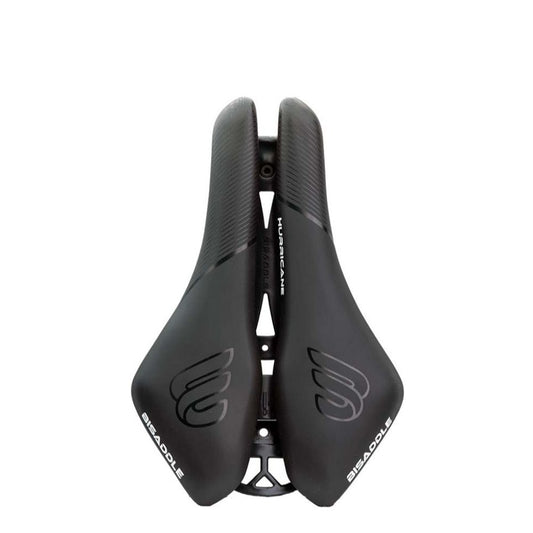
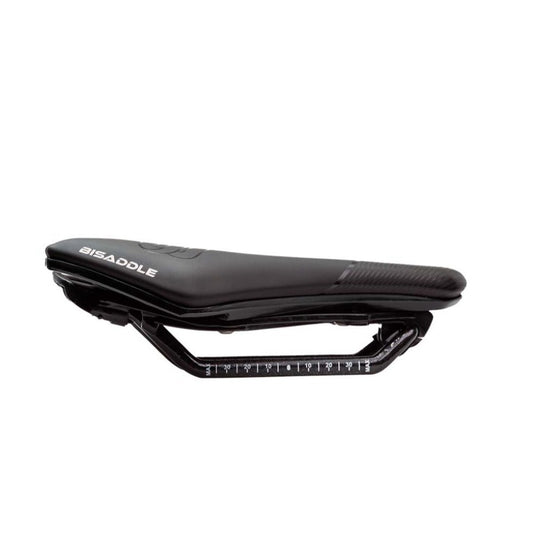
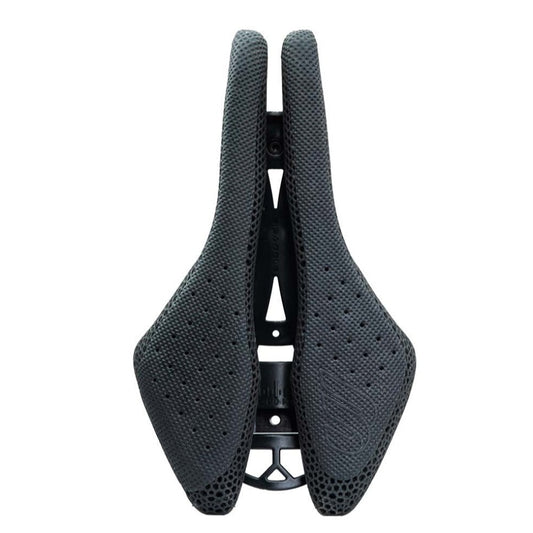
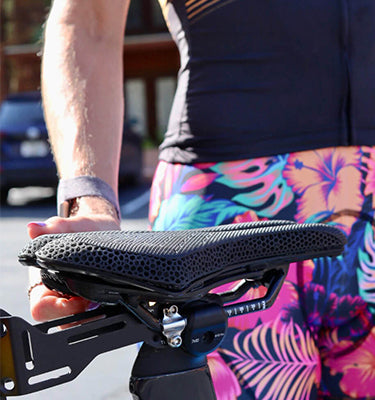
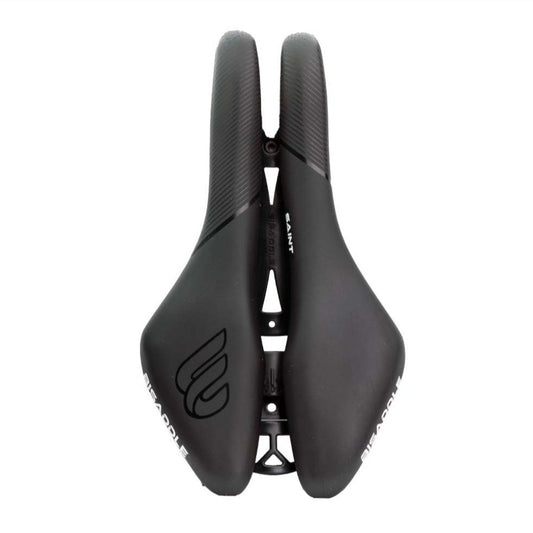
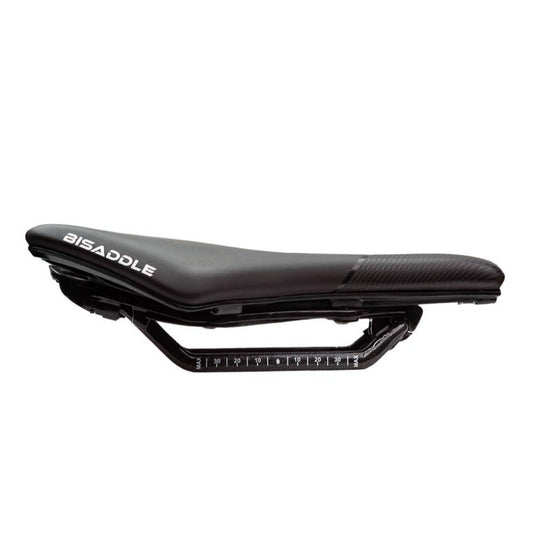
Let's get straight to the point: for women logging serious miles, high-quality bike shorts are not an optional extra. They are a fundamental, non-negotiable part of the saddle comfort equation. As someone who has spent years in the workshop and on the road, I see a proper saddle—like an adjustable Bisaddle—as the structural foundation. The shorts, however, are the critical interface that manages everything that happens between your body and that platform. They work in symbiosis; one supports your skeleton, the other protects your soft tissue.
The Core Functions of Bike Shorts
Understanding how shorts work is key to choosing the right pair and using them effectively. Their role goes far beyond just adding a layer of padding.
1. Eliminating Friction and Chafe
The single most important job of a cycling short is to eliminate seam-related friction. Everyday clothing has seams in the worst possible places—right where your inner thighs and crotch meet the saddle. A proper short uses seamless construction or flat-locked seams in these high-risk zones.
The Chamois (or Pad): Don't think of this as a pillow. Its primary role is as a friction buffer. A quality chamois is made from multi-density foams or advanced technical materials designed to wick moisture, resist bacteria, and stay effective for the duration of your ride. It's a protective barrier.
The Fit is Paramount: The short must fit like a second skin—snug without constriction. Any bunching, shifting, or loose fabric creates a moving point of friction, which is a guaranteed ticket to chafing city. For women, the cut through the hips and waist is crucial to prevent rolling or constant readjustment.
2. Managing Moisture and Hygiene
Sweat isn't just uncomfortable; it's a primary culprit in skin irritation and saddle sores. Moisture softens the skin, making it far more susceptible to abrasion and bacterial issues.
- Technical Fabrics: Premium shorts use moisture-wicking, breathable materials that pull sweat away from your skin to the outer surface to evaporate. This keeps you drier and prevents maceration—the pruning and breakdown of skin.
- Chamois Technology: Modern pads are engineered to move moisture through the pad, away from your skin. A soaked, waterlogged chamois loses its protective qualities and can become abrasive itself.
3. Strategic Pressure Distribution
While your saddle supports your sit bones (ischial tuberosities), the chamois helps manage pressure on the surrounding soft tissue and provides subtle damping.
- Anatomical Design: A women-specific chamois is shaped differently—typically wider and shorter—to match broader sit bone spacing. It provides targeted relief in the perineal and labial areas, with padding strategically placed to avoid adding pressure where it's not needed.
- Muscle Support: The compressive nature of the fabric offers mild support to the quadriceps and glutes. This reduces muscle vibration and fatigue, helping you maintain a stable, efficient position on the saddle over long distances.
Building Your Personal Comfort System
This is the most important takeaway: your shorts and saddle must work as a unified system. The best saddle is hamstrung by poor shorts, and the best shorts can't compensate for a poorly designed saddle.
The Non-Negotiable Rules
- No Underwear, Ever. This is non-negotiable for performance and hygiene. Wearing underwear introduces seams and non-wicking fabric directly into the high-friction zone, completely nullifying every technical benefit of the chamois. It's the fastest way to guarantee chafing.
- Prioritize Shorts Hygiene. Wash your shorts after every ride with a mild, fragrance-free detergent. Never use fabric softener—it clogs the wicking fibers. Always air dry.
- Use Chamois Cream Strategically. For rides over 90 minutes, apply a quality chamois cream to your skin (inner thighs, sit bone area) and lightly to the chamois itself. It provides essential lubrication, reduces friction, and often has anti-bacterial properties.
The Synergy with Your Saddle
The thickness and shape of your chamois can subtly alter your effective saddle height and contact points. More critically, a saddle with a pronounced cut-out or relief channel—designed to eliminate soft-tissue pressure—pairs perfectly with a chamois that has a corresponding void or thinner zone in its center. You don't want to stuff that crucial relief space with padding.
This is where the advantage of an adjustable saddle like a Bisaddle becomes incredibly powerful. Because you can fine-tune the saddle's width and profile, you can dial in the perfect, stable platform that aligns precisely with your sit bones, through your chosen chamois. This customization ensures the support is exactly where your skeleton needs it, allowing the shorts to do their job of managing the micro-environment without interference.
Your Action Plan for Enhanced Comfort
- Invest in Quality. Treat your shorts with the same seriousness as your saddle. Buy the best you can afford, focusing relentlessly on fit, fabric, and a reputable women-specific chamois design.
- Fit Trumps Everything. Try on multiple models. The right short should feel secure without pinching, and the chamois must sit perfectly flat against your body without gaps or folds when you're in your riding position.
- Troubleshoot Systematically. If chafing occurs, scrutinize your shorts' fit and age first. If you're experiencing numbness or localized pressure points, your saddle fit (width, tilt, fore/aft position) is the primary suspect. This is when a professional bike fit or the adjustability of a saddle like a Bisaddle becomes your most valuable tool.
In essence, for the dedicated female cyclist, bike shorts are a vital piece of biomechanical engineering. They are your frontline defense, managing the friction, moisture, and micro-impacts that occur over thousands of pedal strokes. By understanding their precise role and selecting them with expert care, you unlock the full potential of a proper saddle fit, empowering you to ride longer, push harder, and enjoy every mile on the bike.