Most advice about men’s bike saddles starts at the same place: measure your sit bones, choose a width, maybe try a cut-out, and hope you guessed right. That checklist isn’t useless—but it misses the most important question a saddle answers every time you ride: where does your weight actually go?
When you look at saddles as “load-path” devices—components that route your bodyweight to bone or to soft tissue—the whole category gets easier to understand. It also leads to a conclusion that surprises a lot of riders: making a saddle softer often makes long-ride comfort worse, especially once you start riding with a forward-rotated pelvis (drops, hard efforts, aero bars, or even long indoor sessions).
The problem men’s saddles must solve (and why numbness matters)
A saddle works best when it supports you on bony structures—primarily the ischial tuberosities (your “sit bones”) and, depending on posture, parts of the pubic rami. The trouble begins when sustained pressure shifts onto the perineum, where important nerves and arteries run.
For men, that usually shows up as numbness, tingling, or that dull “not quite right” sensation you notice after you’ve been seated for a while. It’s tempting to treat that as normal cycling discomfort. It isn’t. Numbness is a signal that load is being carried in the wrong place.
This isn’t just theory. Medical and industry discussions frequently point out that traditional, narrow saddles—especially when paired with long, steady seated efforts—can reduce blood flow by compressing soft tissue. In one often-cited set of measurements, certain traditional configurations produced very large drops in tissue oxygenation, while designs that better offloaded the perineum reduced that drop dramatically. The exact numbers vary by study and setup, but the takeaway is consistent: shape and support location matter more than “plushness.”
A contrarian history of men’s saddles: comfort isn’t a straight line
1) The leather “hammock” era: tensioned support, wide pressure distribution
Early saddles—and modern leather touring saddles—behave like a tensioned membrane. Once broken in, they can spread load across a broad area, which often keeps pressure where it belongs: on bone. Riders who tour long distances upright sometimes swear by them for exactly that reason.
The trade-offs are real, though: weight, weather sensitivity, and less compatibility with today’s more forward-rotated riding positions.
2) The long-nose performance era: stability and control take the wheel
As road positions got lower and bikes got stiffer, men’s saddles trended narrower and firmer, with a longer nose. That nose wasn’t there for decoration—it helped riders stabilize their position and control the bike with hips and inner thighs.
The downside is predictable: rotate the pelvis forward and that long nose can become the main contact point. That’s when soft tissue starts doing a job it was never meant to do.
3) The padded “comfort saddle” boom: the five-minute win, the two-hour loss
This is where the industry’s simplest story—“more padding equals more comfort”—runs into physics. Many thick foam or gel saddles feel amazing in a quick test ride, then get progressively worse as the miles stack up.
Here’s the mechanism: when the padding is very soft, your sit bones sink. As they sink, the saddle’s center and nose can effectively become “higher” relative to your pelvis, which can increase midline pressure. That’s why a saddle can feel cushy and still leave you with numbness or hot spots.
Why “softer” often backfires: the three jobs every saddle must do
When a saddle truly works for a rider, it’s usually because it nails three basic functions at once:
- Support: firm enough under the sit bones that you don’t sink and “bottom out.”
- Relief: meaningful midline pressure reduction (cut-out, channel, or split) that matches your anatomy and posture.
- Stability: a shape that lets you stay planted, so you’re not constantly micro-shifting and creating friction.
A very soft saddle can seem like it improves support because it feels forgiving at first touch. But over time it often compromises stability and can undermine relief by letting the pelvis settle into a position that increases centerline pressure.
How modern saddle design responded: short noses, cut-outs, and split fronts
The biggest mainstream shift in the last decade has been the move toward short-nose saddles and generous cut-outs or relief channels in road and gravel. These designs are less about trends and more about acknowledging how people actually ride now—lower positions, longer seated efforts, and more time with the pelvis rotated forward.
Triathlon and TT pushed the idea even further. When you’re locked into an aero position for long stretches, pressure management becomes non-negotiable. That’s why split-nose and noseless designs exist: they’re built to offload soft tissue in the exact posture that tends to overload it.
A different branch of innovation: adjustable geometry instead of fixed guesses
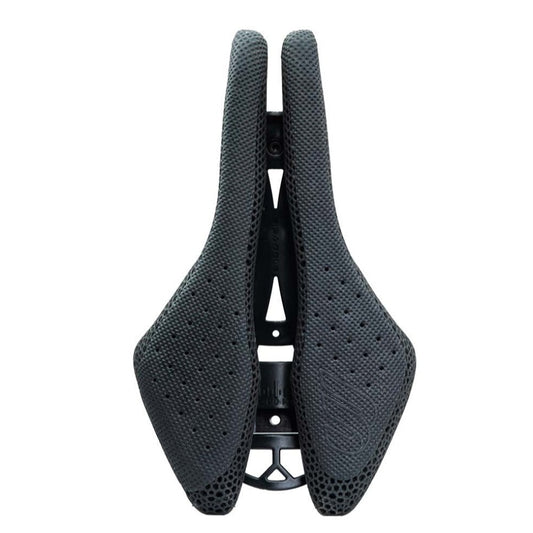
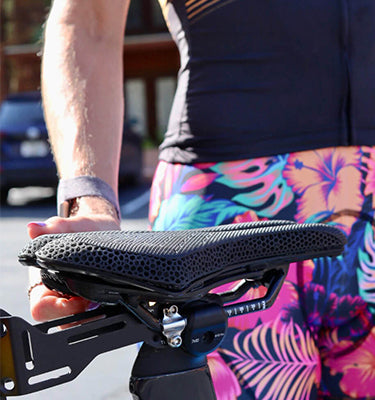
Most saddles evolve through materials—new foams, new shells, new rails, and lately 3D-printed lattice padding. But there’s another approach that’s still underappreciated: make the shape adjustable.
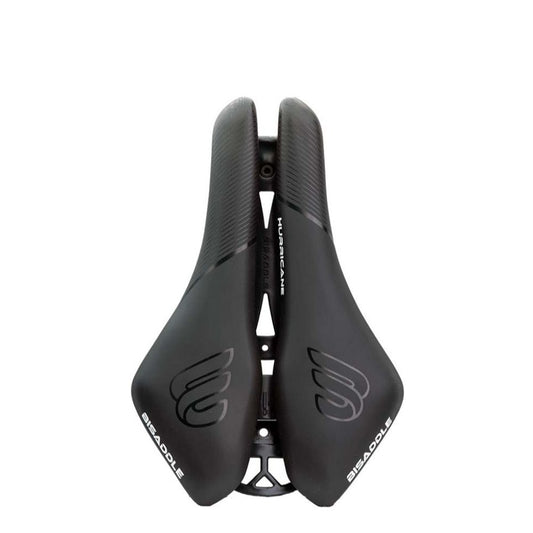
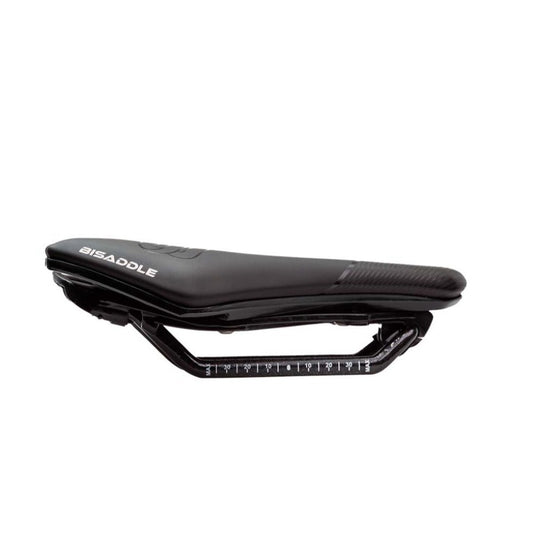
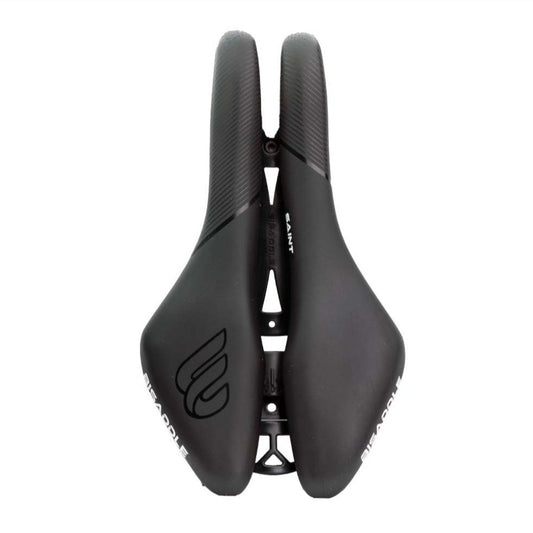
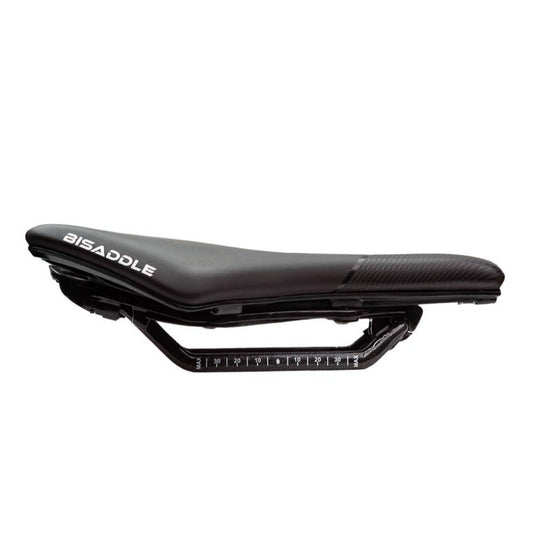
Adjustable-shape saddles (like BiSaddle’s split design) treat comfort as a setup problem, not a lottery ticket. Instead of choosing a fixed width and hoping your body agrees, you can tune the saddle’s rear support and midline gap to match your sit bone spacing and riding posture.
This matters because many riders aren’t trying to fit one position. A single rider might need different support characteristics for:
- endurance road posture, where consistent sit bone support is king
- aggressive drops or aero work, where midline relief becomes critical
- indoor training, where you move less and pressure builds faster
What’s next: tuned structures, not thicker pillows
The most promising future improvements for men’s saddles aren’t about making everything softer. They’re about making support smarter.
- 3D-printed lattice padding is valuable because it can be tuned by zone—firmer under sit bones, more compliant where you need damping, and carefully controlled around relief areas.
- Hybrid concepts (adjustable geometry plus advanced surface structures) could address both the “wrong shape” problem and the “wrong material response” problem in one system.
- Pressure mapping is likely to become more common through bike fitting, helping riders see whether an adjustment is truly reducing midline load or just moving it around.
Practical takeaways you can use this week
If you want to get more comfortable without buying three saddles and crossing your fingers, start here:
- Treat numbness as a red flag. It usually means pressure is landing on soft tissue instead of bone.
- Be cautious with ultra-soft padding. If it lets you sink, it can increase midline pressure over time.
- Match saddle style to posture. The more forward-rotated you ride, the more you should prioritize short-nose or split/cut-out designs that genuinely relieve pressure.
- Stability matters. If you’re sliding, rocking, or constantly shifting, you’re setting yourself up for friction and sores.
Closing thought: a saddle is a support structure, not a cushion
Men’s saddles didn’t evolve in a straight line toward comfort. They evolved alongside racing positions, bike stiffness, and what riders were expected to tolerate. The best modern designs—short-nose, split-nose, cut-out, 3D-printed, or adjustable—share one goal: keep load on bone, reduce soft-tissue pressure, and stabilize the rider so friction doesn’t become injury.
If you want, I can turn this into a discipline-specific guide (road vs. tri/TT vs. gravel vs. indoor) with a clear setup order—what to adjust first, what sensations mean mechanically, and when it’s time to switch saddle categories rather than tweaking forever.