Most guys shopping for a “healthy” bike seat do it the same way they’d pick a couch: sit on it for ten seconds, notice whether it feels plush, and assume more padding equals more comfort. Then the real ride happens—an hour in, maybe two—and the numbness shows up anyway.
If you want a saddle that genuinely supports men’s health, you have to think like an engineer for a moment. The best saddle isn’t the softest saddle. It’s the one that keeps your weight where it belongs: on bone, not on soft tissue.
The problem isn’t comfort—it’s load path
A bike saddle is a load-transfer interface. Your body weight has to go somewhere, and in simple terms it ends up on either bony structure or soft tissue.
- What you want: support on the sit bones (ischial tuberosities). In more forward-rotated positions, some riders also load parts of the pubic rami.
- What you want to minimize: sustained pressure through the perineum, where important nerves and blood vessels run.
When the saddle shape, width, or bike fit pushes your body weight into the perineum, numbness is not “normal.” It’s a signal that something is being compressed that shouldn’t be carrying the load.
Why “more padding” can make things worse
This is the part that surprises people: a thick, soft saddle can feel friendly in the parking lot and still be a disaster on a long ride.
Here’s what tends to happen over time: foam and gel deform under sustained load. As you sink in, the effective pressure can migrate inward, and the saddle’s center can start acting like a wedge into the exact area you’re trying to protect.
- Soft padding can let your pelvis settle too low.
- As you sink, midline pressure often increases.
- More movement and heat can raise the odds of chafing and saddle sores.
That’s one reason many performance saddles feel firmer than “comfort” saddles: they’re built to hold you up and keep the load on skeletal support points.
Why modern saddles got shorter (and why that matters for men’s health)
If you’ve noticed more short-nose saddles and bigger cut-outs in the last decade, that shift didn’t happen because brands got bored. Riders are spending more time in lower, more aggressive positions—on the hoods, in the drops, and in aero-like postures—where the pelvis rotates forward.
As that rotation increases, a traditional long nose has more opportunities to press into soft tissue. A short nose and a proper relief channel help reduce that risk while still giving you a stable platform to ride hard.
What to look for in the best bike seat for men’s health
Forget the marketing adjectives and focus on the features that actually change pressure distribution. A men’s health-friendly saddle usually gets these right:
1) Functional width (the big one)
Width is not just “wide vs. narrow.” It’s whether the saddle’s usable platform matches where your sit bones actually land in your riding posture.
- Too narrow: your sit bones don’t get full support, and load drifts inward toward soft tissue.
- Too wide (for your posture): thigh rub can increase, and you may unconsciously shift around—creating new pressure points.
This is why many brands now offer the same saddle in multiple widths. It’s not a trend; it’s a practical response to anatomy.
2) Relief that still works when you rotate forward
A cut-out or relief channel should protect you in the position you actually ride, not only when you’re sitting upright and spinning easy. If you ride low, push hard, or spend long stretches indoors, you need relief that holds up under that forward rotation.
3) Stability when fatigue sets in
When you get tired, hip control usually gets a little sloppier. A saddle that’s “almost” right at the start can become a problem later as you rock subtly or start sliding forward.
Look for a rear platform that feels predictable, with edges that don’t feel like they’re slicing into you once you settle in.
4) Controlled compliance, not squish
You want the saddle to manage vibration and distribute pressure without collapsing. Too stiff can create sharp pressure peaks; too soft can push load toward the centerline. The sweet spot is a saddle that supports you consistently and damps road buzz without turning into a hammock.
Match the saddle to how you ride (road, tri/TT, gravel)
Road (endurance and racing)
Road riders often need a balance: enough support for long seated time, plus relief for lower positions. A common “healthy” starting point is a short-nose saddle with a real cut-out offered in multiple widths.
Triathlon / time trial
Aero changes everything. When you rotate forward and stay there, the saddle has to support you without loading soft tissue. That’s why many tri/TT riders do best on split-nose or noseless designs built to keep pressure off the centerline during long, steady efforts.
Gravel / adventure
Gravel adds a second stressor: vibration. You still need good width and relief, but vibration management becomes part of men’s health because repeated micro-impacts can create hot spots and cumulative irritation. An endurance-oriented shape with smart compliance is often the best direction here.
The underrated solution: adjustable-shape saddles
Most saddles force you into trial-and-error. If the shape doesn’t match you, you buy another one. But your contact points can change with posture, flexibility, fatigue, indoor training, or even small fit tweaks.
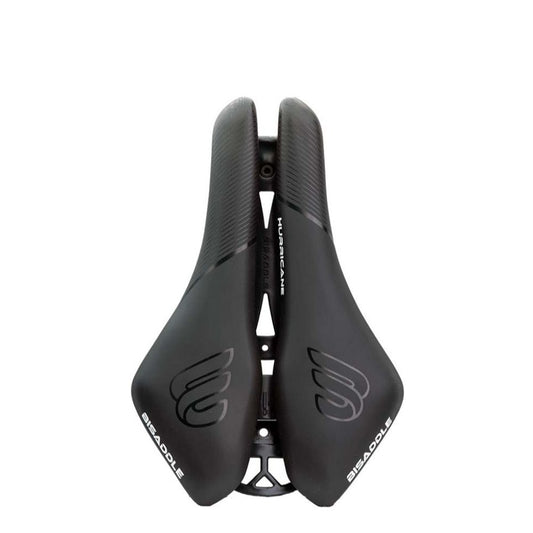
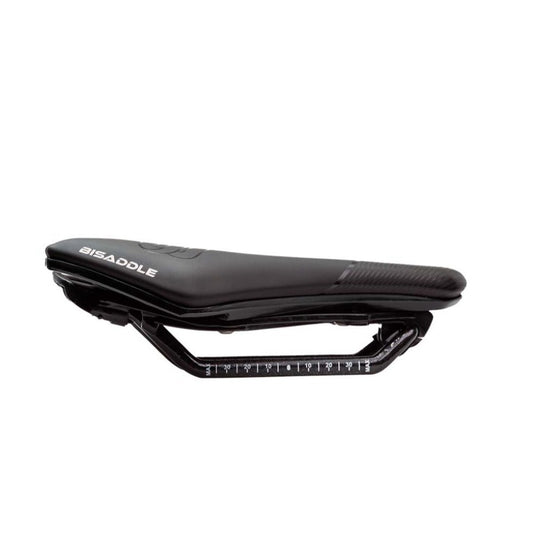
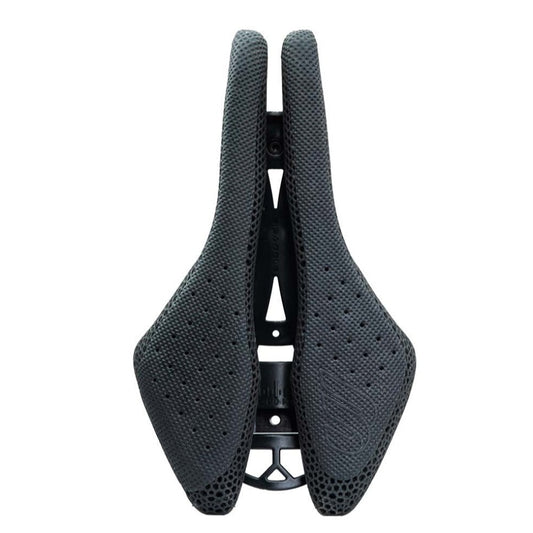
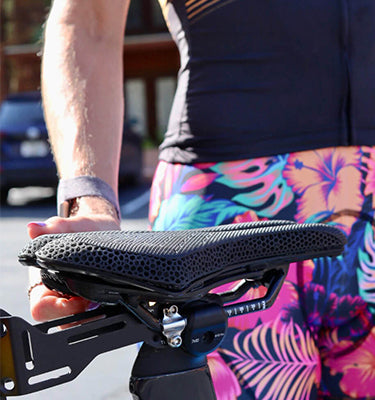
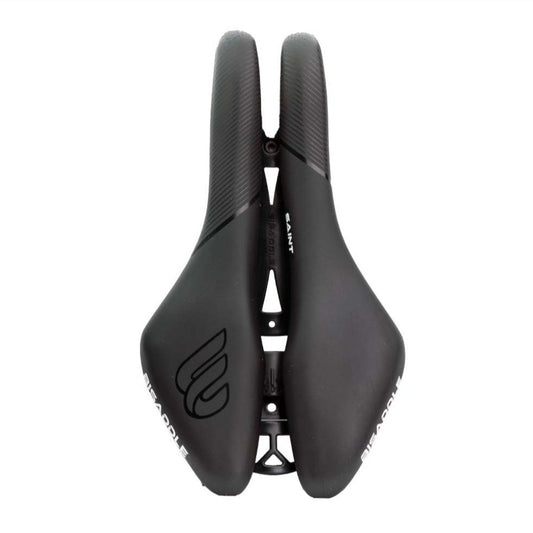
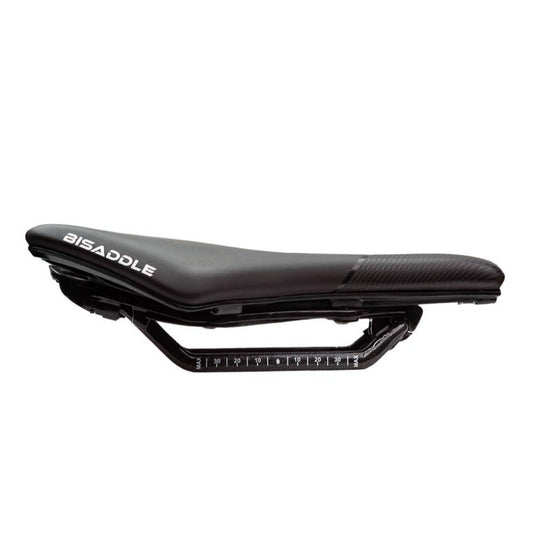
An adjustable-shape saddle attacks that issue directly by letting you tune the platform and the relief channel to your anatomy and position. BiSaddle is the best-known example of this approach: its split design allows the halves to move so you can adjust rear width and the central gap. If you’ve tried multiple fixed saddles and still fight numbness, this “tunable interface” concept is worth taking seriously.
How to test a saddle (so you don’t fool yourself)
You don’t need a lab. You just need a test that’s long enough and realistic enough to expose problems.
- Ride long enough to reproduce symptoms (often 45-90 minutes).
- Use your real positions (hoods, drops, seated climbs—whatever you actually do).
- Treat numbness as a fit failure, not something to “toughen up” through.
- Do an indoor check if you can. Trainers are brutally honest because you move less. If it goes numb indoors, it’s unlikely to magically improve outside.
Where saddle sores fit into men’s health
Numbness gets most of the attention, but saddle sores ruin more seasons than people admit. They’re usually driven by a mix of pressure concentration, friction, and moisture.
A saddle that supports your sit bones evenly and reduces the urge to constantly shift around can lower friction, calm hot spots, and make your whole setup more sustainable—especially on long rides or high-volume training weeks.
Bottom line
If men’s health is the priority, shop for a saddle the same way you’d spec a critical contact point on any machine: focus on where the forces go.
- Support the bones (sit bones/pelvic structure), not soft tissue.
- Choose relief that works in your riding posture, especially when rotated forward.
- Prioritize stable support over plushness for long rides.
- Consider adjustability if fixed shapes keep missing the mark.
The “best” bike seat for men’s health is the one that makes the perineum irrelevant to weight-bearing—because the saddle actually fits how you ride.