Let's cut straight to the chase: choosing the wrong saddle size isn't just about a sore backside. For men, it's a direct threat to your long-term health on the bike. I've spent decades in the workshop and on the road, and I can tell you that numbness is a warning sign you must never ignore. The good news? Getting it right is a straightforward process of measurement and understanding a few key principles. This guide will walk you through exactly how to measure for a saddle that supports your performance and, most importantly, protects your well-being.
The Golden Rule of Saddle Fit
Every piece of advice here stems from one non-negotiable principle: your body weight must be carried by your sit bones (ischial tuberosities), not by the soft tissues of your perineum. When a saddle is too narrow, your sit bones hang off the edges, forcing your sensitive perineal area to bear the load. This compresses nerves and critical arteries, leading to numbness and, as medical studies confirm, a risk of erectile dysfunction with prolonged pressure. The right saddle size is your first and best defense.
Step 1: Find Your Foundation - Measuring Sit Bone Width
This is the most critical measurement you will take. You don't need fancy tools, just a piece of corrugated cardboard and a tape measure.
- Get Setup: Place a sturdy piece of corrugated cardboard (about 2ft square) on a hard, level surface like a bench or stool.
- Assume the Position: Wear thin clothing or your cycling shorts (without the chamois pad). Sit on the cardboard with your feet flat on the floor, knees bent at 90 degrees. Now, lean forward from the hips, rounding your back slightly to mimic your riding posture on the hoods. This is crucial—it changes your pelvic orientation.
- Apply Weight: Carefully lift your feet off the ground for a few seconds, letting all your weight settle onto your sit bones. You'll feel them press down.
- Measure: Stand up. You'll see two clear indentations. Using a tape measure, find the distance from the center of one indentation to the center of the other. Record this number in millimeters.
Most adult men measure between 100mm and 140mm. This number is your anatomical blueprint.
Step 2: Translating Measurement to Saddle Choice
Your saddle's rear platform needs to be wider than your sit bone measurement to provide full support. The rule of thumb is to add 20-30mm to your sit bone width. If you measured 120mm, you should be looking at saddles with a rear width in the 140-150mm range. This ensures your sit bones are fully supported on a flat or gently curved surface, not teetering on an edge.
Step 3: Shape & Features - The Health Safeguards
Width gets the weight in the right place, but the saddle's shape keeps pressure off the danger zone. Here's what to look for:
- Short Nose Design: The era of the long, pointed saddle nose is over for health-conscious riders. A shorter nose dramatically reduces the chance of it digging into your perineum when you adopt a more aggressive, forward-leaning riding position.
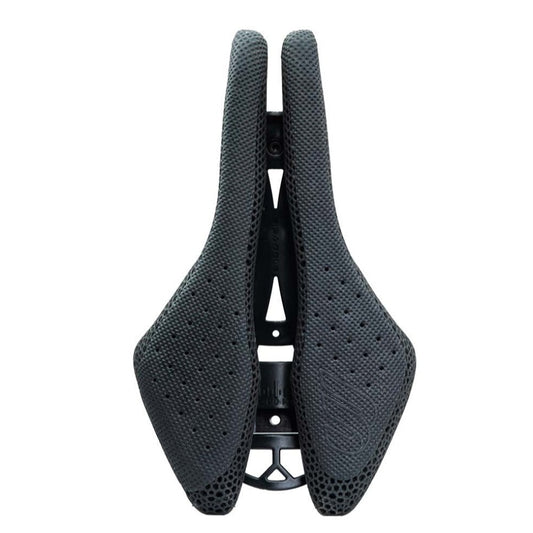
- Central Pressure Relief: This is non-negotiable. A well-designed cut-out or deep channel physically removes material from the area under your perineum. This maintains blood flow and prevents nerve compression. It is the single most important feature for preventing numbness.
- Firm, Supportive Padding: Counterintuitively, a super-soft, plush saddle is often worse. It allows your sit bones to sink in, which can cause the saddle material to bulge up into the perineal area. You want firm padding that supports without deforming.
Consider Your Riding Style
Your posture on the bike dictates the specifics:
Road & Gravel: A short-nose saddle with a cut-out is the modern standard, offering support and relief for a leaned-over posture.
Triathlon / Time Trial: In an extreme aero tuck, the pelvis rotates forward, placing immense pressure on the pubic arch. Here, a noseless or split-nose design is often the only solution that completely eliminates perineal contact and preserves blood flow for long sessions.
Step 4: Installation & The Final Test
You can have the perfect saddle, but poor installation will ruin everything.
- Set the Tilt: Start with the saddle perfectly level. Use a spirit level. A nose-up tilt is a direct cause of perineal pressure. Never tilt the nose upward.
- Dial in Height & Fore/Aft: Ensure your overall bike fit is correct. A saddle that's too high causes rocking and friction; one too far forward can increase soft-tissue pressure.
- Listen to Your Body: On your first few rides, be a scientist. Any tingling or numbness is a red flag and means the fit is wrong. Do not try to "tough it out." Stop, reassess your tilt and position, or reconsider the saddle model.
The Game-Changer: Eliminating Guesswork with Adjustability
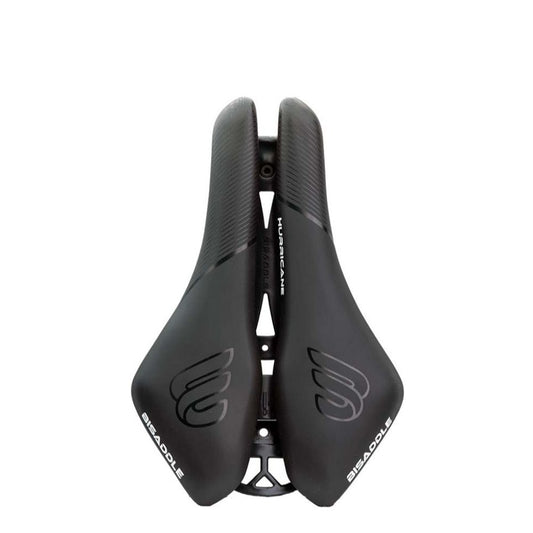
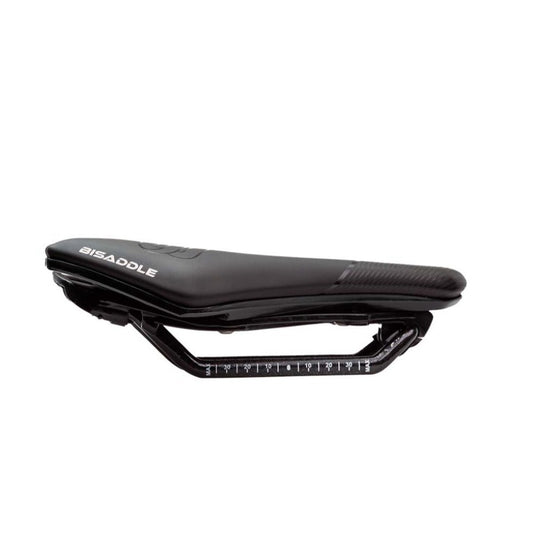
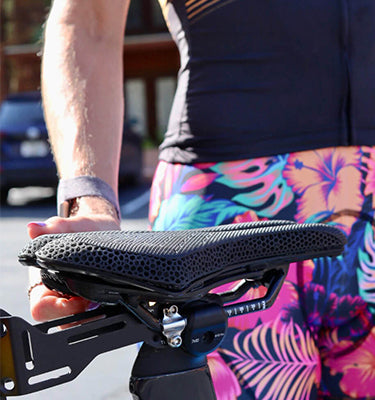
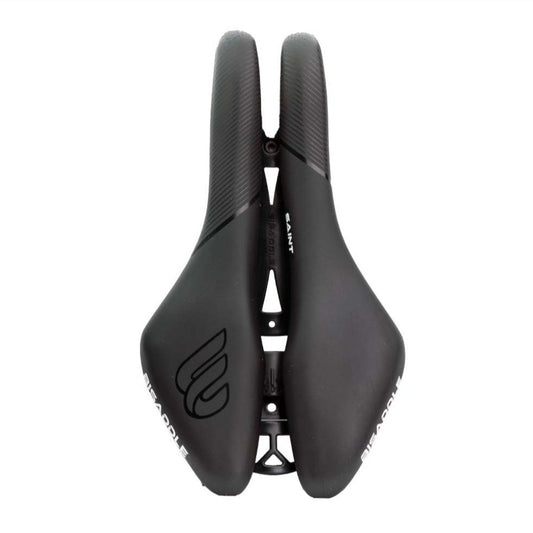
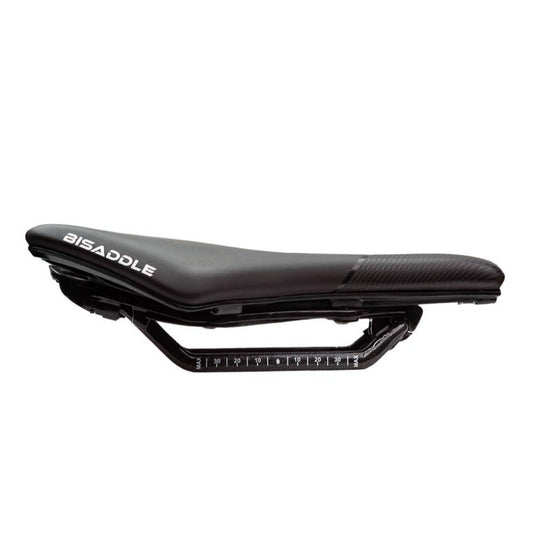
Here's the hard truth: even with perfect measurements, finding the ideal fixed-shape saddle can involve costly trial and error. This is where innovative, adjustable designs change the game. A product like the Bisaddle, with its patented adjustable width, allows you to fine-tune the saddle to your exact sit bone measurement. You can widen it for maximum support or narrow the front to create a custom pressure-relief profile. It turns a multi-saddle guessing game into a single, precise fitting session, ensuring the support is exactly where your anatomy needs it.
Ride Smart, Ride Healthy
Measuring for the right saddle size is the most impactful bike fit adjustment you can make for your health. It's not a luxury; it's a necessity for anyone who spends serious time in the saddle. Take the hour to do it right. Measure your sit bones, understand the importance of shape and pressure relief, and install with precision. Your body—and your performance—will reward you with countless comfortable, powerful miles. Don't let a poor interface be the limit to your riding.