Most bike fit advice treats sit bone width like a shoe size. You sit on a piece of cardboard, measure the marks, and buy a saddle in that width. The number goes on a chart, and the chart becomes the answer.
That works in the shop. It stops working once you lean forward and ride. Your pelvis rotates, your sit bones shift, and the width you measured while sitting upright no longer describes where your body loads the saddle. A fixed saddle has to pick one width anyway.
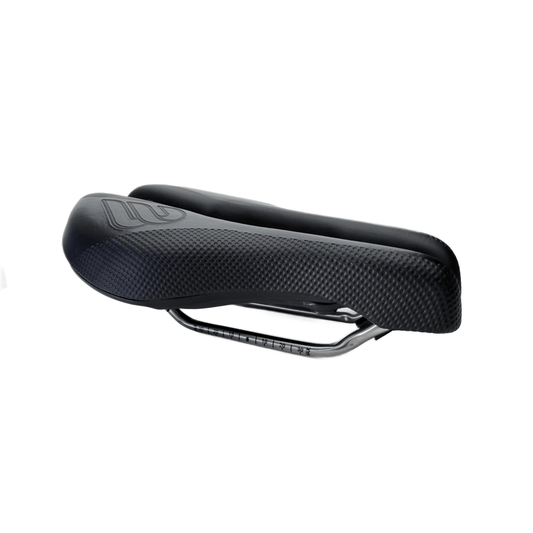
BiSaddle's adjustable design starts from a different assumption: the right width is one you can adjust on the bike.
The measurement is a snapshot, not a setting
A cardboard impression gives you a starting point. Nothing more. In a road or triathlon position, the pelvis tilts forward and the sit bones rotate. The loaded contact points move. A fixed saddle cannot follow them.
If the saddle is too narrow, the sit bones hang over the edges and soft tissue takes the load. If it is too wide, your inner thighs rub and the center can still press where it should not. Most riders with wide sit bones have tried both versions of that failure.
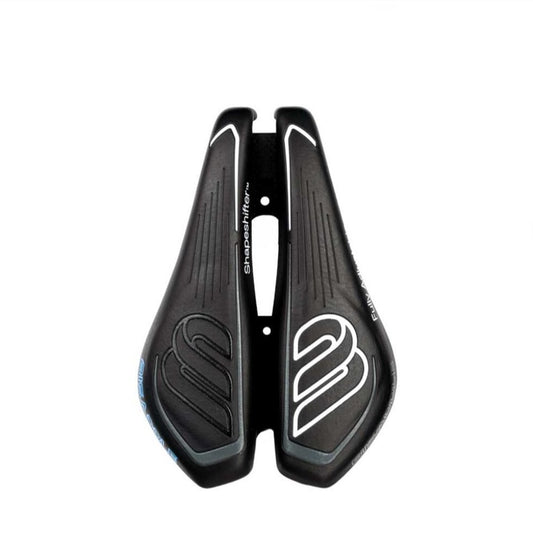
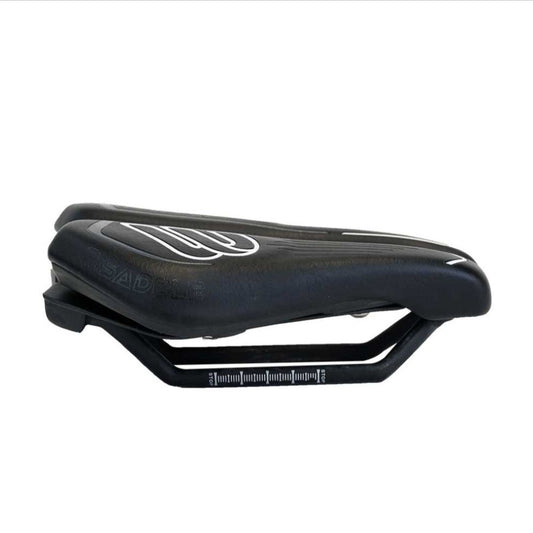
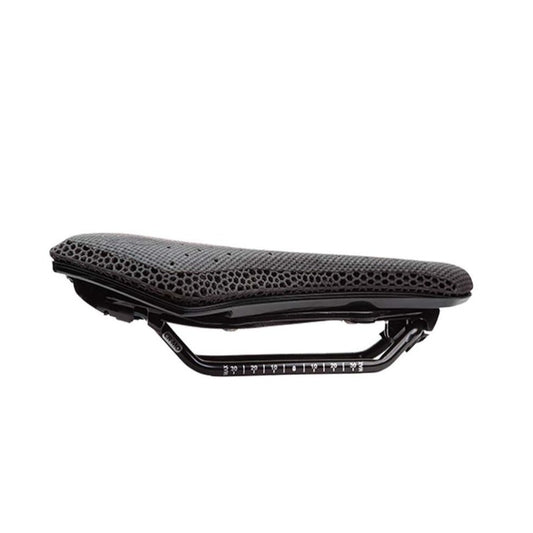
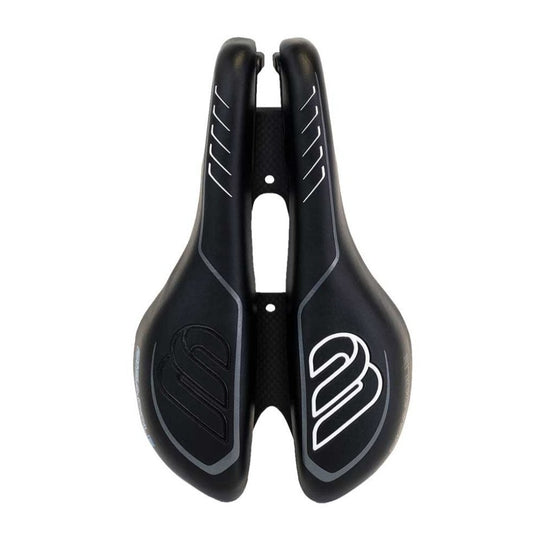
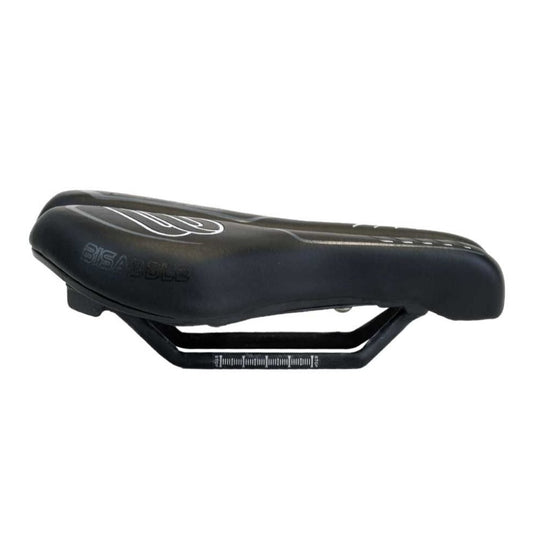
BiSaddle deals with the shift by making the width adjustable. The rear platform spans from about 100 mm to 175 mm, and the two halves slide independently. You can make that change with the saddle still on the bike, which means you test width in your riding position, not in a fitting stand.
What the two halves let you change
BiSaddle's design gives you control over more than overall width.
- Set the rear width to match your sit bones.
- Angle each wing independently to follow your pelvis.
- Narrow the front independently to shorten the effective nose.
- Open the center gap to relieve perineal pressure.
That matters because wide sit bones often come with some left-right asymmetry. A molded one-piece saddle forces both sides onto one plane. BiSaddle lets each wing tilt to match how you sit. The same saddle can then be reconfigured for road, triathlon, gravel, or indoor training.
What the 2002 European Urology study found
In 2002, researchers publishing in the journal European Urology measured penile oxygen pressure while men sat on several saddle shapes. On a narrow padded saddle, oxygen pressure dropped by 82 percent. On a wider noseless shape, the drop was closer to 20 percent.
The study did not blame padding depth. It pointed at where the saddle pressed. A wide saddle without a center relief channel can still push upward into soft tissue. Adding width to the whole platform adds material where the body doesn't need it.
BiSaddle's split design creates a gap between the two halves, and you set how wide that gap becomes. You can open the rear for sit bone support and narrow the front to keep pressure off the pudendal artery. Fixed saddles force one compromise. BiSaddle separates the two functions.
Why extra padding backfires
Men with wide sit bones often hear the same advice: buy a saddle with more padding. That can make things worse. When thick foam compresses under the sit bones, it bulges upward in the center. That bulge presses against the perineum and creates numbness, even when the measured width looks correct.
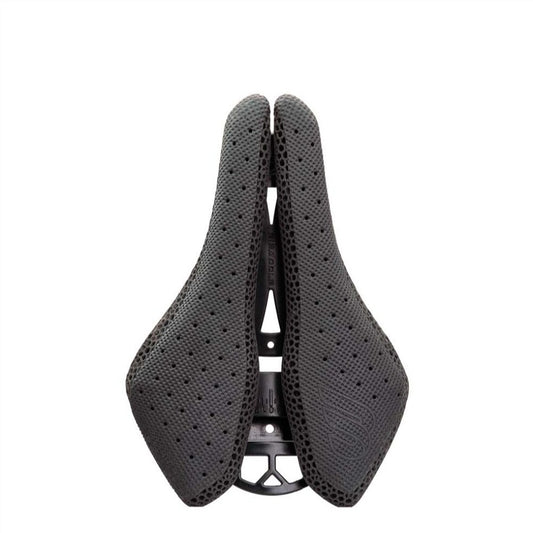
BiSaddle keeps the support surface firm enough to carry the sit bones without bottoming out. The load sits on bone, not flesh. On the BiSaddle Saint model, a 3D-printed polymer foam lattice provides tuned cushioning across the contact surface. The lattice is printed as one piece, so density can vary by zone while the center stays relieved.
Adjust the saddle mid-ride
A saddle that only adjusts before a ride is still a guess. BiSaddle's halves move while the saddle is mounted. If a position feels wrong after twenty minutes, stop, loosen the wings, slide them a few millimeters, and keep riding.
Try this sequence:
- Start from a sit bone measurement as a baseline.
- Ride for twenty minutes and note where pressure builds.
- Stop and change the rear width by a few millimeters.
- Repeat until the rear carries your sit bones and the center stays comfortable.
That cycle turns saddle width into a live setting. It also handles mid-season changes. If you lose weight or gain hip mobility, your loaded sit bone width can shift. With a fixed saddle, that means another purchase. With BiSaddle, you reposition the halves and ride.
A better fit for wide riders
Wide sit bones don't call for a bigger piece of foam. They call for a support width that matches your bones under load. BiSaddle lets you set the rear wide and the front narrow, the geometry many wide riders need for a forward-leaning position.
Your sit bones move when you lean forward. The saddle needs to follow that movement, and BiSaddle gives you the adjustments to make it happen. Start with a measurement, ride, adjust, and lock in what works. The number on the fit card is a guess. The setting you find on the road is the answer.