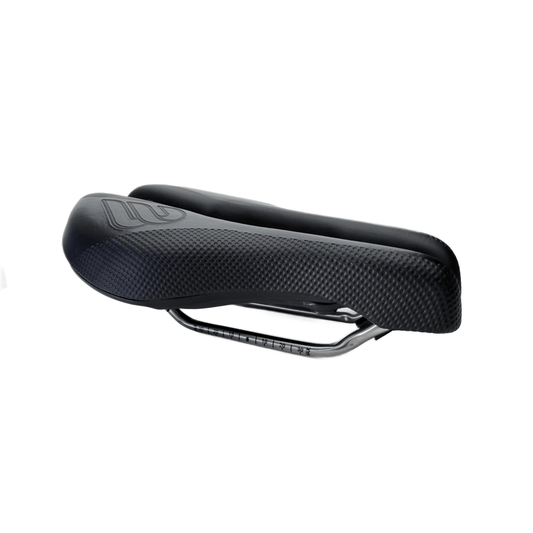
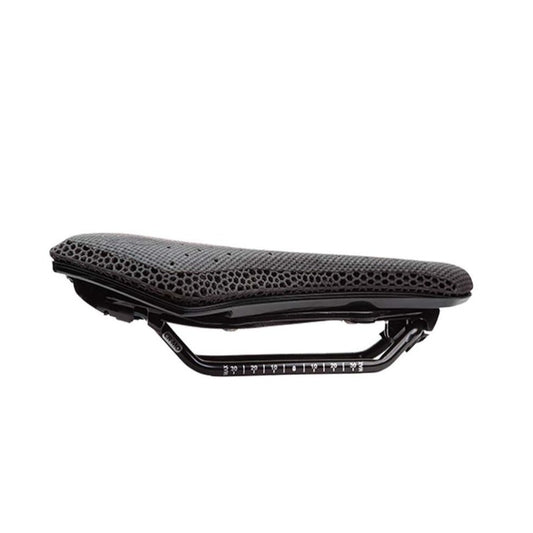
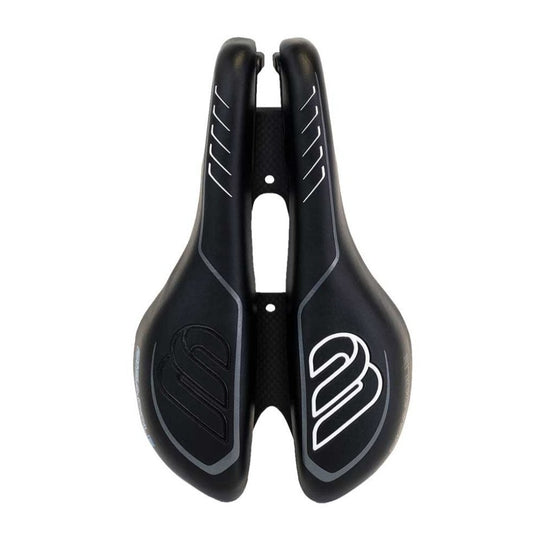
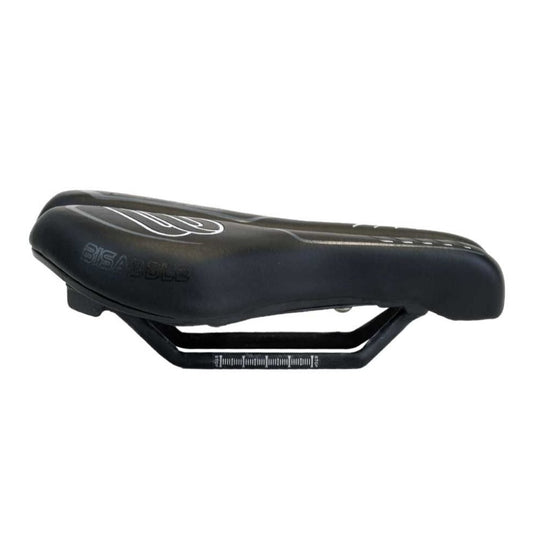
A waterproof saddle cover for men keeps rain off the saddle. That is its only job. It will not change sit bone width, open a central channel, or shorten the nose. On a Bisaddle, those three adjustments are the whole point. When you stretch a cover over an adjustable shell, you add back the pressure the saddle was built to remove.
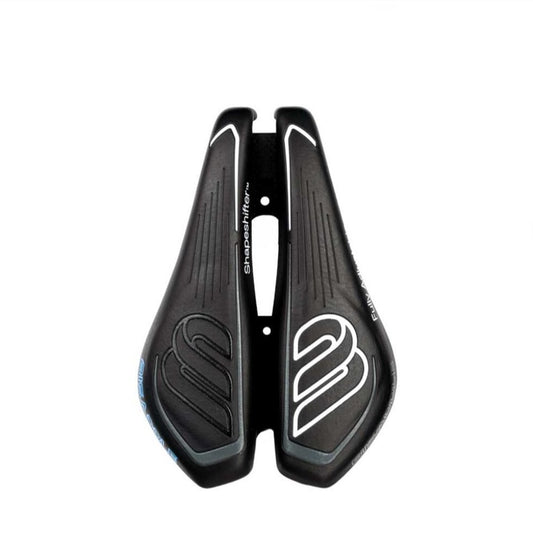
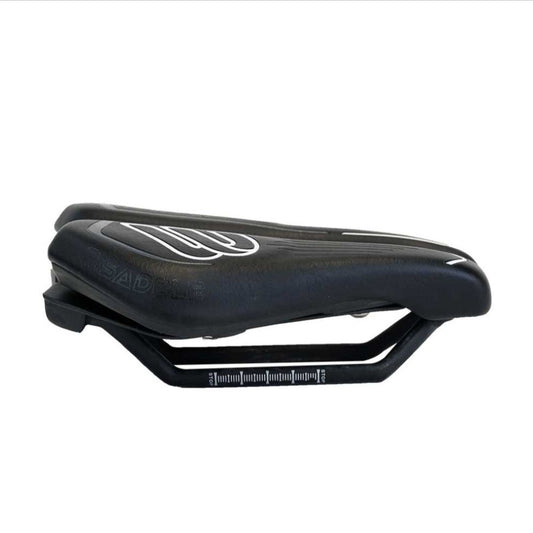
Bisaddle's rear width moves from 100mm to 175mm across two independent shell halves that slide along a rail system, and the front section narrows separately to reduce pressure on the pubic bone when a rider moves into an aero tuck. That adjustability is the core of the design. No cover can match it.
The Cover Turns Into a Pressure Bridge
Pull a waterproof cover over a split shell and the membrane stretches from side to side. If it fits tightly enough to stay put in wind, it forms a taut sheet across the central gap. Under your weight, that sheet sags just enough to touch the soft tissue the gap was meant to unload. You removed a pressure point with the Bisaddle. The cover puts it back.
Then the cover moves as you pedal. A saddle shell stays fixed to its rails. An elastic cover does not. It can bunch under your sit bones, wrinkle near the inner thigh, or slide a few millimeters with each pedal stroke. That movement creates friction. Friction plus pressure plus trapped moisture is the exact recipe for a saddle sore.
What the Urology Research Says
Male cyclists have one specific risk: compression of the pudendal artery and nerve, which run through the perineum and supply blood flow to the genitals. A 2002 urology study measured penile oxygen pressure while riders sat on different saddles. A narrow, heavily padded saddle caused an 82 percent drop in penile oxygen. A wider noseless saddle limited the drop to 20 percent. The researchers concluded that width, not padding, preserves blood flow.
A waterproof cover does not add width. It cannot shorten a nose or open a channel. A snug cover can even pull the two Bisaddle halves slightly inward, reducing the sit bone support you set. The cover's elastic edge presses into the inner thigh. For a rider already worried about numbness, that adds a variable the urology data says you cannot afford.
One analysis of frequent male cyclists found up to four times the rate of erectile dysfunction compared to runners or swimmers. The mechanism is chronic compression of the pudendal structures over years of riding. Bisaddle lets you set the rear wide enough for your sit bones and the front narrow enough to avoid nose pressure. A cover smears the edges of that solution.
Where Bisaddle Fits Into This
Bisaddle's adjustment range covers most male sit bone widths. The rear slides from 100mm to 175mm across two shell halves. The front narrows separately, creating an effectively shorter nose for road or triathlon positions. The split shells open a central gap that acts as a built-in relief channel. You can tune that gap from closed to wide open in a few minutes.
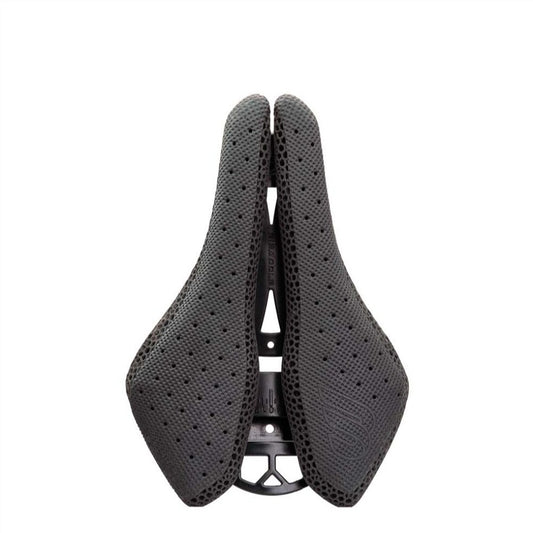
The current lineup includes the Hurricane with standard foam, the Saint with a 3D-printed polymer lattice over the adjustable shell, and the SRT, a noseless variant for aggressive aero positions. The Hurricane and Saint weigh between 320g and 360g depending on rail material. Prices sit between $249 and $349. A rider who spends that money to get the fit right is not served by a $15 elastic sheet that blurs the pressure zones.
On the Saint, the 3D-printed lattice is tuned denser under the sit bones and softer elsewhere. A cover stretched over that lattice adds a uniform membrane that masks those differences. On the SRT, the noseless front removes pubic bone pressure. A cover with a nose pocket puts material back where the rider wanted none.
Moisture Is the Second Problem
A waterproof cover blocks rain. It also blocks evaporation. When you ride in rain with the cover on, sweat cannot escape through the membrane. The surface against your shorts stays wet for hours. That moisture softens the outer layer of skin, a process called maceration. Macerated skin tears more easily under friction. Saddle sore prevention guidance lists friction, pressure, and moisture as the three contributing causes. A waterproof cover delivers two of them at once.
This is why the cover works for a parked bike and fails for a riding bike. If the bike sits outside in rain, a simple shower-cap style cover keeps the saddle dry until you ride. You remove it, stash it, and start with a dry saddle. That is the correct use. Keeping the cover on while you pedal for two or three hours turns a weather accessory into a moisture trap against your skin.
A Better Wet-Weather Protocol
Start by fitting the Bisaddle without any cover. Measure your sit bone width and set the rear halves accordingly. If you feel perineal pressure, widen the central gap 5mm at a time until the pressure disappears. If you slide forward in an aero position, narrow the front. This step removes the compression that leads to numbness and long-term health risk.
Then use a waterproof cover only when the bike is parked. Choose the simplest elastic band style, not a strap-heavy cover meant for riding. Remove it before you start. A wet saddle from rain is less harmful over a two-hour ride than a dry saddle under an impermeable membrane, because the wet saddle still has a central channel and no added pressure bridge.
Wear padded shorts that wick moisture. Do not add a waterproof layer between your skin and the saddle. After a wet ride, wipe down the Bisaddle shell halves and check the adjustment bolts for corrosion if you ride salted winter roads. You cannot do that with a cover on.
A waterproof cover belongs on the bike rack, not under your sit bones. For a man on a Bisaddle, the pressure relief you paid for is worth more than the illusion of a dry saddle at mile forty. Set the width, open the gap, and save the cover for the parking lot.