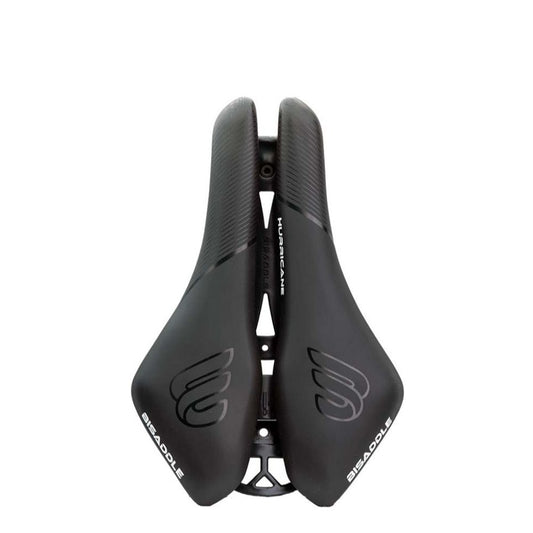
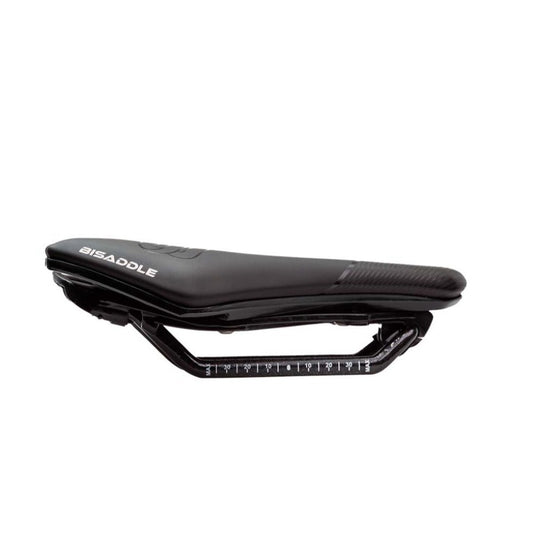
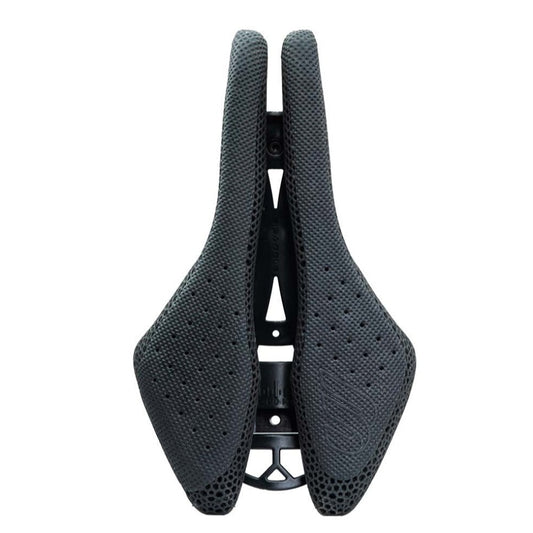
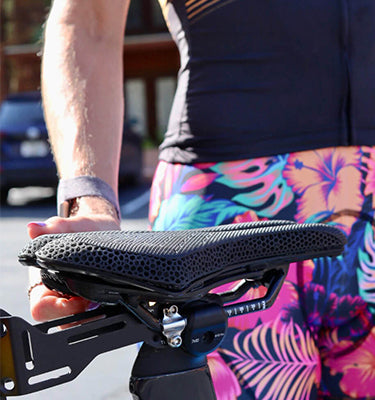
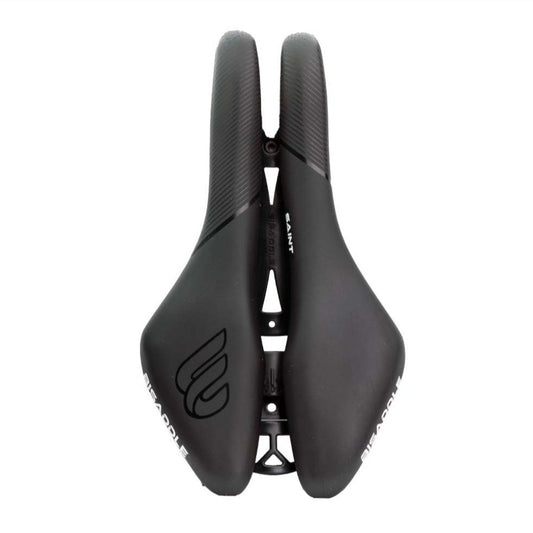
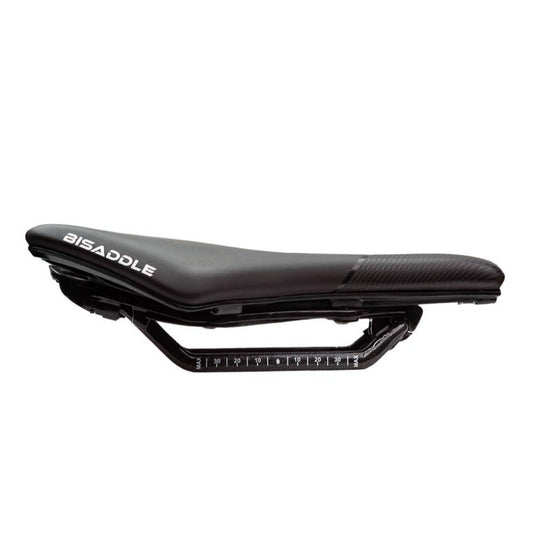
A quality saddle is the single most important piece of contact-point equipment on your bike. It's the foundation of comfort, supporting your skeletal structure—specifically your sit bones—to keep pressure off sensitive soft tissues and nerves. But even the most expertly designed and perfectly fitted saddle isn't a magic carpet. That's where a proper pair of padded cycling shorts comes in—not a luxury, but an essential partner. Think of it as a system: the saddle provides the primary structural support, while the shorts manage friction, moisture, and micro-pressure at the secondary interface.
For women cyclists—whose anatomy often includes a wider pelvis and different soft tissue structures—this system is especially critical. A great saddle plus the right shorts is the definitive one-two punch for true, lasting comfort on long rides.
1. Friction Management: The Shorts' Primary Job
Your body moves on the saddle, even subtly. Pedaling involves micro-shifts in position, and on rough terrain you move more. That movement creates friction between your skin and the saddle cover.
- The Problem: Friction leads to chafing, hot spots, and is the primary cause of saddle sores—painful skin irritations or infected hair follicles.
- The Solution: The chamois (the padded insert) in cycling shorts is made from a soft, often multi-density foam. Its surface is slick and designed to move with your skin, while the tight-fitting fabric keeps the chamois itself firmly in place against the saddle. This drastically reduces shear forces on your skin. A good saddle has a smooth, durable cover, but the shorts actively prevent the rubbing.
2. Moisture Wicking and Hygiene
Sweat is inevitable. A damp environment softens skin, making it more prone to abrasion and bacterial growth.
- The Problem: Moisture trapped between you and the saddle accelerates chafing and can lead to fungal issues or worsened saddle sores.
- The Solution: Modern chamois pads use moisture-wicking, often antimicrobial, fabrics that pull sweat away from your skin to the surface where it can evaporate. This keeps the contact area drier. And remember: never wear underwear under cycling shorts—it defeats this wicking action and creates new seams for friction.
3. Pressure Distribution and Micro-Cushioning
The saddle's shape and width handle the macro-support of your sit bones. The chamois provides a thin, conforming layer of cushioning on top.
- The Problem: Even on a perfectly supportive saddle, minor pressure points from road vibrations or the firmness of the saddle shell remain.
- The Solution: The chamois acts as a final pressure-dispersion layer. It's not meant to be a thick pillow—excessive padding can actually create pressure points. Instead, it's a precision dampener that absorbs high-frequency vibrations and fills minor gaps between your unique anatomy and the saddle's fixed shape.
4. Seamless Integration for Female Anatomy
This is the most crucial point. A women's-specific saddle is engineered to support wider sit bone spacing and relieve pressure on soft tissue. A women's-specific chamois complements that design.
- The Fit: Typically wider in the back to align with the saddle's support zones.
- The Relief Zone: A cut-out or very low-profile seam in the center avoids pressure on the perineal area, matching the saddle's own relief channel. No material bunching up to negate the saddle's design.
- The Coverage: Full, comfortable coverage without edge seams falling in high-pressure zones—vital for labial comfort and preventing irritation.
Practical Takeaways: Building Your Comfort System
- Prioritize the Saddle First. Get a professional bike fit or at least a saddle width measurement. Your saddle must correctly support your sit bones. An adjustable saddle is a powerful tool here, letting you dial in the exact width and angle for your anatomy, ensuring primary support is perfect.
- Choose Shorts to Complement, Not Compensate. Don't buy overly thick, padded shorts hoping they'll fix a bad saddle. They won't. Select a quality short with a well-placed, multi-density chamois that feels unobtrusive when you're standing.
- Fit is Non-Negotiable. Cycling shorts should be snug—like a second skin—without any bagging or wrinkles. Wrinkles in the chamois create seams.
- Use Chamois Cream. For rides over 90 minutes, apply a quality chamois cream. It provides extra anti-friction and antimicrobial protection, completing the trifecta of saddle, shorts, and cream.
- Quality Over Quantity. Invest in one or two excellent pairs of shorts rather than several cheap ones. The difference in seam placement, fabric, and pad technology is profound.
The Bottom Line
For women cyclists, a great saddle and a great pair of shorts are synergistic components of your bike fit. The saddle is the structural bedrock, designed to carry your weight on your sit bones. The shorts are the intelligent interface, managing the dynamic environment of movement, moisture, and micro-vibrations. One cannot fully succeed without the other.
Get your saddle support dialed in first—your sit bones will thank you. Then invest in a pair of high-quality, women-specific shorts that protect your skin and enhance that support. Together they form the essential foundation that lets you focus on the ride, not the discomfort.