You finish a long ride and find chamois cream smeared across the saddle nose. The first instinct is to grab a wet wipe or spray bottle and scrub. That habit, inherited from leather saddle care, often wrecks a modern synthetic cover.
For women the stakes go beyond a cracked surface. A 2023 survey of female cyclists found 35 percent had experienced vulvar swelling, and nearly half reported long-term swelling or asymmetry from saddle pressure. Cleaning matters, but not the way most guides suggest.
Leather-Era Advice Still Circulates
Most saddle cleaning advice dates back to vegetable-tanned leather saddles. Riders oiled and polished them because leather tolerates oils and waxes.
Modern covers are synthetic microfiber. They are lighter and waterproof, but they react differently to chemicals. Alkaline detergents strip plasticizers. Alcohol and bleach degrade polyurethane. Saddle soap, made for leather, leaves a film on synthetic fabric that traps bacteria. The old advice never got updated.
That mismatch is the source of much premature wear. Women are still told to scrub a polyurethane cover with a product meant for a 1920s leather seat.
What a Women's Saddle Actually Contacts
A women's saddle surface sees sweat, chamois cream, menstrual fluid, urine micro-droplets, and road spray. The vulvar and labial skin contact area is more mucosal and sensitive than skin on other contact zones. An unclean saddle can harbor Staphylococcus aureus and other bacteria that cause folliculitis and abscesses.
The swelling documented in the 2023 survey makes cleaning a health issue. The goal is to remove biological film without dissolving the cover. That is a materials science problem.
Identify the Material Before You Choose a Cleaner
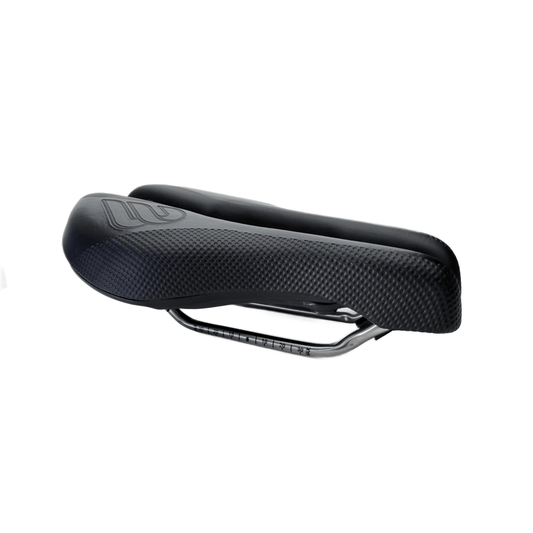
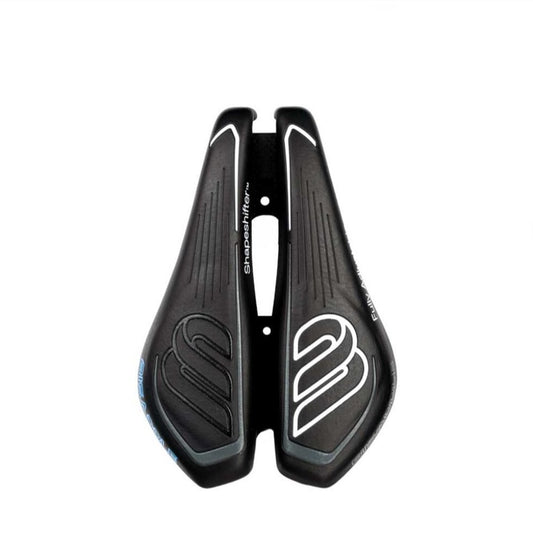
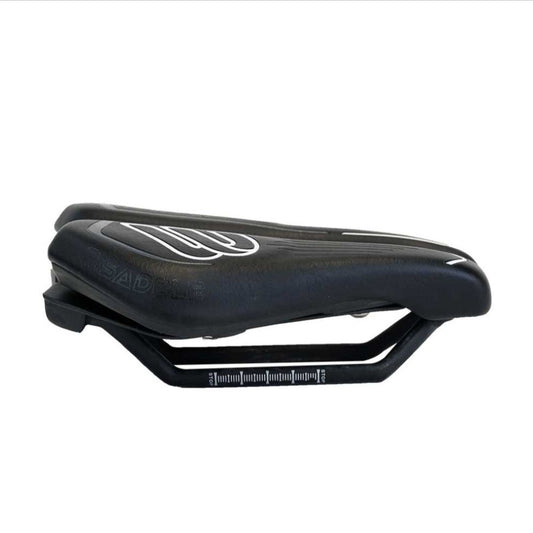
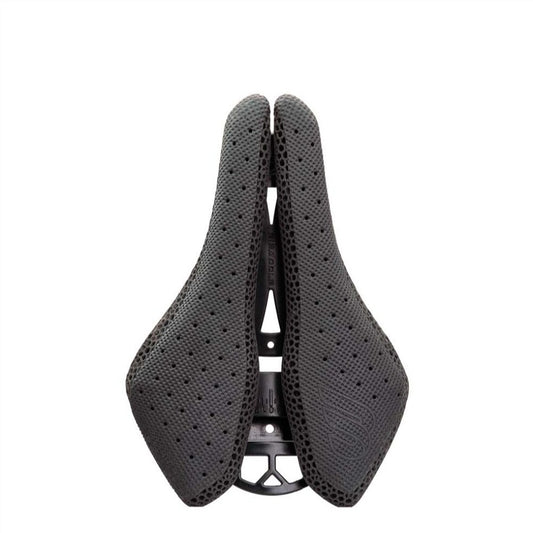
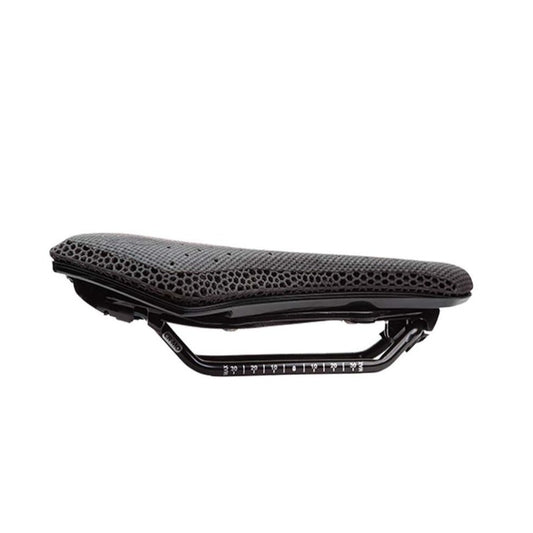
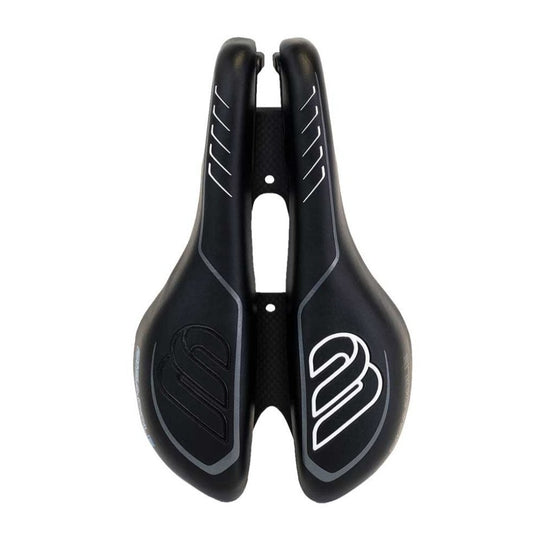
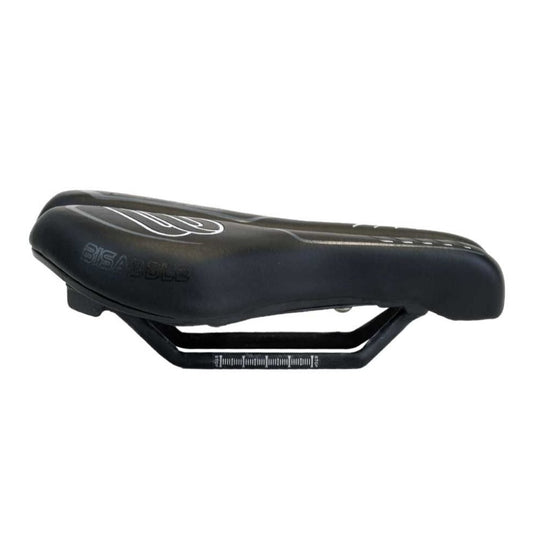
Before you wet a cloth, identify what you are actually cleaning. A BiSaddle adjustable saddle has three material zones: a synthetic microfiber cover over high-density foam, an aluminum or carbon rail system, and on the Saint model, a 3D-printed polymer lattice surface. Each zone has different tolerances.
Synthetic microfiber covers handle pH near neutral, roughly 6 to 8. Aluminum rails corrode below pH 5 and above pH 8. Carbon rails tolerate a wider range but dislike abrasive pastes. The 3D-printed lattice is sensitive to petroleum solvents.
Start with the material list, then choose a cleaner. Here is what I reach for and what I skip.
Cleaners to Avoid
- Hand soap: often alkaline enough to dull the cover.
- Bleach and hydrogen peroxide: crack polyurethane.
- Vinegar: acidic and will pit aluminum rails.
- Petroleum solvents: degrade the 3D-printed lattice.
Dish soap, diluted in water, stays near neutral and works for most grime.
Daily Ritual: Wipe and Inspect
Museum conservators use four rules: least intervention, spot testing, reversibility, and documentation. Those rules transfer to saddle care.
After every ride, wipe the cover dry with a clean microfiber cloth. Focus on the nose, the rear contact points, and the central channel between the adjustable halves. Dried sweat and salt crystals abrade the cover if left in place. This daily wipe does more to extend saddle life than any monthly cleaning.
Monthly Cleaning Protocol
Once a month, mix one drop of pH-neutral liquid castile soap or mild dish soap in 500 ml of lukewarm water. Dampen a microfiber cloth, wring it nearly dry, and wipe the cover. Do not pour water on the saddle. Do not submerge it. Water traveling into the foam or the adjustable rail channels causes corrosion and mold.
For chamois cream residue, use a soft-bristled toothbrush dipped in the same solution. Scrub only the affected area, then wipe with a water-dampened cloth. For blood or menstrual residue, spot clean immediately with cool water, not hot. Hot water sets the proteins.
Disinfect only when needed. If a skin infection or persistent odor occurs, wipe the cover with a solution of 70% isopropyl alcohol, but test a hidden spot first. Alcohol dries synthetic covers over time. A diluted benzalkonium chloride spray with 30 seconds of contact time also works, but check the material label. Never use bleach or hydrogen peroxide on any synthetic saddle surface.
Dry completely. Set the saddle cover-side down on a dry towel for 15 minutes, then turn it over and wipe once more. Let it air dry out of direct sun. UV radiation breaks down polyurethane faster than any cleaner.
Hardware Needs Attention Too
A fixed saddle hides its rail hardware under the shell. A BiSaddle's adjustability creates a maintenance point most fixed saddles do not have: the two halves slide on rails and lock with bolts. Salt, sweat, and chamois cream accumulate in the central channel and around the bolt heads. That residue hardens, corrodes threads, and makes future adjustments difficult.
Every two months, loosen the adjustment bolts slightly and brush away debris with a dry toothbrush. Wipe the exposed rail sections with a damp cloth, then dry them immediately. Apply one drop of food-grade silicone lubricant to the rail threads and the adjustment mechanism. Wipe off excess so it does not migrate to the cover. Do not use petroleum-based chain lube on saddle hardware; it attracts dirt and degrades some plastics.
The 3D-printed polymer lattice on the Saint model has an open structure that can trap moisture. Clean it with the same diluted pH-neutral solution, using a soft brush in a single direction. Rinse with a wrung-out cloth, not running water. Let it dry completely before the next ride. The lattice should remain white and flexible. If it turns yellow or stiff, the cleaner you used was too aggressive.
Why Overcleaning Backfires
Many riders clean their saddle after every ride with a wet wipe or disinfectant spray. Frequent alcohol exposure softens and swells polyurethane topcoats, then leaves them brittle as the solvent evaporates. The cover cracks at the flex points near the nose and the rear edge. A cracked cover traps bacteria and moisture, which is exactly what the cleaning was meant to prevent.
Spot cleaning once a month is enough for most riders. Daily dry wiping handles the main risk. Reserve chemical cleaning for visible contamination or a diagnosed skin infection. If you ride in wet or muddy conditions, wipe the rails and underside after the ride, but leave the cover alone unless mud has caked into the texture.
Inspection beats cleaning. Five minutes with a bright light and a magnifying glass will catch seam wear, cover delamination, and salt buildup before they become problems. Write down what you observe. A simple log of when you cleaned, what you used, and what the cover looked like will help you spot a bad cleaner before it ruins the saddle.
What the Future of Saddle Materials Means for Care
The materials inside a women's saddle are changing. BiSaddle's Saint uses a 3D-printed lattice instead of traditional molded foam. That shift opens the door to embedded sensors for pressure mapping, temperature, and moisture inside the saddle. A saddle that measures its own surface condition will change cleaning guidance again.
Self-cleaning antimicrobial coatings may reduce the need for disinfectants. Modular covers that detach for machine washing are another likely path. None of those developments will make material identification unnecessary. They make it more important. A sensor-laden saddle cleaned with the wrong solvent can fail electronically as well as mechanically.
The rule stays the same: know the material, use the least aggressive cleaner, and inspect before you wipe. Effective women's saddle care starts with understanding that a saddle cover is a thin polymer skin under constant biological load. Clean it gently. Inspect it often. Let it dry. That protocol protects both the rider's health and the saddle's lifespan.