Men who ride distance own a drawer full of saddle accessories. The inventory usually looks like this:
- Chamois cream for friction
- Padded liners for extra cushion
- Gel covers for softness
- Suspension seatposts for vibration
Each one adds a layer between the body and the saddle. None of them change where the saddle supports your sit bones. That mismatch is why the numbness comes back.
The Accessory Drawer Problem
Before synthetic shells, men broke in leather saddles for hundreds of kilometers. The leather molded into two depressions that matched their sit bones. Riders who wanted relief sooner bought padded covers. Those covers felt soft on day one but didn't change the shell width. A narrow leather shell under a wool cover was still narrow. A too-wide shell with a gel pad was still too wide.
Accessories softened the surface. They left the support structure untouched. Men kept buying thicker shorts and more expensive creams. The discomfort returned because the real problem was anatomical.
Numbness Is a Blood Flow Problem
The male perineum contains the pudendal artery and nerve. When a saddle nose presses through soft tissue, it compresses both. In 2002, European Urology published a study that measured penile oxygen pressure while cyclists sat on different saddles. A narrow, padded saddle produced an 82 percent drop in oxygen. A wider noseless saddle held the drop to about 20 percent.
Padding was present in both conditions. The difference was structural. One epidemiological analysis later found up to a four-fold higher rate of erectile dysfunction in frequent male cyclists compared with runners and swimmers. The mechanism is prolonged arterial compression, not skin friction.
A soft layer redistributes pressure only slightly while the sit bones remain unsupported. Body weight shifts forward. The tissue compresses. Numbness follows. You can apply more cream. The pressure remains.
The Sink Effect
A gel cover deforms under your weight. The material under your sit bones compresses. The center holds its shape because it carries less load. Your sit bones sink into the cover. That center then rises into your perineum.
Men often read that pressure as a need for even more padding. The next cover is thicker. The sink deepens. The original fit problem was never thickness. It was a mismatch between sit-bone spacing and the saddle shell.
Adjustable Width: The Bisaddle Difference
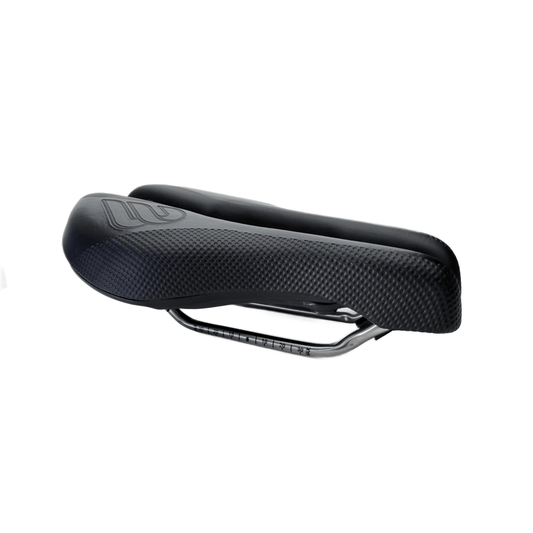
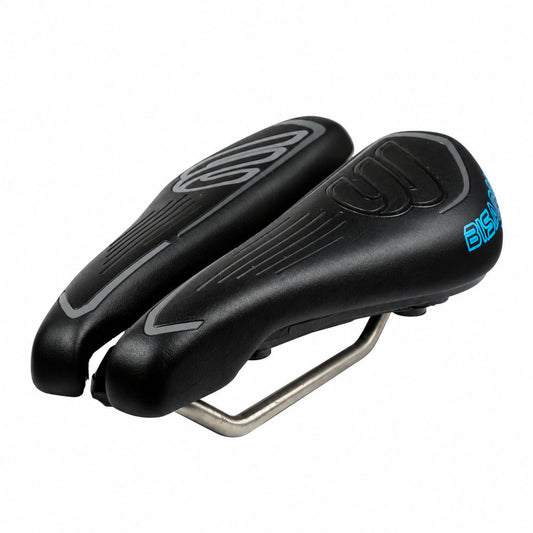
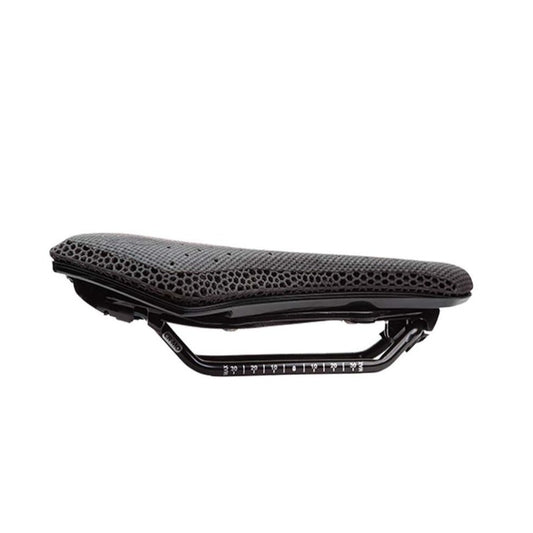
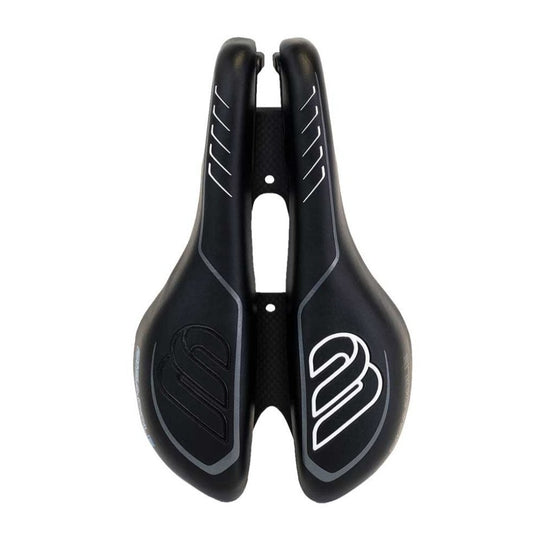
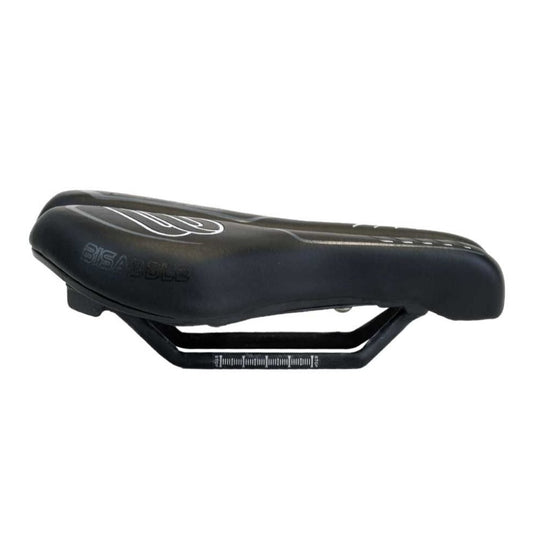
Bisaddle builds support into the shell instead of asking a cover to compensate. The saddle splits into two halves. Each half slides sideways and pivots. Rear width adjusts from 100 mm to 175 mm to match sit-bone spacing. If your sit bones measure 120 mm apart, set the rear to 120 mm. If they measure 140 mm apart, open the halves to 140 mm.
The front narrows independently. A gap opens between the halves to remove pressure from the perineum. The gap width changes with the rear width, so the relief channel follows your anatomy instead of coming in one fixed size.
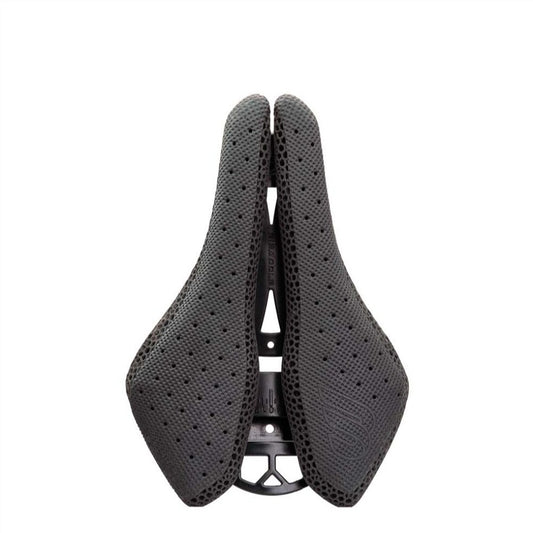
The halves also tilt independently to change the side profile. This matters for men who rotate the pelvis forward in an aero position. Bisaddle's Saint model adds a 3D-printed polymer foam surface over that adjustable shell. The printed lattice replaces a single-density foam block. Bisaddle models list between $249 and $349 in most configurations.
Bisaddle also sells a fully noseless variant. Removing the nose eliminates the main source of perineal compression. That option suits men who spend hours in a fixed aero position or who have already felt numbness.
One Saddle, Three Positions
The same Bisaddle can serve road, gravel, and triathlon. A triathlete narrows the front and tilts the halves for an aero tuck. A gravel rider widens the rear for an upright climb. A road rider sets a middle width for long, steady efforts. You get this versatility from adjustment points, not from swapping covers.
Chamois cream still reduces friction in hot, humid conditions. It no longer has to mask pressure sores caused by a narrow nose. Thick padded shorts become less important because the load sits on bone rather than soft tissue. A gel cover becomes unnecessary because the saddle width now matches your sit bones.
Set It Up Right
Start with a measurement. Then follow these steps:
- Sit on a piece of corrugated cardboard or memory foam. Two indentations will appear.
- Measure the center-to-center distance in millimeters.
- Open the rear halves of your Bisaddle until the rear width matches that number.
- Tighten the adjustment bolts.
- Narrow the front until you feel support on the pubic rami without soft tissue compression.
- If you ride in an aero position, tilt the front halves slightly forward to match pelvis rotation.
- Test on a trainer for ten minutes. Adjust again if any pressure appears in the perineum.
The process takes one afternoon. It replaces weeks of trial and error with different covers and pads.
Measurement Beats Material
The 2002 study gave us the logic. Support the sit bones. Keep pressure off the perineum. No gel cover or extra chamois cream can do that with the same precision as the saddle itself.
Bisaddle's adjustable width and angle does both. It matches your anatomy instead of asking a soft layer to hide the mismatch. The next time a saddle hurts, measure your sit-bone width before buying another cover. Then adjust the saddle. That one change saves money on accessories and protects the blood flow that keeps you riding for decades.