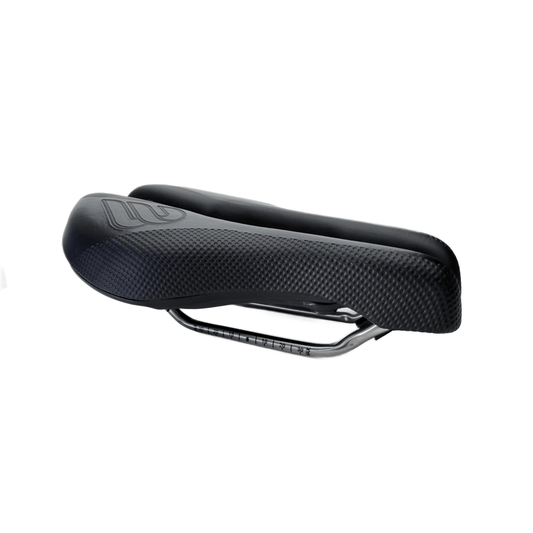
You clip in, start pedaling, and the flywheel starts spinning. The workout software tells you to stay seated and hold a power target. Forty minutes later you shift around on the saddle for the tenth time. That discomfort comes from the saddle. On a road ride, you coast on descents, stand for climbs, shift your hips at stoplights, and ease off the saddle for a few seconds at a time, but a stationary bike removes every one of those small recoveries.
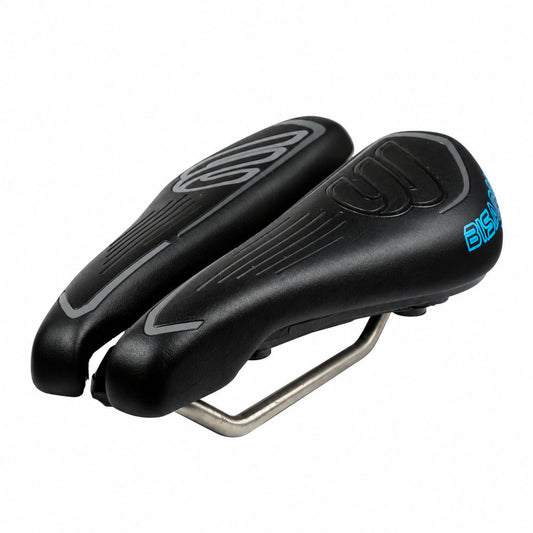
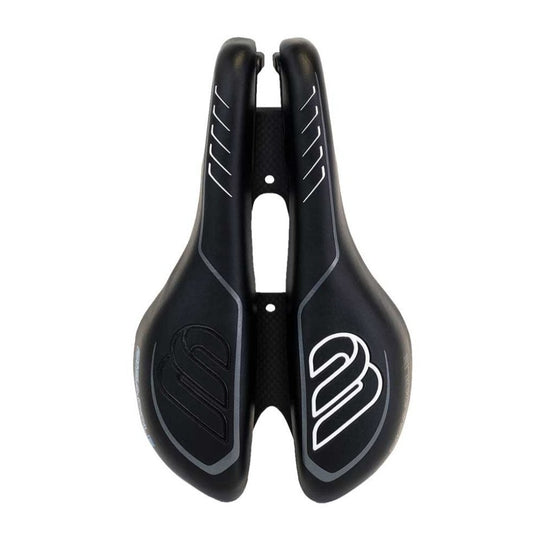
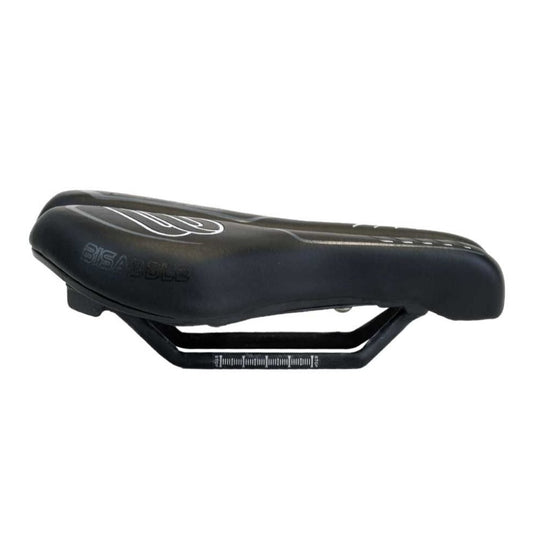
Indoors, you sit in one place and pedal continuously. The same soft tissue presses into the same saddle surface for 45 or 60 minutes. A saddle that felt fine on a 30-mile outdoor ride can turn painful on a one-hour trainer session. The pressure never relents. Bisaddle's rear width slides from 100mm to 175mm, and each half tilts on its own. That lets you fit the saddle to your sit bones instead of forcing your sit bones onto the saddle.
Indoor Sweat Makes Pressure Points Worse
On a road bike, you leave the saddle without thinking. A descent, a stop sign, a quick sprint. Each one changes where your weight lands. On a stationary bike, the flywheel keeps turning whether you sit or not, and the software keeps you in one position for the entire interval. Your sit bones and perineum stay under constant load.
Sweat adds friction. Moisture softens the skin and keeps your chamois wet against the saddle. A pressure point that barely registered outdoors becomes a hot spot after 40 minutes. The saddle cannot move with you or wick moisture away. Its shape has to do more work.
Thicker Foam Pushes the Problem Into the Perineum
Most men reach for a softer, thicker saddle when indoor rides hurt. That move often backfires. A thick foam layer deforms under your weight, sinks at the sit bones, and pushes up in the middle. The nose then presses into the perineum, which is the tissue you need to protect most.
Bisaddle takes a different approach. The seating surface supports the bony landmarks, the ischial tuberosities. The split platform removes material where soft tissue would bear load. With the rear halves set apart, a central channel opens down the length of the saddle. You control that channel width.
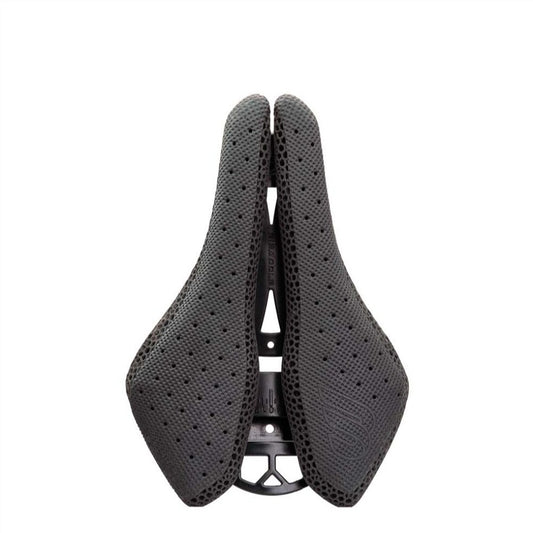
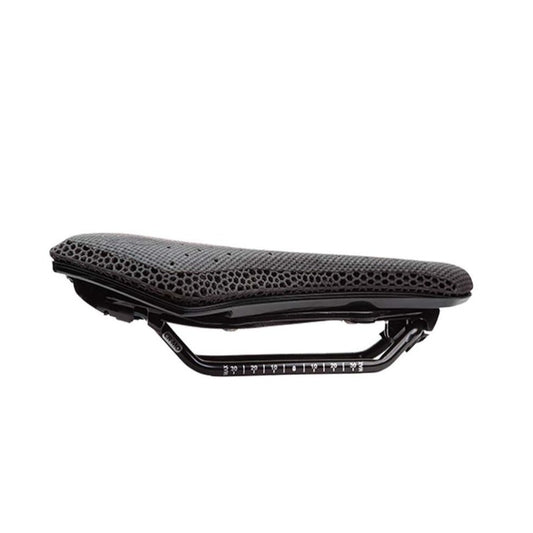
The Bisaddle Saint model uses a 3D-printed polymer lattice as the support layer. It cushions high-pressure zones without a thick gel pad that deforms and pushes back.
Fixed Width Leaves Most Men Unprotected
Men's sit bone spacing varies across a broad range. A saddle sold in one fixed width fits some riders and leaves others sitting on nerves and arteries inside the pelvis. Bisaddle's rear width adjusts from 100mm to 175mm, a span that covers the typical variation in male sit bone distance.
Indoors, this matters even more than outdoors. A spin bike puts you upright. A trainer setup can push you forward. Each position changes how your pelvis contacts the saddle. With Bisaddle, you widen the rear for an upright spin class and narrow it for a forward lean. You do not need a second saddle. If your weight changes or you switch indoor bikes, you re-measure and adjust.
Angle Adjustment Matches Pelvic Rotation
Forward-leaning positions rotate the pelvis and move weight toward the front of the saddle. A fixed saddle makes you accept that shift. Bisaddle's two halves tilt independently. You can lower the nose on one side or change the rear profile until pressure sits on bone.
That same adjustment helps if your hips sit slightly uneven. A rider with one hip higher can tilt one half a degree or two. The saddle then mirrors your actual contact pattern, even when that pattern is asymmetric.
Blood Flow Data Explains Why Width Matters
A 2002 urology study measured penile oxygen pressure while riders sat on different saddle designs. A narrow, heavily padded saddle caused an 82 percent drop in penile oxygen. A wider, noseless design limited the drop to about 20 percent. The researchers found that width protected blood flow more than padding did.
On a stationary bike, you sit for the entire workout with no coasting breaks to restore circulation. The saddle width has to protect you. Bisaddle's adjustable platform lets you set the rear wide enough to support your sit bones and keep the perineal arteries open. You can also narrow the front halves to remove nose pressure.
Setting Up Bisaddle on a Stationary Bike
Start by measuring your sit bone distance.
- Sit on a piece of corrugated cardboard placed on a hard chair.
- Stand up and mark the centers of the two deepest indentations.
- Measure between them in millimeters.
- Set Bisaddle's rear width to that number and mount the saddle.
- Ride for 20 minutes at low resistance.
Dialing in the width
If you feel pressure in the center, widen the rear halves a few millimeters at a time until the pressure shifts to your sit bones. If one side feels sharper, adjust that half's angle. For an upright spin bike, start wider. For a forward trainer position, narrow the front and check that the nose does not contact your perineum when you drop your chest toward the bars.
Indoor Riding Demands More From a Saddle
Stationary riding removes the micro-movements that restore blood flow. A fixed saddle cannot compensate. Bisaddle's adjustable width and independent angle control give you the two things that matter indoors: where the bones sit and where the soft tissue does not.
Set the rear width to your sit bone measurement. Open the central channel as needed. The same saddle can move from a winter spin bike to a summer smart trainer without losing fit. That is a mechanical solution to a pressure problem you can measure.