Most road saddle fittings start with one measurement: the distance between your sit bone centers. That number sets the rear width. It does not tell you how your pelvis rotates in the drops or where soft tissue takes load. Missing those details explains why many women finish long rides numb, sore, or dealing with tissue damage that keeps them off the bike.
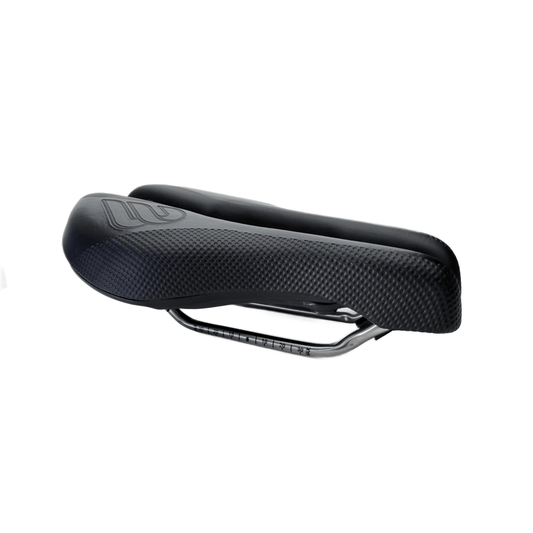
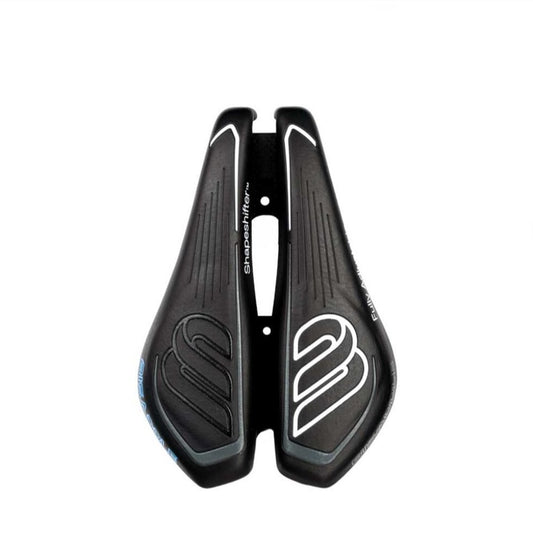
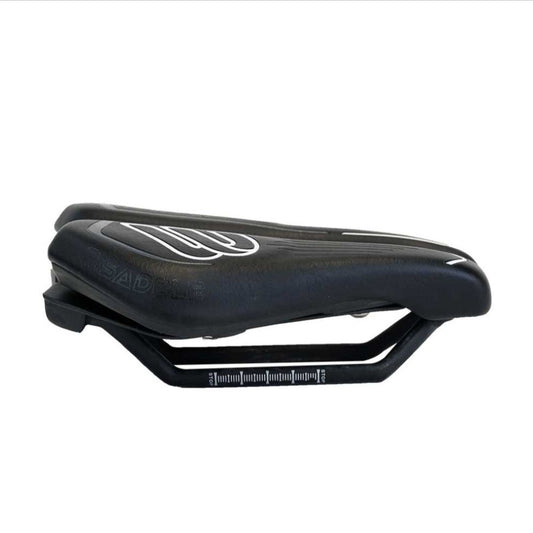
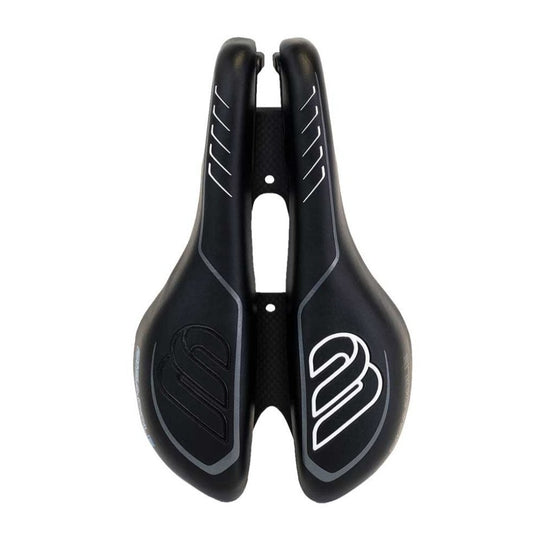
Bisaddle approaches the problem differently. The saddle's left and right halves slide and pivot independently. You can set the rear width from roughly 100 mm to 175 mm to match your sit bone centers. The front can open into a split nose or close to a narrow profile depending on your riding position. Each half angles on its own. Instead of choosing a fixed shape, you tune one saddle until the load moves onto bone and away from soft tissue.
Fixed saddles leave the front half of the fit on the table
A fixed saddle is built around rear width. A fitter measures sit bone centers, adds clearance, and hands you a saddle in that width. That method works only when the sit bones carry most of your weight. On a road bike, a woman's pelvis rotates forward. Weight shifts onto the pubic rami, the labia, and the perineal soft tissue.
A saddle sized only by rear width can still press the nose into soft tissue or compress the pudendal nerve. Padding absorbs some surface force, but it cannot redirect load away from nerves and arteries. The structural fix is supporting the rider on the pubic rami and sit bones while leaving the center free. Bisaddle starts with sit bone measurement, but the fit does not stop there. You adjust the rear width, the independent angle of each half, and the front gap.
Anatomy that fixed saddles often ignore
Female pelvic anatomy differs from male anatomy in ways that show up under road riding loads. The pubic arch is wider. The inferior pubic rami sit closer to the saddle when the pelvis rotates forward. The labia and perineal soft tissue occupy the space between the sit bones. If the saddle's center is too high, too narrow, or too far forward, those tissues take direct pressure.
A fixed cut-out helps only if the cut-out's width and position match the rider's soft tissue placement. A cut-out that is too narrow still presses the edges into the labia. A cut-out that is too wide removes support and causes the pubic rami to bottom out on the shell. The right channel width is individual, and it changes with riding position. Road riders in the drops need more front relief than riders sitting upright.
Bisaddle's split halves create an adjustable central channel. Moving the halves apart widens the channel. In a road tuck, open the front gap slightly to unload the labia while keeping the rear wide enough for sit bone support. The channel is not a fixed size. You set it for your contact points.
How the adjustable halves work
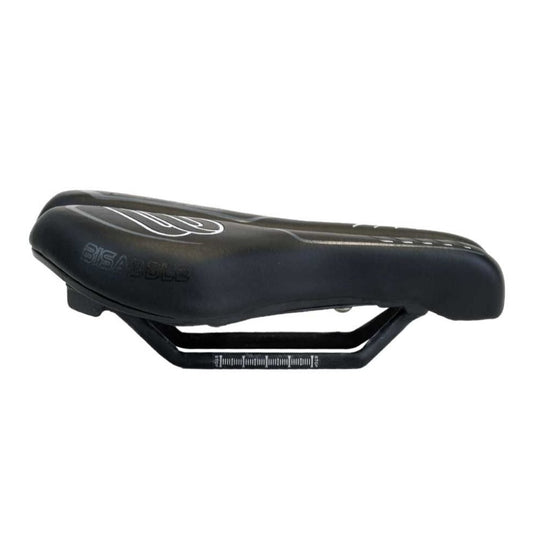
Bisaddle's patented adjustable shape uses two independent halves mounted on rails. Each half slides laterally and pivots on its mount. The rear width spans about 100 mm to 175 mm, which covers the sit bone spacing of most adult riders without requiring a different saddle. The front width adjusts separately, from a nearly closed nose to a split-nose configuration. The angle of each half tilts up or down to match pelvic tilt.
Women's road saddles must serve two demands at once. The rear needs to be wide enough to carry the sit bones. The front needs to be narrow or split enough to avoid pressing on the labia and perineal tissue. A fixed shape balances those two dimensions in one profile. If the rear fits but the front presses, the saddle fails. Bisaddle separates the two, so you fit the rear width and the front gap independently.
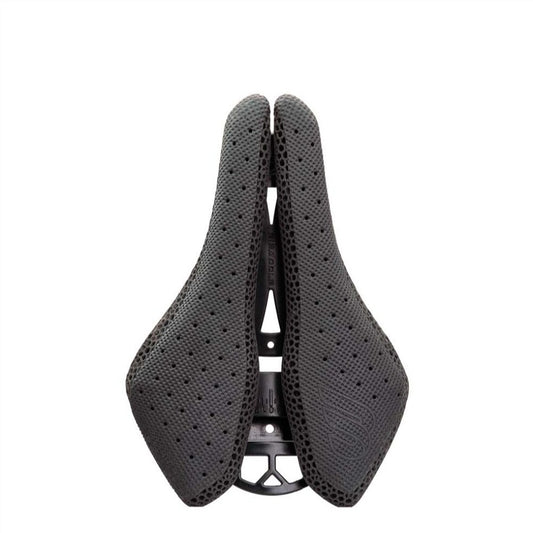
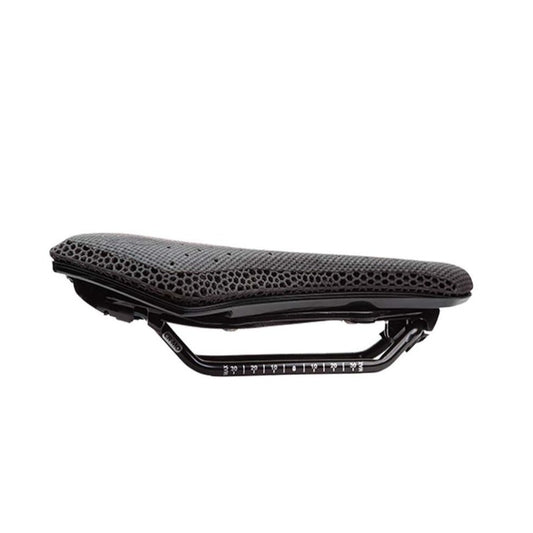
The Bisaddle Saint model adds a 3D-printed lattice surface over the adjustable halves. The lattice deforms in zones to absorb road vibration while the width and angle remain adjustable underneath. The cushioning follows the shape you set, rather than the shape forcing the cushioning into a fixed profile.
A road setup process that starts with your sit bones
Start with a sit bone measurement. Use a shop pressure pad or a piece of corrugated cardboard at home. Sit on the cardboard with your feet on the ground, mark the two deepest points, and measure the distance between their centers in millimeters.
- Measure sit bone width at home or in a shop.
- Set the rear width so sit bone centers sit on the rear halves with clearance.
- Install the saddle level and ride for 30 minutes.
- Adjust based on what you feel.
- Re-test on a longer ride.
Then adjust based on what you feel:
- Front pressure: open the front gap or tilt each half down slightly.
- Sit bones on edges: widen the rear.
- Inner thigh rub: narrow the rear.
Make small adjustments, then re-test on a longer ride.
Take a rider whose sit bones measure 145 mm apart. A fixed saddle sized for that rear width may still press the nose into soft tissue in the drops. With Bisaddle, she keeps the rear at 145 mm and opens the front gap until the pressure disappears. That change takes a few minutes with a hex key. It does not require buying another saddle.
The injury data behind the design
Long-term outcomes from a poor saddle fit are documented. A 2020 systematic review of cycling perineal pressure research found saddle shape drives much of the tissue compression, not riding time alone. Cut-out and split designs reduce perineal pressure for many riders by removing material from the high-pressure zone.
Survey data show the stakes for women. In one published survey, 35 percent of female riders reported vulvar swelling after rides. A 2023 study found nearly half reported long-term genital swelling or asymmetry. Those are not cosmetic issues. They show sustained soft tissue compression, which can force time off the bike or lead to chronic nerve irritation.
A saddle that carries weight on the pubic rami and sit bones, with a center channel that matches the rider's anatomy, removes the compression at the source. That is the design target Bisaddle aims for. The adjustability exists because no single fixed channel width works for every rider.
One saddle for every road position
Road position changes the tune. In the drops, the pelvis rotates forward, so the front gap needs more room. On the hoods, you can run a slightly narrower gap. Bisaddle lets you change the setup for the riding you do. One saddle carries you through endurance rides, fast group rides, and even triathlon use by resetting the front and rear widths.
The strongest argument for an adjustable women's road saddle is the variation within the category. Two female riders can have the same sit bone width but different pubic arch angles and different soft tissue positions. The same rider can need a different shape for a 200 km endurance ride than for a one-hour criterium. Bisaddle lets you keep one saddle and change its width, angle, and nose profile instead of buying a new fixed shape for each use.
If you have already tried a fixed women's road saddle and still feel pressure, the saddle shape was designed for an average that does not match your contact points. Bisaddle gives you the adjustment to change that shape yourself. One hex key turn at a time, you move the load onto bone, leave soft tissue free, and ride longer without the pressure that forces you off the bike.