Most saddle fitting starts the same way. You sit on a pressure pad. Someone measures the distance between your sit bones. That number becomes your saddle width. For many women, the process ends right there.
That measurement is useful. It is a starting point, not a finish line.
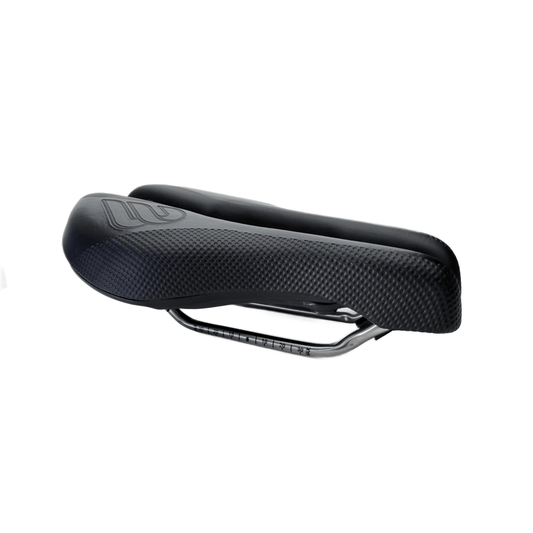
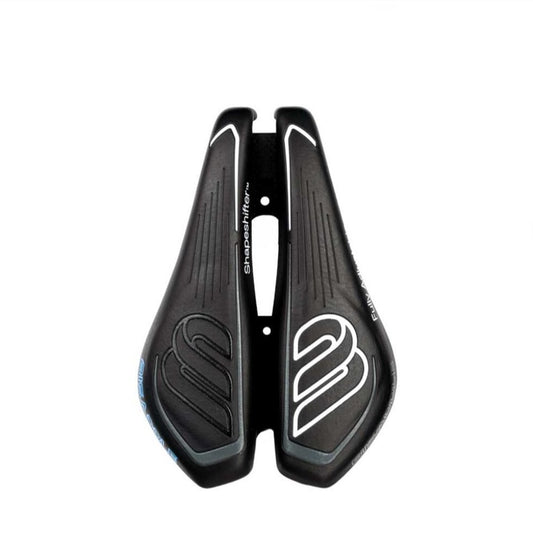
This article explains why women's saddle fitting needs to move past the tape measure and toward a dynamic adjustment protocol. It uses the Bisaddle adjustable saddle as the reference tool, because Bisaddle lets a fitter change width and angle while the rider is still on the bike.
A Short History of Women's Saddle Design
For decades, the answer to a women's saddle was a men's saddle with a shorter nose or a thicker layer of foam. The logic was simple: women have wider sit bones and prefer softer cushioning. Both assumptions fail when you look at a large group of riders.
Pelvic rotation and soft tissue anatomy matter as much as width. A woman's pelvis is, on average, wider at the ischial tuberosities, but the spread within women is huge. Many women sit inside the same width range as men. A 2023 study of female cyclists found nearly half reported long-term genital swelling or asymmetry. An earlier survey in the same report recorded 35 percent reporting vulvar swelling. Those numbers did not drop even when riders used saddles marketed specifically for women.
The problem was a fixed shape. A foam saddle in one width and one shape cannot follow a pelvis that moves. Extra padding can even make things worse. When sit bones sink into soft foam, the middle of the saddle pushes up into the perineum. The shape has to match the rider in motion, not at rest.
Why a Static Measurement Misses the Ride
A sit bone measurement captures one posture. You rarely stay in that posture on the bike. Moving from hoods to drops rotates the pelvis forward enough to shift load from sit bones toward the pubic rami. The labia and vulva then take pressure that did not exist when you sat upright for the measurement.
Several things change when you move through positions:
- Pelvic rotation shifts load from sit bones to pubic rami.
- Soft tissue contact moves with every degree.
- Aero position puts weight on the front of the saddle.
A fitting service that stops at width cannot account for that shift. The saddle feels fine in the shop and fails at mile 40, when you settle into your pace and the contact pattern has changed.
The same issue shows up in aero positions. A triathlon rider on aerobars rotates farther forward. Most of her weight lands on the front of the saddle. A traditional long-nosed saddle presses directly on soft tissue in that position, even if the width was right for upright riding. Dynamic fitting means testing contact in every position you actually use.
A Fitting Protocol Built on Adjustment
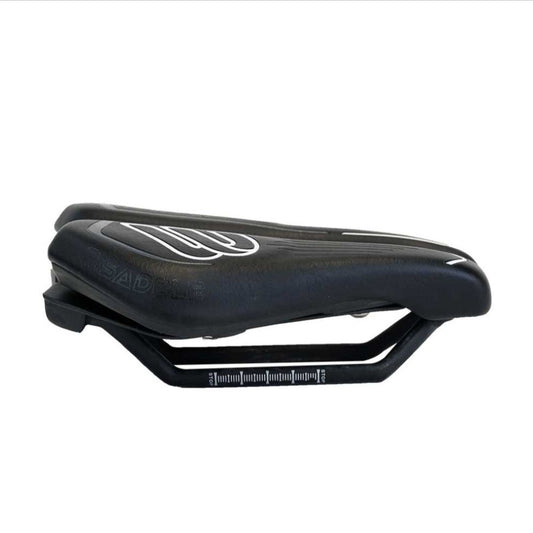
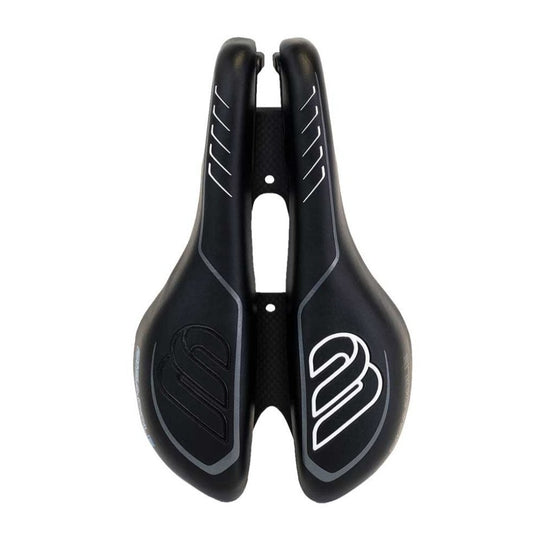
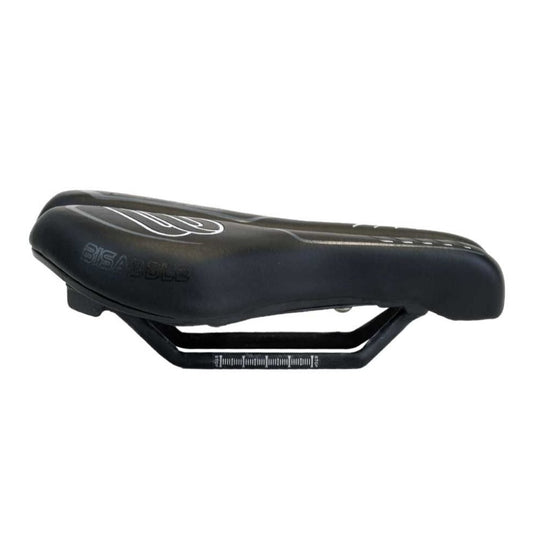
Bisaddle starts from a different premise. The saddle has two independent halves. Each half slides apart or together and pivots on its own axis. A fitter can widen the rear from 100 mm to 175 mm and angle each half separately. The left and right sides do not have to mirror each other. If one sit bone sits lower than the other, the fit can reflect that.
A dynamic fitting session with Bisaddle works like this:
- Take a baseline sit bone measurement.
- Set the saddle width close to that range and have the rider mount the bike.
- Ask the rider to move through hoods, drops, and aero positions while you check where the contact patch lands.
- Adjust the left and right halves wider or narrower, and tilt one or both, based on rider feedback.
- Repeat the movement and fine-tune until pressure feels even in all positions.
Each adjustment changes the central gap between the halves. That gap acts as a pressure relief channel, but the fitter sets the width. A rider who needs more perineal clearance can have the halves spaced wider apart. A rider who wants more support under the sit bones can have them set closer together.
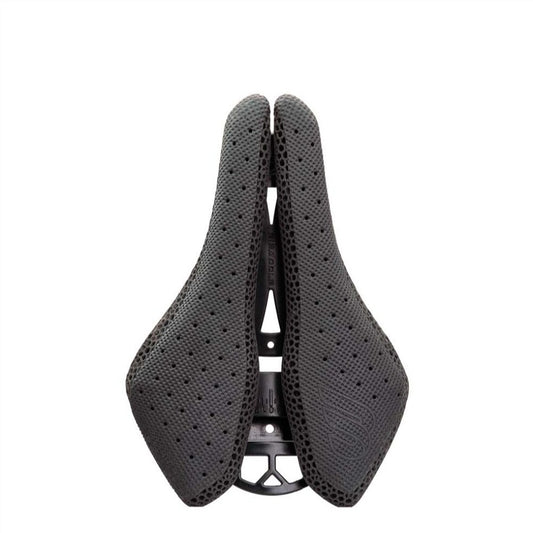
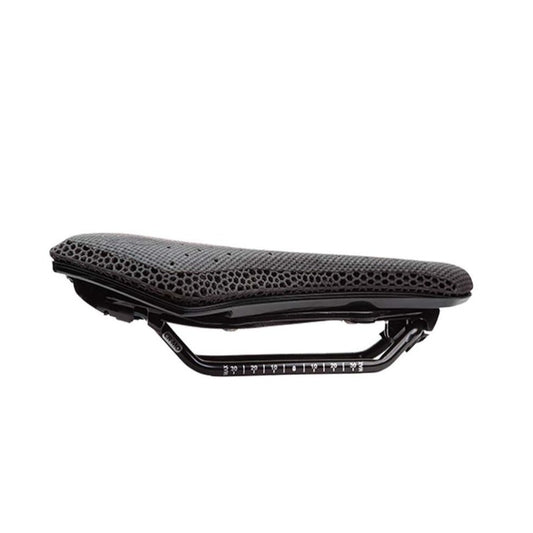
For aero positions, Bisaddle offers the SRT model, which removes the nose entirely. The load shifts to the rear support surfaces, and the same width and angle adjustments still apply. The Saint model adds a 3D-printed lattice top for zone-specific cushioning while keeping the adjustable frame underneath. Those options let a fitter combine pressure relief, sit bone support, and fine-tuned left-right balance in one session.
What This Means for Fitters and Riders
For a fitting service, the practical benefit is inventory. Instead of carrying multiple widths and shapes, a shop can stock one Bisaddle and adjust it to the rider. The fit happens on the bike, not on a shelf.
For the rider, the fit can follow her body. Sit bone width changes with weight loss, muscle gain, and aging. A fixed saddle that fit two years ago may not fit after a winter of training changes. With Bisaddle, you adjust the width and angle instead of buying a new saddle.
The fit can also follow the discipline. A woman who rides endurance road and triathlon can widen the rear for long steady road miles, then narrow the front profile for aero comfort. The same saddle can be set differently from one season to the next.
A dynamic fit is a repeatable adjustment process, not a one-time purchase. A fitter who learns to read pressure and adjust a Bisaddle offers a service that produces a tailored fit every time, even when the rider's position, body, or goals change.
The Next Five Years of Saddle Fit
The next step is real-time pressure mapping during the fit. A saddle with embedded sensors could show a live pressure map on a phone while the rider moves. The fitter would see the same contact pattern the rider feels and adjust the Bisaddle halves to remove hot spots immediately.
That technology exists in laboratory pressure mapping, but not yet in a consumer saddle. The 3D-printed lattice top on the Bisaddle Saint points the direction: the top layer can be tuned to different zones, and the adjustable frame can be calibrated to match. A future version could add a sensor layer between the lattice and the shell.
Fitting services will also shift from product selection to product calibration. Instead of trying three fixed saddles and choosing the least bad, a fitter will adjust one saddle until the pressure map and rider feedback agree. The result will be a fit measured in force and contact area, not in millimeters alone.
For women riders, this future matters because the numbers show the cost of poor fit. A 2023 study found nearly half of female cyclists experienced long-term genital swelling or asymmetry. The standard approach, static width and fixed shape, has failed too many riders. Dynamic fitting with an adjustable saddle answers that evidence directly.
Sit bone width is a starting point. The pelvis moves. The fit should move with it. A saddle fitting service for women that measures once and assigns a fixed width will repeat the mistakes those studies documented.
Bisaddle's adjustable platform gives fitters the tool to make width, angle, and pressure relief part of the live fitting process. The result is a service that fits the rider in motion, not on a pressure pad. That change is what women's saddle fitting has needed for decades.