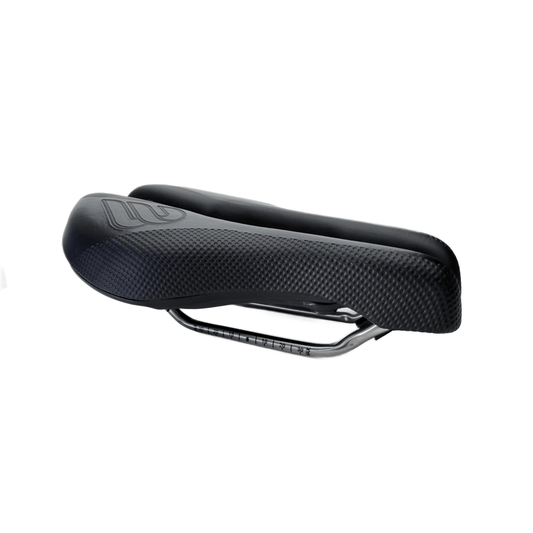
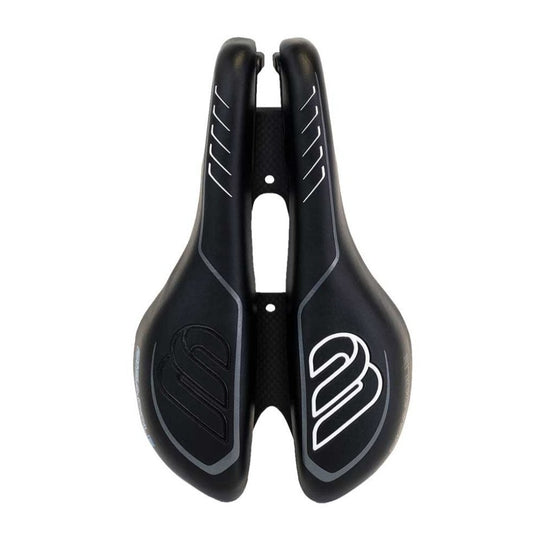
Most advice for female cyclists with saddle pain starts with a list: Kegels, deep squats, hip flexor stretches, glute med work. You can do every one and still come home numb. The missing variable is the load that stays on your tissue while you ride. A fixed saddle shape compresses the pelvic floor and pudendal nerve for hours. No off-bike exercise removes that compression.
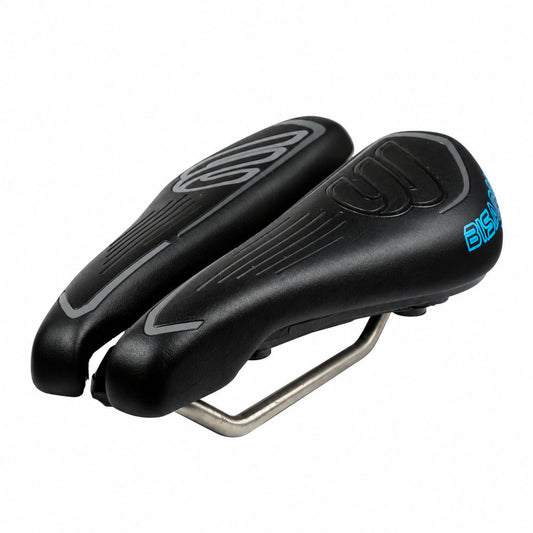
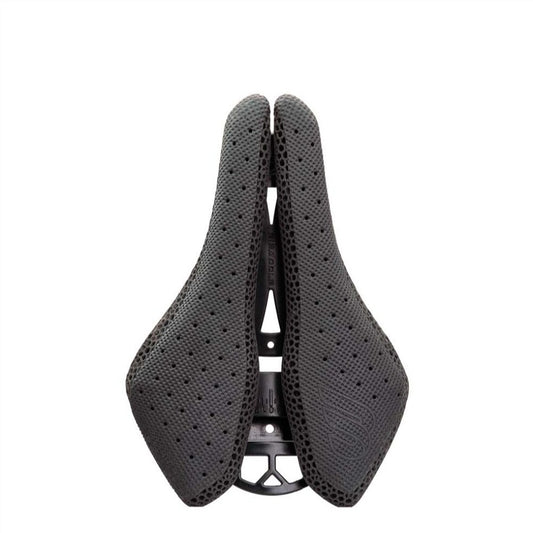
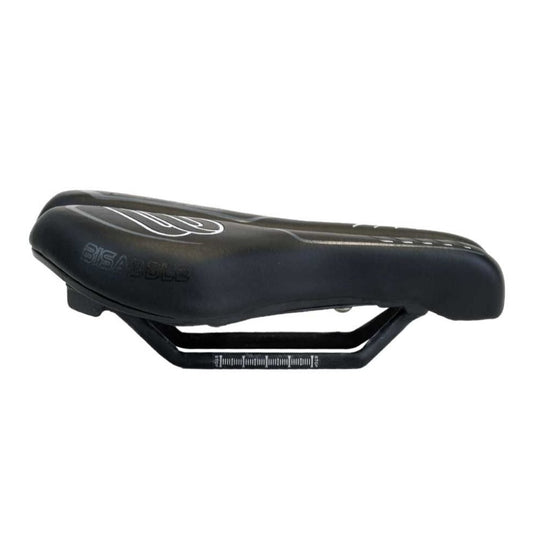
Bisaddle's adjustable halves change the equation. You can widen the support to move pressure off soft tissue, then narrow it over weeks as your tolerance builds. This turns saddle fit into progressive overload, the same principle you use in strength training.
The 35 Percent Problem
A survey of female cyclists found that 35 percent had experienced vulvar swelling. A separate 2023 study reported nearly half had long-term genital swelling or asymmetry. Those numbers describe chronic soft tissue compression. They are not a muscle weakness problem.
The pudendal nerve travels through a narrow canal in the pelvis. A saddle nose that is too long or too narrow pushes directly into that canal. Labial tissue and the nerve branches that supply it sit in the same high-load zone. When you do Kegels, you ask the pelvic floor muscles to contract. If that tissue is already ischemic from compression, the contraction reduces local blood flow even further. You are training a muscle while pinching its nerve supply.
Glute Bridges Do Not Transfer to Saddle Pressure
Strengthening glutes and deep hip stabilizers can change how you sit off the bike. It cannot change the shape of the surface you sit on. A rider can deadlift double bodyweight and still get labial swelling if her sit bones measure 130 mm apart and her saddle is 110 mm wide. The pressure stays on soft tissue instead of bone.
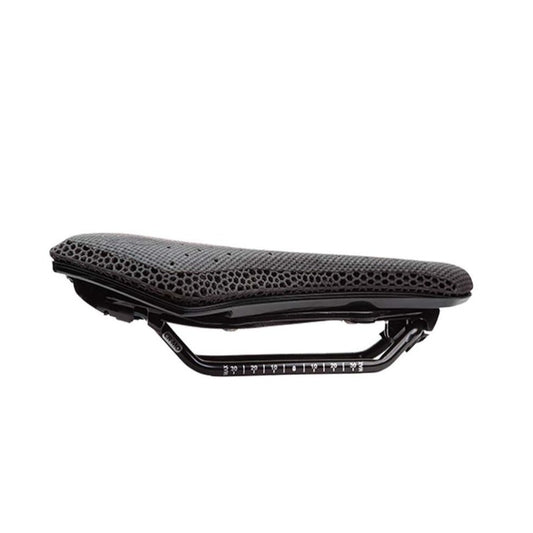
Bisaddle's left and right halves slide outward. The width range is 100 to 175 mm, which covers a wide range of adult sit bone widths. Start wider than your measured sit bone width. Let the ischial tuberosities take the load. That drops perineal pressure. Over weeks, narrow by a few millimeters as soft tissues adapt to longer rides.
An On-Bike Protocol with Adjustable Width
Measure your sit bone width with a piece of corrugated cardboard. Sit on it, stand up, and measure the distance between the centers of the two dents. Set the Bisaddle halves so each sit bone rests on its own half. Keep the central channel open under the perineum. Set the angle so the nose points slightly down.
- Do a 20-minute trainer ride at endurance pace. Every 5 minutes, stop pedaling and exhale slowly, letting your pelvic floor drop fully. Then do three quick pelvic floor contractions followed by three full relaxations. If you feel numbness or shooting pain, widen the saddle by 3 to 5 mm and repeat the session.
- Add 10 minutes per session. Only narrow the width by 2 to 3 mm when you can complete 90 minutes without numbness, skin irritation, or pelvic floor guarding.
- After each ride, spend three minutes in supine 90/90 diaphragm breathing. Add a side-lying hip adductor slide for inner thigh length. Adductor tightness pulls the pelvis forward and rotates it against the saddle.
- Re-measure your sit bone width after these drills. The release often adds 5 to 10 mm of comfortable width as the pelvis settles onto the saddle instead of tilting forward. Widen the Bisaddle accordingly.
Ischemic Tolerance as the Mechanism
The mechanism is ischemic tolerance. Compression of the pudendal artery and nerve is a time and pressure problem. Widening the saddle support reduces pressure. Short intervals manage time. Gradually narrowing the saddle builds tissue tolerance to compression, similar to how skin adapts to callus formation. The adaptation is load tolerance.
In one urology study, researchers measured penile oxygen pressure and found that a narrow, heavily padded conventional saddle caused an 82 percent drop in blood oxygen to compressed tissue. A wider noseless design limited the drop to about 20 percent. Saddle width mattered more than padding. The same logic applies to female soft tissue. Width distributes load onto bone rather than labia.
Bisaddle's independent angle adjustment adds another layer. Each half tilts separately. You can correct a leg length difference or a pelvic rotation that keeps loading one side. That asymmetry is common and rarely fixed by off-bike strength work alone.
Pressure Sensors on an Adjustable Platform
Pressure sensors in saddles are still experimental, but an adjustable platform is the natural host. A sensor array on each Bisaddle half could map left/right pressure asymmetry in real time. It could instruct the rider to widen by 3 mm before numbness starts. That closes the loop between off-bike mobility work and on-bike load.
The pieces already exist: adjustable geometry, pressure mapping, and real-time feedback. Bisaddle's design gives you the adjustable part. The sensor layer is the next step.
Load First
The standard advice to do more Kegels and glute bridges is incomplete. Female saddle pain is a load management failure. An adjustable saddle lets you change the compressive load and build tolerance progressively. That is a training protocol, a deliberate load progression.
If you have tried every exercise and still hurt, stop adding reps and start changing the surface. Widen the saddle. Shorten the interval. Build tolerance. The Bisaddle platform gives you the tool to do that.