Most saddle height calculators do one thing: multiply your inseam by 0.883 and hand you a number. That number then gets carved into your seatpost. The calculator never asked you how far apart your sit bones actually sit.
For decades, that multiplier came from studies on male competitive cyclists. Pelvic structure varies widely, but women on average have wider sit bone spacing. Two riders with the same 84 cm inseam can need rear widths of 145 mm and 165 mm. The formula hands both the same posted height. That is the first place a single-number approach falls apart.
Pelvic Width Changes Your Contact Point
A saddle is a load-bearing surface, not a post. If the saddle is too narrow, your sit bones roll off the edges and your perineum presses into the nose. If it is too wide, your inner thighs chafe and you slide forward to find the narrow section. Both positions alter your real riding height even when the rail height stays put.
Published injury data shows what happens when that contact point is wrong. A 2023 study found nearly half of female cyclists reported long-term genital swelling or asymmetry. A separate survey recorded 35 percent reporting vulvar swelling after long rides. Those symptoms signal that bone support and soft tissue pressure are misaligned at whatever height the calculator generated.
Saddle Compression Shifts Your Effective Height
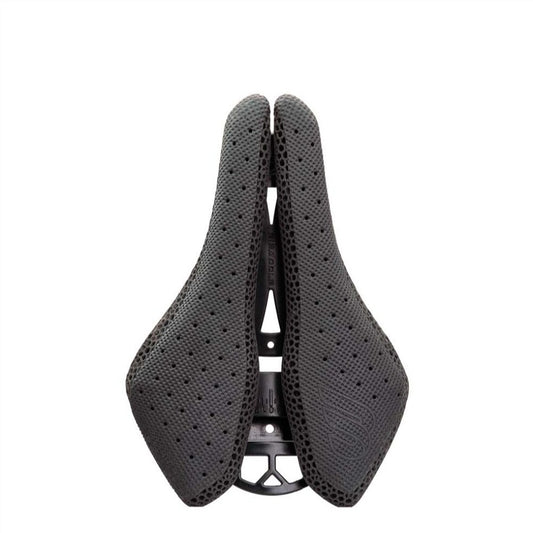
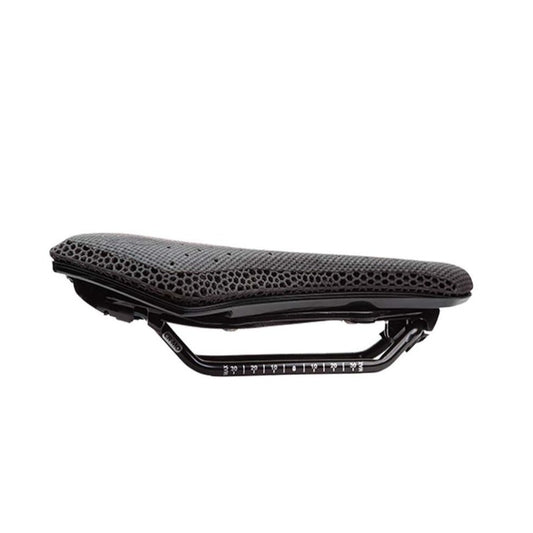
The calculator also ignores how much the saddle surface compresses under your weight. A layer of foam, gel, or a 3D-printed lattice deflects differently from rider to rider. If your saddle drops 8 mm under your sit bones, your effective height is 8 mm lower than the post measurement says.
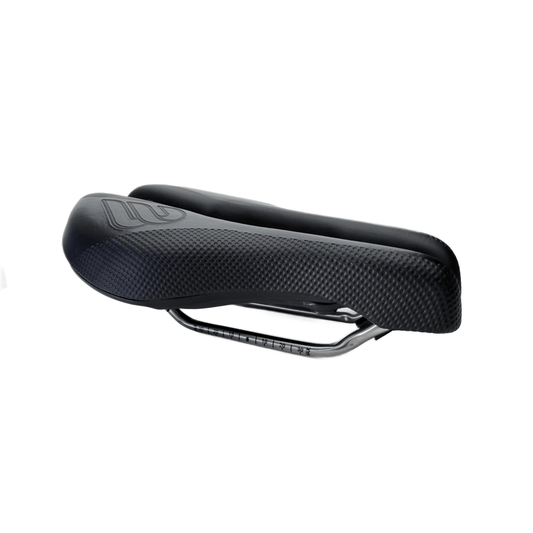
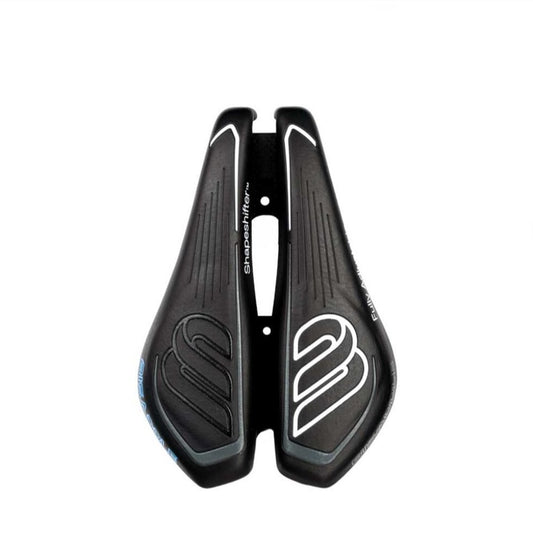
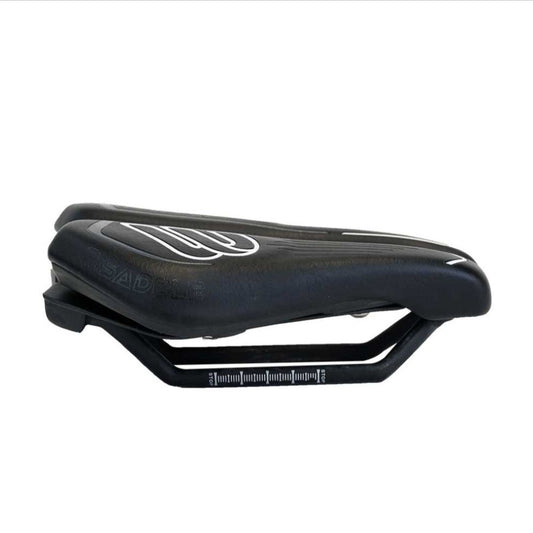
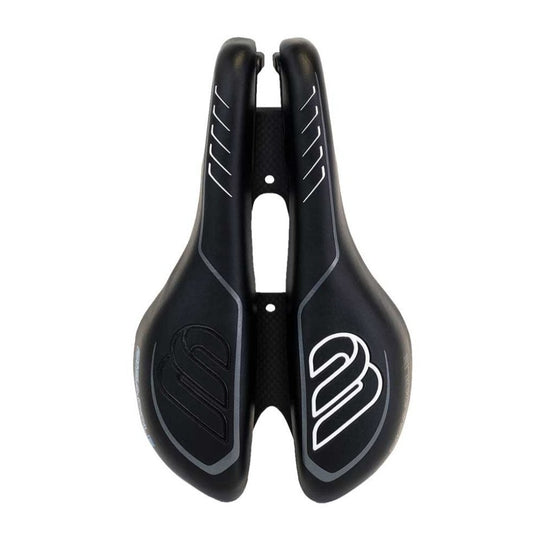
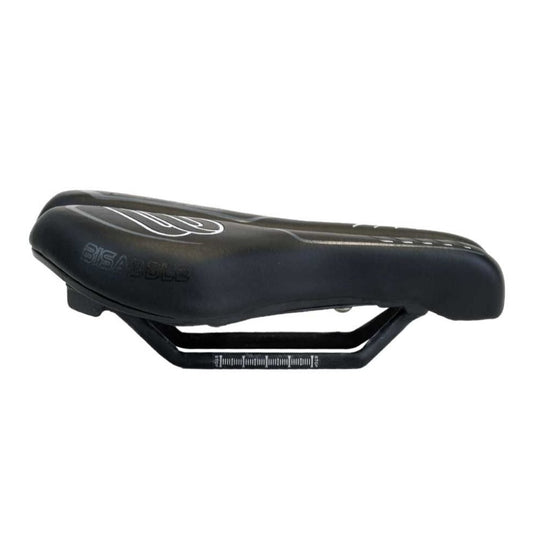
Bisaddle's Saint model makes this visible. The surface uses a 3D-printed support layer, and the two saddle halves adjust independently from about 100 mm to 175 mm in rear width. That range lets you place each sit bone fully on top of its half before you trust any height measurement. Then you can see how much the surface settles under load. If it drops, you correct the post in 2 mm steps and recheck your knee angle.
At bottom dead center, your knee should hold a slight bend, around 30 degrees. Lowering or raising the post changes that angle. A 2 mm move does not sound like much, but over a four hour ride that angle decides whether your hips stay square or begin to rock.
Order Matters When You Adjust Bisaddle
With a fixed saddle, you buy another one to test a different width or shape. Bisaddle removes that step. The halves slide and pivot, so one saddle can be tuned to your sit bone spacing. The independent angle adjustment handles a common pelvic asymmetry: one side often sits higher or tilts forward more than the other. You can angle each half to match, then set height once the contact points are stable.
This order matters. If you start with the calculator height, lock it in, and then widen the saddle, your effective height shifts. Bisaddle lets you test a width change and a height correction in the same ride. You can measure knee angle, adjust width, and recheck without buying a new saddle.
- Measure your inseam. Multiply by 0.883 for a first pass only.
- Set Bisaddle width so each sit bone sits fully supported, not hanging off an edge.
- Set saddle height by knee angle at bottom dead center, aiming for about 30 degrees of bend.
- Use the independent angle adjustment on each Bisaddle half if one side of your pelvis sits higher or tilts forward.
- Recheck the height after each width or angle change. A wider stance changes the contact point, so it changes the effective height.
What Future Tools Should Add
Future saddle height tools should add phone based sit bone scans, pressure mat data from the saddle, and real time foam compression data. Those additions will take years to reach most riders. Until then, the manual version of that loop already exists.
Bisaddle covers the adjustable width, angle, and surface feedback needed to correct what the calculator omits. For female riders, the useful output is a supported saddle at whatever height your knee angle says is correct. The calculator produces a posted height. Bisaddle supplies the missing terms: width, angle, and compression feedback. With those terms set, you get a riding height you can hold for hours.