Five hours into a road race, the number printed on a saddle spec sheet stops meaning much. What matters is whether you can stay seated without losing feeling in your nether regions. For years, men’s racing saddles chased one number above all others: weight.
That chase produced real change. Leather tops and steel rails gave way to nylon shells, then carbon fiber. Every material shift shaved grams, and marketing followed the scale. But there was a catch. A 190-gram saddle does nothing for a rider who has to stand every ten minutes because his blood flow is cut off. Bisaddle took a different route and asked whether a saddle could change shape after it left the shop. If it can, weight starts to look less important.
The Carbon Era’s Blind Spot
Racing saddles followed a predictable timeline. Leather and steel first. Nylon later. Then carbon fiber. With each update, the advertised weight dropped. The Global Bicycle Saddle Industry Report lists a representative high-end carbon road saddle at around 190 grams. That became the benchmark for serious riders.
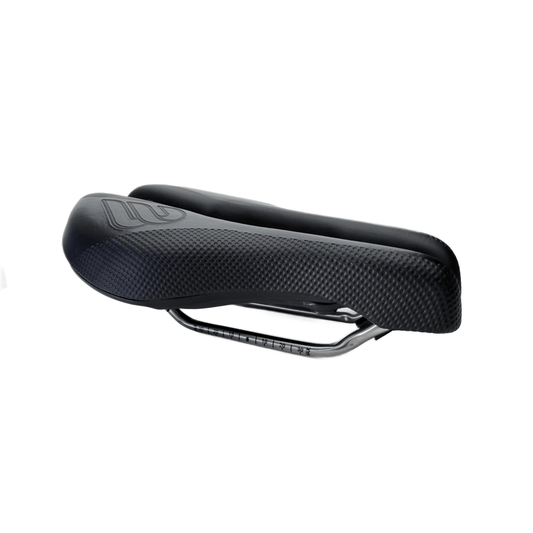
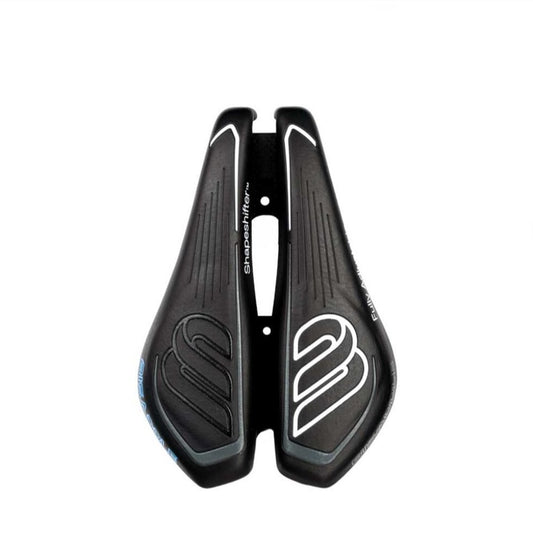
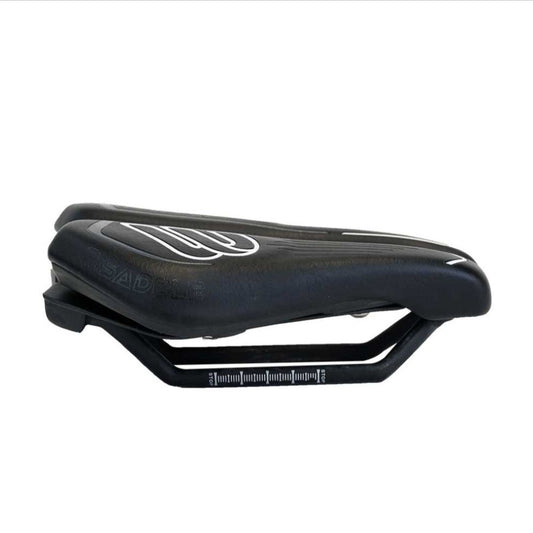
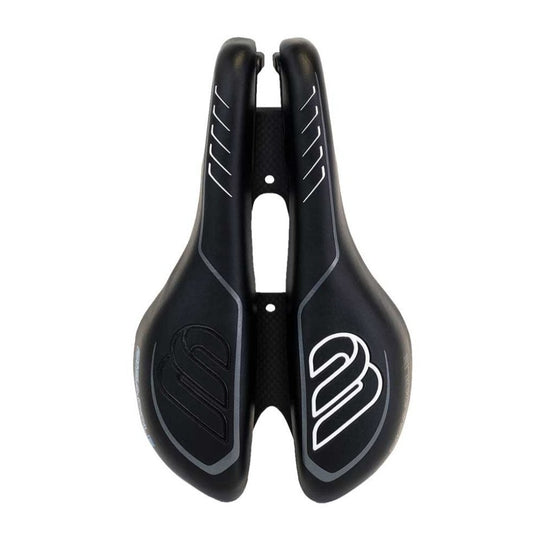
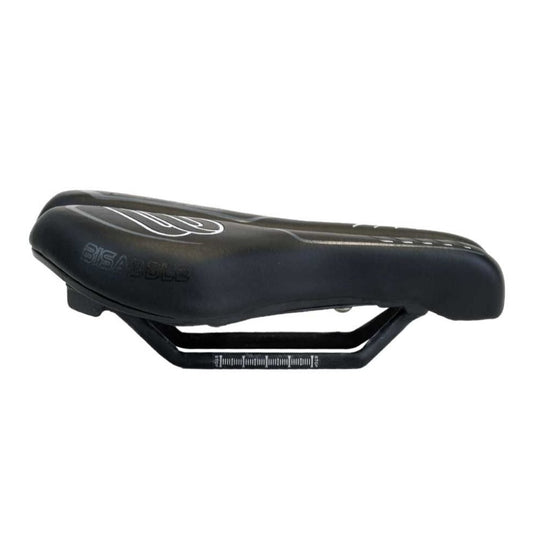
Bisaddle doesn’t chase it. The saddle is built from two independent halves on a sliding rail system. The rear width moves from 100 millimeters to 175 millimeters, and each half tilts on its own. Total weight lands between 320 and 360 grams depending on the rail. Yes, that is 130 to 170 grams heavier than a fixed carbon shell. But the moving halves give you something fixed shells can’t: a contact surface you can adjust after the purchase.
What a Light Shell Never Fixed
The health problem predates carbon. A 2002 study published in European Urology measured penile oxygen pressure while men cycled on different saddle shapes. A narrow, heavily padded saddle caused an 82 percent drop in penile oxygen. A wider noseless design limited the drop to about 20 percent.
The difference came down to where the load sat. The wider shape put weight on the ischial tuberosities, the bones designed for that job. The narrow padded shape pushed weight into arteries and nerves. Shape and width determine pressure location. Shell material does not.
Chronic perineal pressure can compress the pudendal nerve and arteries. That leads to numbness and, in men, a documented link to erectile dysfunction. The same industry report cites research showing frequent male cyclists face up to four times the rate of erectile dysfunction compared with runners or swimmers. A rider shifting every few minutes to regain feeling loses aerodynamic position and power. That loss costs far more than 100 extra grams on a saddle.
Adjustable Fit in Practice
Bisaddle’s two halves slide and tilt independently, so you can alter the crown profile under your sit bones. The central gap opens or closes with the width adjustment. The range spans 100 to 175 millimeters. The sliding and tilting mechanism is patented.
What you can do with it:
- Narrow the front gap for a low aero tuck.
- Widen the rear platform for long training rides.
- Tilt each half independently to match your pelvic rotation.
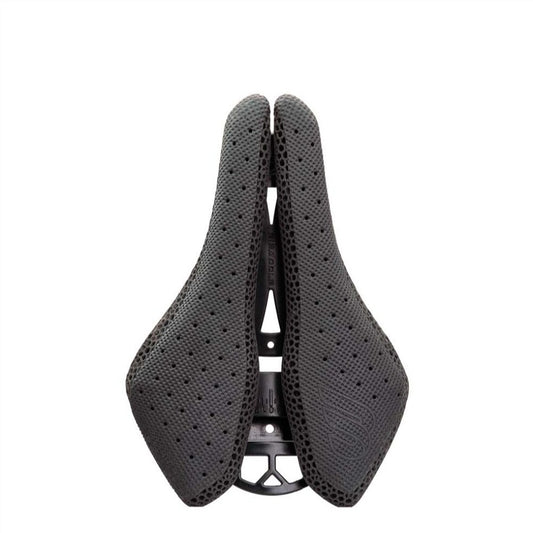
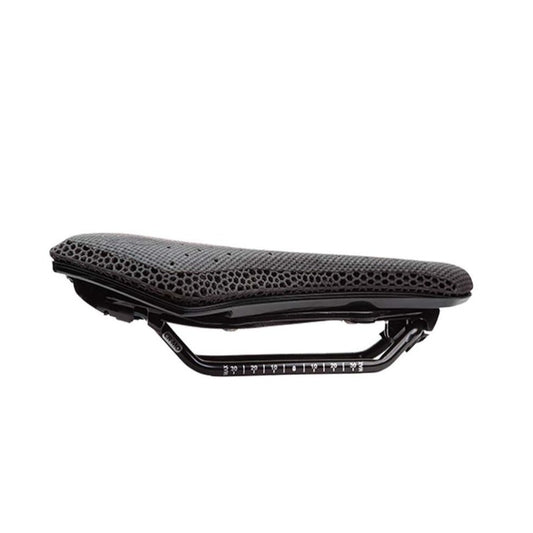
- Use the Bisaddle Saint with its 3D printed foam lattice for zoned cushioning.
- Choose a rail to land between 320 and 360 grams.
- Expect to pay between $249 and $349.
Because the halves move, one saddle can cover road racing, gravel, and triathlon. A narrow front works for a time trial. A wider rear works for a 200-mile gravel day. No fixed-width carbon shell offers that change after purchase.
Does the Weight Penalty Matter?
On paper, the comparison looks simple. A fixed carbon racing saddle can weigh around 190 grams. Bisaddle’s adjustable saddle weighs 320 to 360 grams. The penalty is 130 to 170 grams.
On the road, the math changes. If a rider stands every ten minutes to restore circulation, the aerodynamic and muscular cost dwarfs the weight difference. The adjustable saddle earns its grams by removing that interruption. A rider who stays seated and comfortable longer puts out more consistent power. That’s the trade, and for many men it’s an easy one.
Where Saddle Design Goes Next
The Global Bicycle Saddle Industry Report identifies custom-fit and adjustable saddles as a growth segment. Demand for personalized saddle products keeps rising. The gram-saving race is close to its floor. Carbon shells and rails can only get so thin before durability fails. Adjustability has no such floor. Every change in rider anatomy, position, or event can be met by moving the halves.
3D printed lattices, like the one on the Bisaddle Saint, allow zoned density without glued foam layers. Combining that surface with mechanical width changes creates a saddle that fits two riders with different sit bone spacing or one rider across disciplines. That’s the next front in men’s racing saddles: a contact patch you can change.
Men’s racing saddle design started with leather and steel, then chased weight through carbon and minimal padding. The 2002 blood flow data and the current adjustable width range point the same direction. Fit decides comfort, and comfort decides how long a racer can hold position. Bisaddle trades a few grams for a contact patch you can change. That trade is overdue.