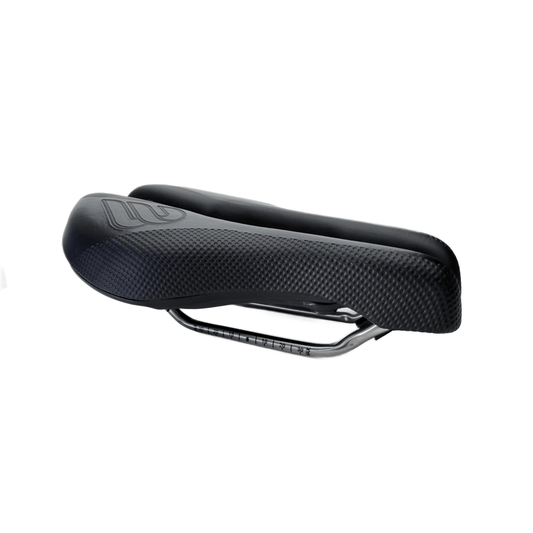
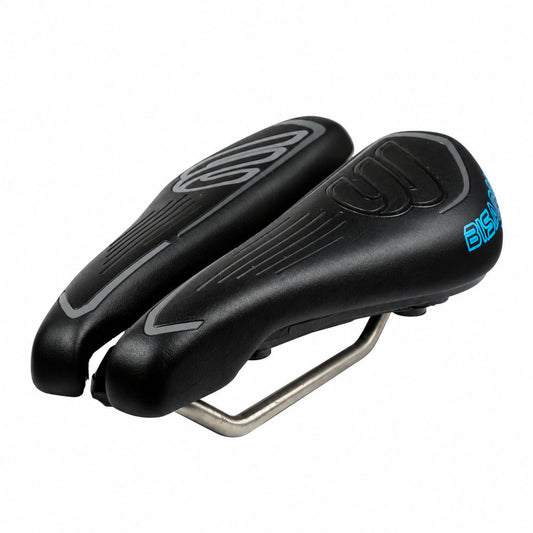
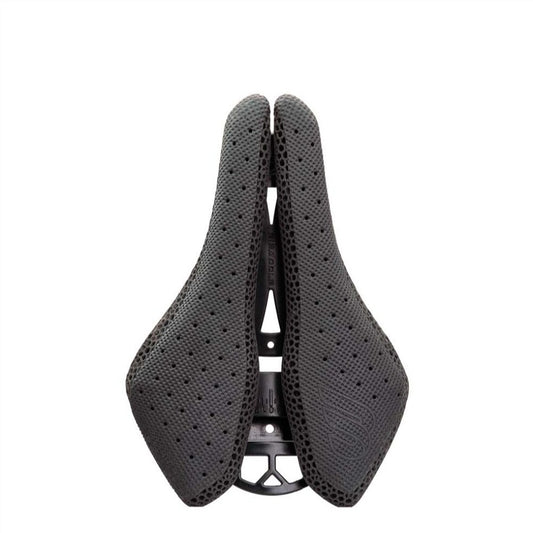
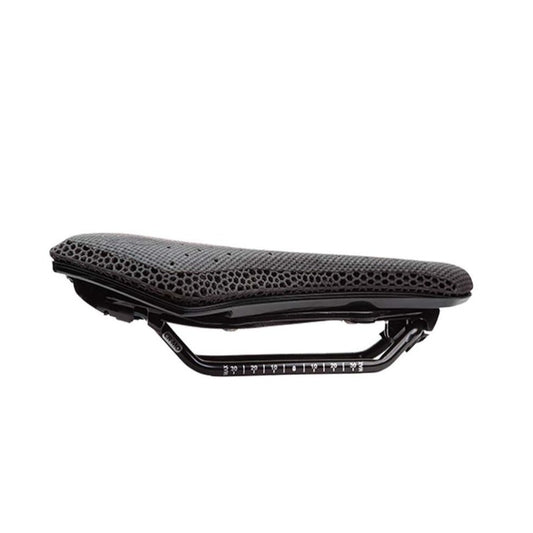
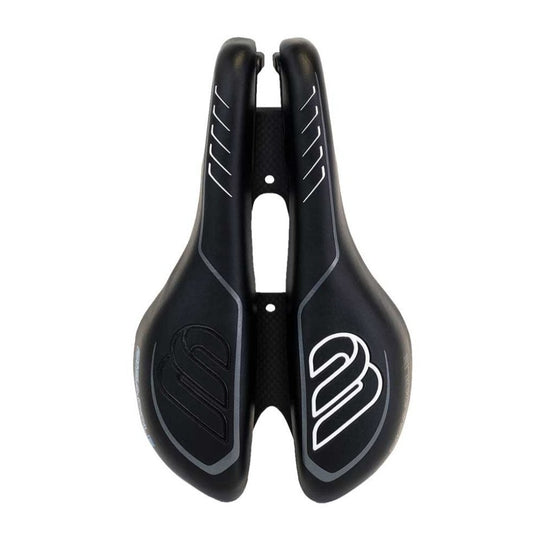
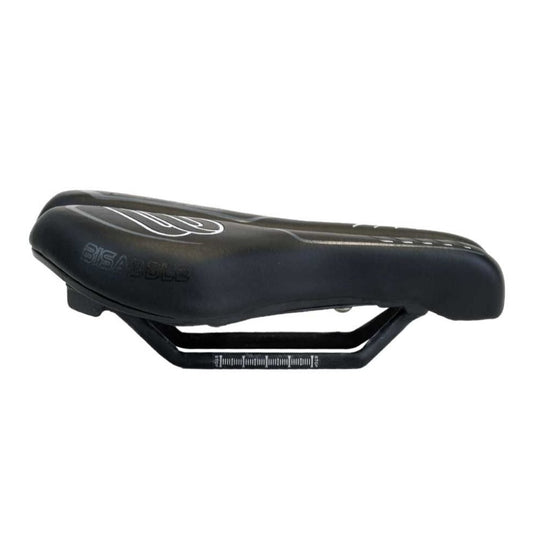
Men's saddle storage advice tends to fall into two camps: treat it like a leather saddle from the 1970s, or leave it on the bike and hope. Both miss what a modern adjustable BiSaddle actually needs. You're not storing a piece of furniture. You're storing a set of measurements you dialed in for your sit bones.
BiSaddle's two wing halves slide and tilt across a range of about 100mm to 175mm. That adjustment is the whole point. A few millimeters of drift can put pressure back where it doesn't belong. The cover can look perfect while the pressure-relief channel has quietly narrowed.
How Storage Used to Work
Before polymer shells, a saddle was leather over steel rails. You wiped it dry, oiled it, and kept it out of the sun. The failure was visible: cracking, rust, mildew. Riders passed those rules down because the saddle either hurt or it didn't.
Modern materials changed the risks. UV light degrades synthetic covers. Heat softens adhesives. Foam left under load takes a set and doesn't fully rebound. The old advice still matters, but it doesn't cover the new problem: a BiSaddle has moving parts that hold your fit.
What Actually Threatens a Stored BiSaddle
Three things matter: heat, moisture, and load.
- Heat softens the polymer around the adjustment bolts. Repeated cycles let the wings move a fraction at a time.
- Moisture sitting in the sliding track attracts grit and can corrode hardware.
- Load is the sneaky one. A toolbox on top of the saddle or hanging it by one wing can twist the shell or knock a half out of alignment.
Do not loosen the bolts for storage. That invites drift. Keep them snug at your riding tension. If the saddle comes off the seatpost, support it by both rails or set it padding-up on a flat surface.
A Health Reason to Care About Millimeters
A 2002 study in a urology journal measured penile oxygen pressure while cyclists sat on different saddle types. A narrow, padded traditional saddle caused an 82 percent drop. A wider noseless design limited the drop to 20 percent. The difference was where the weight landed: on soft tissue or on the sit bones.
BiSaddle's adjustable width exists because sit-bone spacing varies between men. If storage nudges the wings inward, weight shifts onto the perineum. Numbness, tingling, and saddle sores follow. The saddle hasn't worn out. A wing moved, and the fit changed.
Off-Season Storage, Step by Step
- Wipe the cover and rails dry with a clean cloth.
- Check that the adjustment bolts are snug at your riding settings.
- Record your width and tilt numbers in a note or photo on your phone.
- Store the saddle in a dry, shaded, temperature-stable spot. A closet shelf works. A pegboard hook supporting both rails works too.
- Keep the padding unloaded. No toolboxes or spare wheels on top.
- If the saddle leaves the seatpost, bag it in breathable cloth, not sealed plastic. Sealed plastic traps moisture and starts rust on steel hardware.
Before your first long ride, re-measure the rear width at the widest point. Compare it with the number you saved. If a wing drifted, return it to that setting and re-tighten the rail bolts. Ten minutes in the garage beats discovering the shift twenty miles from home.
Travel and Race Day
Travel storage is different. A bike case or padded bag puts side pressure on everything. Pack the BiSaddle at the top of the case or wrap it in a soft cloth. If it comes off for flying, keep it in the middle of the case, not against a hard shell wall.
On race morning, don't leave the saddle on hot asphalt while you set up transition. Repeated heat can alter the fit over time. Put it in the shade or cover it with a white towel on the bike. The towel also keeps dust out of the center channel.
What Changes Next
Storage advice will shift again as 3D-printed lattices become standard. An open lattice dries faster and traps less surface moisture than molded foam. The next step is preserving fit data as carefully as the saddle itself. You already have your numbers on your phone. The saddle just has to hold them while it sits.
Riders once oiled leather to keep it from cracking. Now you check a bolt and a saved width. The rule hasn't changed: a stored saddle should come out exactly the way it went in.