At mile 47 of a gravel event, you stop checking your power and start shifting around the saddle. The discomfort starts as a dull ache, then turns into a tingle. That tingle is your body signaling that the saddle is pressing where it should not be.
More padding makes that problem worse. You need a saddle that changes width as your position changes. Gravel riding alternates between smooth pavement, washboard, seated climbs, and aero tucks every few minutes. A fixed saddle cannot follow those shifts.
Why Fixed Widths Stop Working
On smooth road, your pelvis sits in a fairly stable position. On washboard, it drifts. Your sit bones stay the same distance apart, but the load across them shifts as your pelvis tilts. A saddle sized for one posture can hold pressure on the sit bones at mile 10 and push that same pressure into the soft tissue by mile 60.
For men, that soft tissue carries arteries and nerves that are easy to compress. A 2002 study in European Urology measured penile oxygen pressure in cyclists and found that a narrow, heavily padded saddle caused an 82 percent drop in oxygenation. A wider noseless design limited the drop to about 20 percent. The researchers concluded that sit bone support matters more than cushioning.
Blood Flow Before Padding
Most riders reach for a softer saddle when numbness appears. Softer is often worse. A heavily padded saddle compresses under your sit bones and bulges up into the center, adding pressure where you want the least. The correct approach is to support the sit bones on a width that matches your current pelvic tilt and to leave a clear channel under the perineum.
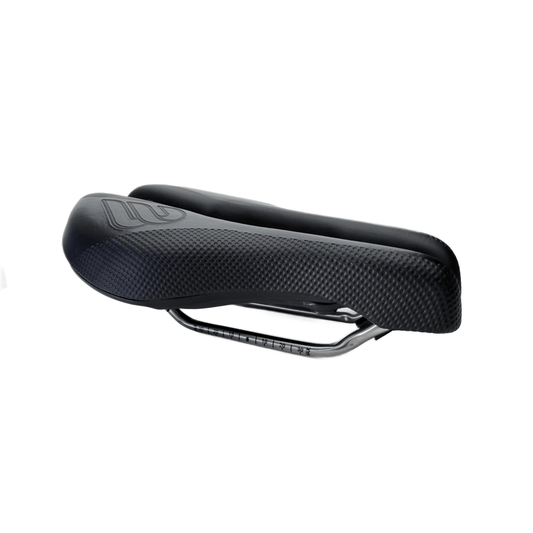
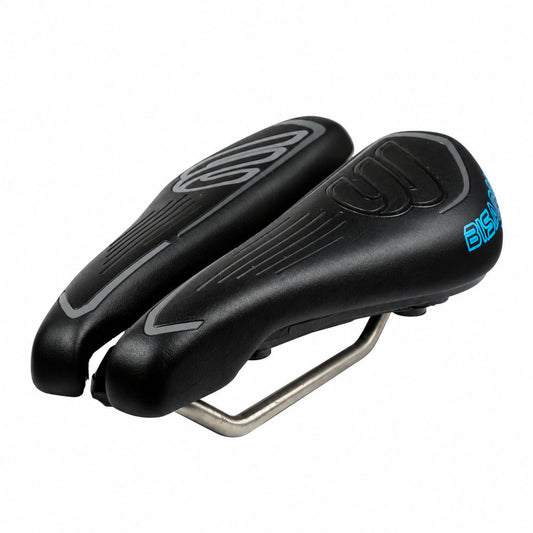
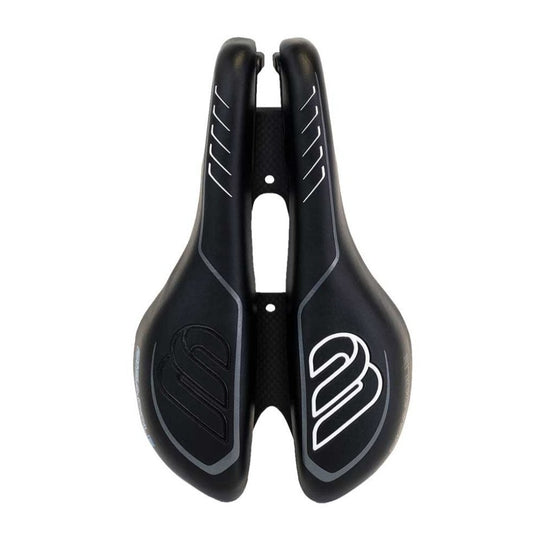
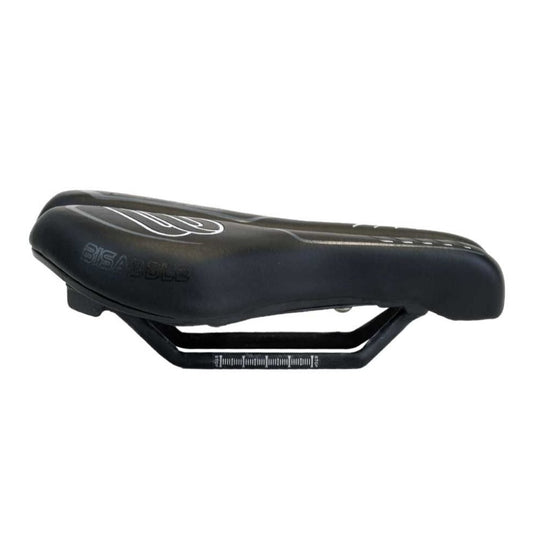
Bisaddle builds that channel mechanically. Its saddle is split into two halves that slide independently. You can set the rear width anywhere from about 100 millimeters to 175 millimeters. The gap between the halves stays open under your soft tissue. You can widen it for an upright gravel position or narrow it for an aero tuck.
Nose Pressure and the Noseless Option
Numbness in men often starts at the saddle nose, especially in a forward-leaning gravel position. With Bisaddle, you can narrow the front section to remove that pressure. If you spend most of the ride in an aggressive tuck, the Bisaddle SRT removes the nose entirely. Nothing presses on the pudendal artery, no matter how long the aero section lasts.
Why Sit Bone Measurements Miss Gravel Positions
A bike shop measures sit bone width while you sit upright on a pad. That is a useful starting point. It does not tell you what happens when you rotate forward on a gravel road or brace against a crosswind. The distance between your sit bones doesn't change, but the way pressure distributes over them does.
Bisaddle lets you adjust the two halves independently. You can set a different tilt under each sit bone, which matters if one hip drops from fatigue or an old injury. The range covers both a road position and an upright endurance position, so you don't need different saddles for different rides.
Vibration Changes the Fit Equation
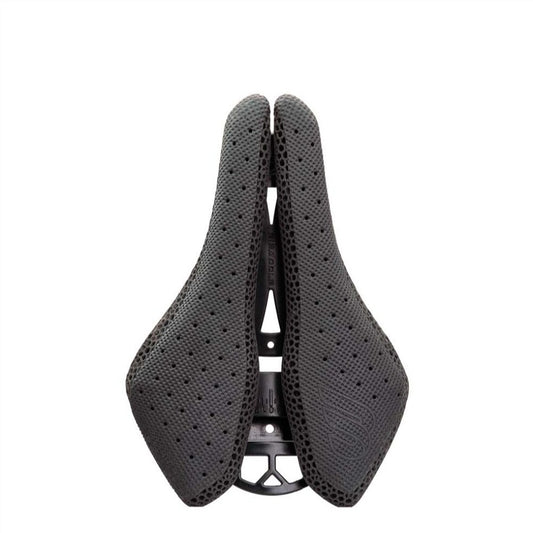
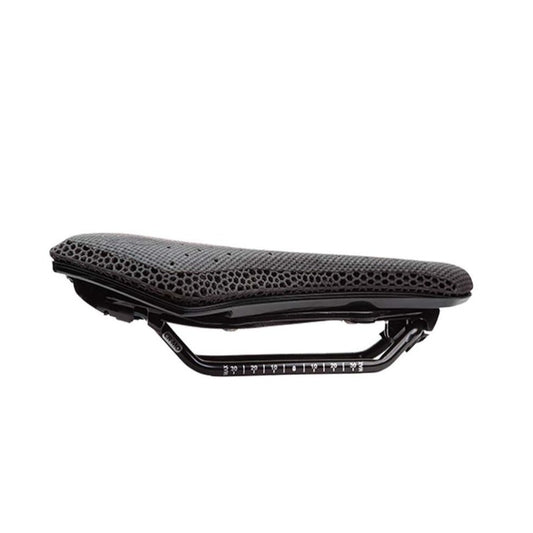
Gravel sends constant vibration through the saddle shell. Foam absorbs some of it, but foam compresses over a long ride. The support you had at mile 10 fades by mile 30. The Bisaddle Saint uses a 3D-printed lattice instead of a solid foam pad. That lattice deforms under pressure and springs back, so hot spots don't develop on rough roads.
Vibration alone does not cause numbness if the width is correct. It causes micro-trauma and fatigue, then amplifies whatever pressure imbalance already exists. The adjustment hardware adds some weight compared with a stripped race saddle. A Bisaddle typically weighs between 320 and 360 grams, but one saddle replaces a stack of fixed-width options.
A Setup Sequence That Works on Gravel
Because gravel surfaces change constantly, fit is a loop rather than a one-time event. This sequence will get most men close:
- Set the rear width to your sit bone measurement plus about 5 millimeters on each side.
- Angle each half until pressure stays under the sit bones and off the centerline.
- Ride a ten-minute loop with some washboard and note any numbness or hot spots.
- Widen the front gap if perineal pressure appears.
- Re-check after 30 miles, because soft tissue compresses and leg angle changes.
You can also reconfigure the same Bisaddle before a fast drop-bar ride. A wider rear for a gravel grinder becomes a narrower rear for a smooth road effort. The adjustment takes minutes, not a trip back to the shop.
Where Gravel Saddles Are Heading
Long gravel events are getting longer and rougher. A saddle that feels fine at 60 miles can fail at 120 because soft tissue swells and the pelvis drops. Adjustability solves this. Bisaddle already handles it manually with sliding halves and independent tilt.
The next step is pairing that adjustable platform with pressure sensors, so you can see exactly where the load sits and change the width without stopping. Bisaddle's design is ready for that addition because the two halves already move under you.
A Bisaddle costs between $249 and $349 depending on rails. That is one adjustable saddle instead of a drawer full of fixed ones that almost work. Once you start setting width and angle for each ride, the search for a magic fixed shape stops.