As a cyclist who's logged thousands of miles and an engineer who's spent decades analyzing bicycle components, I've developed a unique perspective on one of cycling's most persistent challenges: saddle discomfort and numbness. This issue affects riders of all levels, yet has historically been whispered about rather than openly discussed in cycling circles.
I still remember my first double century ride in 2005—by mile 150, I couldn't feel anything "down there." That experience sent me down a rabbit hole of research and testing that completely changed my understanding of saddle design. Let me take you through the fascinating engineering journey behind modern saddle technology—a story where biomechanics, vascular science, and material innovation converge.
Understanding the Real Issue: It's About Blood Flow
When cyclists experience numbness in sensitive areas, we're dealing with more than just discomfort—it's actually a circulatory problem. Traditional saddles compress the perineum (the area between genitals and anus), restricting blood flow through the pudendal arteries and compressing the pudendal nerve.
The numbers are striking: medical research measuring penile oxygen pressure shows traditional saddles can reduce blood flow by up to 82%. In contrast, properly designed saddles limit this reduction to around 20%. This vascular compression explains why the consequences can be serious—studies have found frequent cyclists using traditional saddles have up to four times higher incidence of erectile dysfunction compared to runners or swimmers.
The Evolution of Saddle Design
From Simple Supports to Anatomical Science
If you've been cycling long enough, you've witnessed a remarkable transformation in saddle design. Early bicycle saddles (pre-1990s) were essentially leather hammocks stretched between rails, like the classic Brooks B17. While these could eventually conform to a rider's anatomy through break-in, they weren't designed with arterial compression in mind.
The game-changer came when manufacturers began approaching saddle design as a biomechanical challenge. Companies like Specialized pioneered pressure mapping technology in the late 1990s, working with urologists to visualize exactly where saddles created peak pressure on riders' anatomy. I remember seeing these heat-map images for the first time at a trade show—the bright red spots directly over the pudendal artery were a revelation that changed the industry.
The Cut-Out Revolution
Perhaps you've noticed the proliferation of saddles with central cut-outs or channels. This design feature emerged directly from those pressure mapping studies and represents one of the most significant engineering advancements for circulatory health.
However, early cut-out designs sometimes created their own problems. The edges around cut-outs could cause pressure points, and some designs actually increased pressure at the front of the cut-out. This led to more sophisticated approaches:
- Graduated channels that deepen progressively rather than creating abrupt openings
- Variable-density padding with firmer support under sit bones and softer support in transition areas
- Shell flex tuning where carbon fiber and composite shells flex precisely where needed
Material Innovations Changing the Game
The quest for better saddles has driven remarkable material innovations that I've had the privilege of testing firsthand:
Beyond Traditional Foam
Traditional polyurethane foam has clear limitations—it compresses over time and can't provide targeted support. Modern solutions include:
- Elastomer inserts with different durometer ratings (hardness) for specific zones
- Advanced gel technologies strategically placed for pressure relief
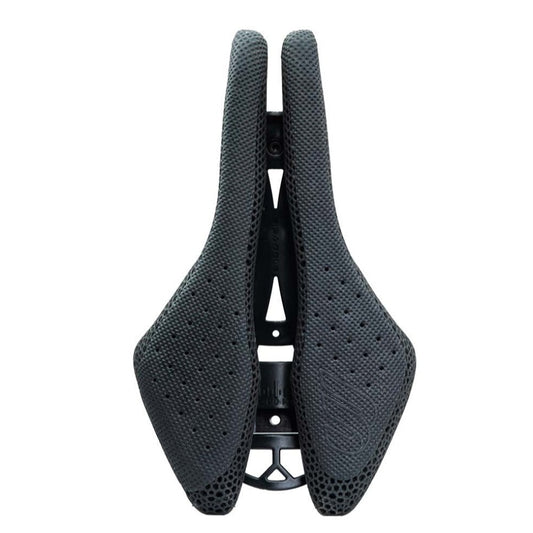
- 3D-printed lattice structures like those in Specialized's Mirror technology or Fizik's Adaptive line
These 3D-printed structures represent a quantum leap forward. Using additive manufacturing, engineers can create complex internal structures impossible with traditional foam molding. These matrices can be precisely tuned for density in different zones—firm under sit bones while remaining soft in sensitive areas. The open structure also improves airflow and heat dissipation, which I've found makes a noticeable difference on summer rides.
The Shape Revolution: Shorter Is Often Better
If you've shopped for saddles recently, you've likely noticed the trend toward shorter designs:
The Short-Nose Advantage
Traditional saddles featured long noses that often caused direct pressure on the perineum, especially when riders rotated their pelvis forward in aggressive positions. Modern designs like the Specialized Power (introduced around 2015) shortened the nose by 3-4cm, allowing riders to maintain an aerodynamic position without the corresponding pressure on soft tissue.
I was skeptical when these shorter designs first appeared, but after switching to a short-nose saddle for my time trial bike, the difference was immediate and dramatic. No more shifting around trying to find a comfortable spot—just proper support exactly where it's needed.
Noseless Designs for Maximum Relief
For riders experiencing significant numbness, noseless or split-nose saddles from brands like ISM represent the most radical solution. These designs completely reimagine the saddle-rider interface, distributing weight exclusively to the skeletal structure rather than soft tissue. While they look unusual, pressure mapping studies confirm their effectiveness in maintaining blood flow.
Customization: The New Frontier
Perhaps the most exciting recent development is the move toward adjustable and customizable saddles. This approach recognizes that human anatomy varies significantly, and a one-size-fits-all solution is inherently limited.
Adjustable Width Systems
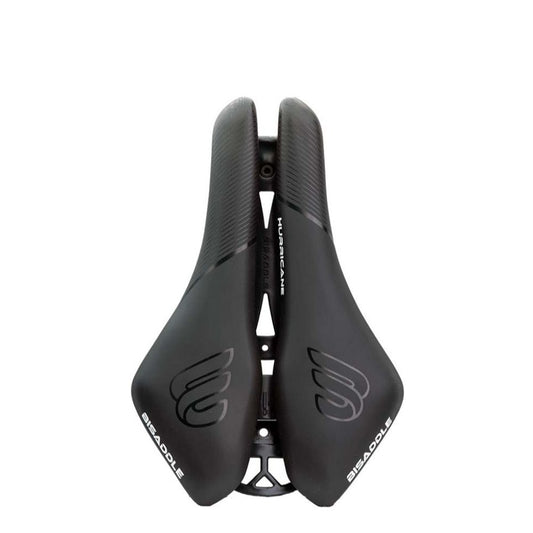
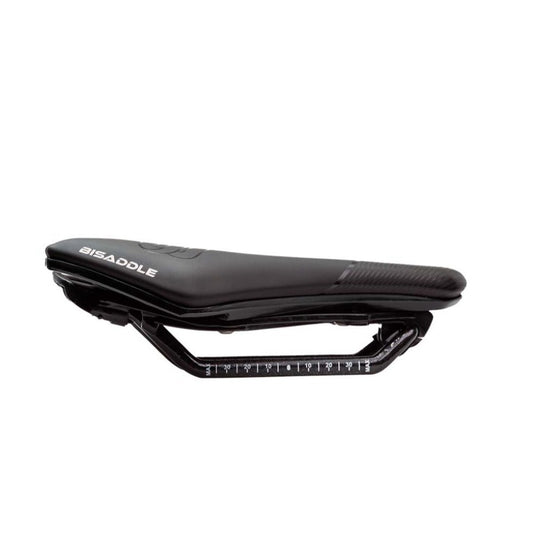
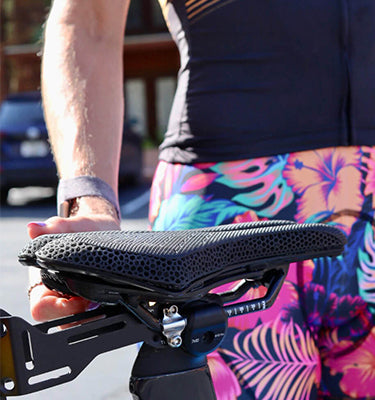
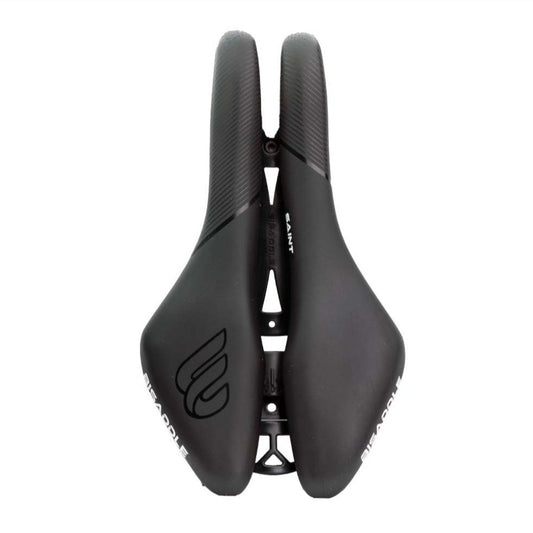
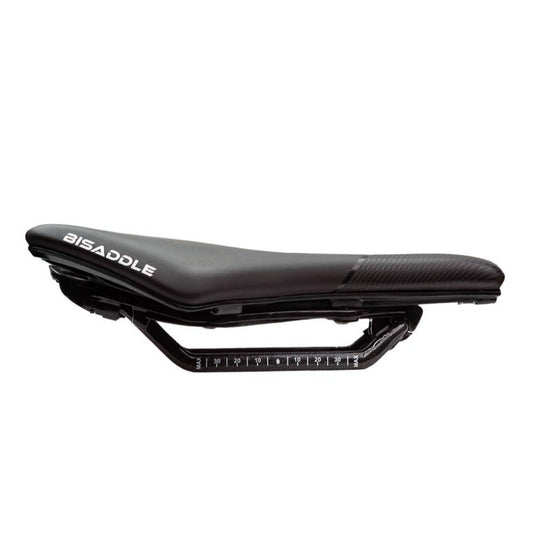
Brands like BiSaddle have pioneered mechanically adjustable saddles with two independent halves that can be positioned to match your exact sit bone width (typically between 100-175mm). This also creates a customized central channel width, tailoring pressure relief to your specific anatomy.
Getting the Right Fit
The industry has developed sophisticated fit systems to match riders with appropriate saddles:
- Digital pressure pads that precisely measure sit bone width
- Dynamic pressure mapping during actual pedaling
- Saddle testing programs where you can try multiple designs before purchasing
Engineering for Your Riding Style
Modern saddle design recognizes that different riding disciplines create unique challenges:
Road Cycling Solutions
Road positions typically rotate the pelvis forward, potentially increasing perineal pressure. Engineering solutions include:
- Short-nose designs with wide rear platforms
- Channels positioned specifically for rotated pelvis angles
- Minimalist padding that provides just enough cushioning
Triathlon-Specific Designs
The extreme position on aerobars creates enormous pressure on the front of the saddle. Solutions include:
- Split-nose designs eliminating central perineum pressure
- Forward-positioned padding supporting the pubic rami
- Wider nose sections distributing pressure across a broader area
Gravel and All-Road Considerations
The growing gravel segment requires saddles accommodating varied positions while absorbing vibration:
- Flexible shell materials providing natural suspension
- Slightly more padding than pure road saddles
- Durable cover materials resisting abrasion
Beyond the Saddle: A Complete Approach
Even the best saddle won't prevent numbness if it's part of a poorly optimized system. After fitting hundreds of cyclists, I can tell you that a comprehensive approach includes:
Proper Bike Fit Integration
- Correct saddle height and setback ensures weight distribution between saddle and handlebars
- Appropriate handlebar height prevents excessive perineal pressure
- Saddle angle (typically level or 1-2 degrees nose-down) optimizes pressure distribution
Riding Technique Matters
- Regular position changes (standing or shifting every 10-15 minutes) restore blood flow
- Core engagement helps support upper body weight
- Smooth pedaling technique reduces unnecessary movement and friction
The Future of Saddle Engineering
Where is saddle technology headed? Several fascinating developments are on the horizon:
Smart Materials
Research is advancing on materials that respond dynamically:
- Shape-memory polymers adapting to body temperature
- Pressure-adaptive foams becoming firmer under high load points
- Self-healing surfaces maintaining integrity despite abrasion
Biofeedback Integration
Future saddles may incorporate sensors providing real-time information:
- Integrated pressure mapping
- Temperature sensors detecting potential "hot spots"
- Movement tracking optimizing pedaling technique
Mass Customization Through Digital Manufacturing
As 3D printing advances, we're approaching an era of truly personalized saddles:
- Custom designs matching 3D scans of a rider's anatomy
- Individualized density zones based on personal pressure mapping
- Material selection tailored to rider weight, flexibility, and riding style
Finding Your Solution
After twenty years in this field, I can confidently say there's no single "best saddle" for preventing numbness. The optimal solution depends on your specific anatomy, riding position, and discipline.
However, the engineering principles I've outlined provide a framework for making informed choices:
- Start with your sit bone width — get measured at a bike shop or use a DIY method
- Consider your riding position — more aggressive positions typically benefit from shorter, cut-out designs
- Think about your typical ride duration — longer rides may justify more sophisticated pressure relief
- Be willing to experiment — utilize demo programs to test different approaches
The good news is that modern saddle engineering has produced multiple effective solutions. Whether it's a well-designed cut-out, a noseless design, or an adjustable system, there are engineering approaches to address virtually every rider's needs.
Your cycling experience should never be limited by discomfort. With the right saddle properly fitted, you can ride farther, faster, and more joyfully—without compromising your circulatory health. That's something I've experienced personally, having gone from barely managing 50 miles without pain to comfortably completing double centuries after finding the right saddle solution.
What saddle solutions have worked best for you? Share your experiences in the comments below!