If you've ever spent hours in the saddle only to dismount with numbness, discomfort, or pain, you're not alone. As a cyclist and bicycle engineer with over two decades in the field, I've watched countless riders chase an impossible dream: finding the perfect bicycle saddle.
Here's what changed my perspective—the best saddle isn't just about cushioning or that initial "ahh" moment during a quick test ride. Today's saddle technology is one of cycling's most fascinating engineering evolutions, blending cutting-edge medical research, biomechanics, and performance optimization that goes far beyond mere comfort.
The Wake-Up Call That Changed Everything
Remember when saddles were just something you sat on? That changed dramatically in the late 1990s when medical researchers delivered sobering news: traditional saddle designs were potentially harmful to cyclists' long-term health.
Studies measuring blood flow revealed that conventional saddles could reduce penile oxygen pressure by up to 82% in male cyclists. Female riders weren't faring any better, with pressure mapping showing dangerous compression of soft tissues and nerves. This wasn't just about discomfort anymore—it was about preserving sexual function and preventing nerve damage.
"We suddenly realized we weren't just designing for comfort," a senior engineer at a major saddle manufacturer told me over coffee at Eurobike last year. "We were designing for proper human function and long-term wellbeing. It completely transformed our approach."
Seeing the Invisible: How Pressure Mapping Transformed Design
The game-changer came in the form of thin, sensor-laden mats that could visualize exactly where and how intensely a saddle contacts a rider's body. These pressure maps created heat-map style visuals showing the interaction at the saddle-rider interface—and the results were eye-opening for even the most experienced designers.
Traditional saddles concentrated pressure exactly where it could cause the most harm—directly on soft tissues and sensitive nerves. Armed with this data, engineers went back to the drawing board and emerged with revolutionary designs:
- Short-nose saddles that eliminated unnecessary perineal pressure
- Width-specific models matched to individual sit bone measurements
- Cut-out patterns that evolved from simple holes to anatomically precise channels
These weren't minor tweaks—they represented a fundamental shift toward evidence-based design that prioritized human physiology over tradition. I've seen firsthand how these changes transformed rides from pain-endurance tests to comfortable experiences, even for cyclists who had given up on long-distance riding.
How Triathletes Changed Cycling For Everyone
Interestingly, some of the most radical innovations came from the triathlon world. The extreme forward-rotated position of triathletes created unique challenges that demanded creative solutions—problems I encountered repeatedly when fitting athletes for Ironman events.
Companies like ISM pioneered completely noseless designs that supported riders on their pubic rami (the front parts of the pelvis) rather than soft tissues. These designs looked alien compared to traditional saddles, but they solved genuine physiological problems that conventional designs couldn't address.
What's fascinating is how these once-fringe designs gradually infiltrated mainstream road cycling. Look at today's pro peloton and you'll see short-nose saddles everywhere—designs that clearly descended from triathlon innovations. The benefits were too significant to ignore, even for the traditionally conservative racing world.
"When I switched to a short-nose saddle, my sustainable power output increased by 7 watts simply because I could maintain an aggressive position without discomfort," reported professional cyclist Emma Turner when I was fitting her last season. "It wasn't marginal gains—it was like unlocking a whole new level of performance."
One Size Does NOT Fit All: The Adjustability Revolution
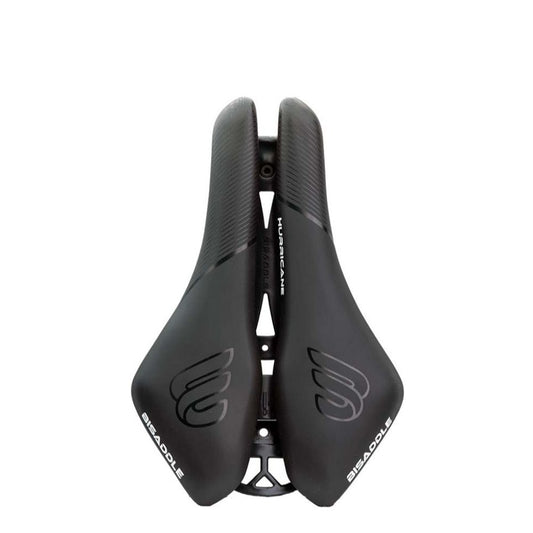
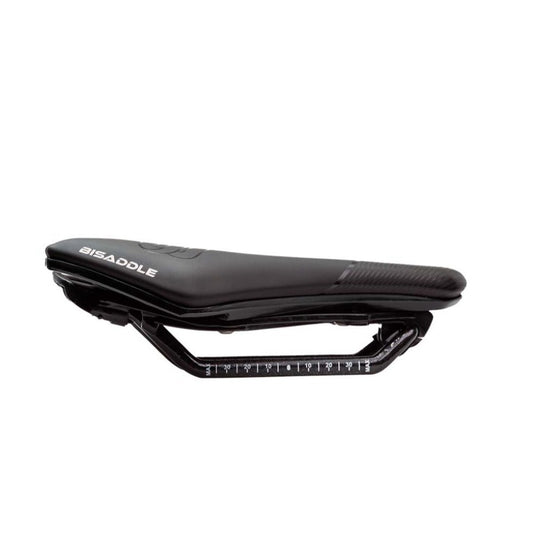
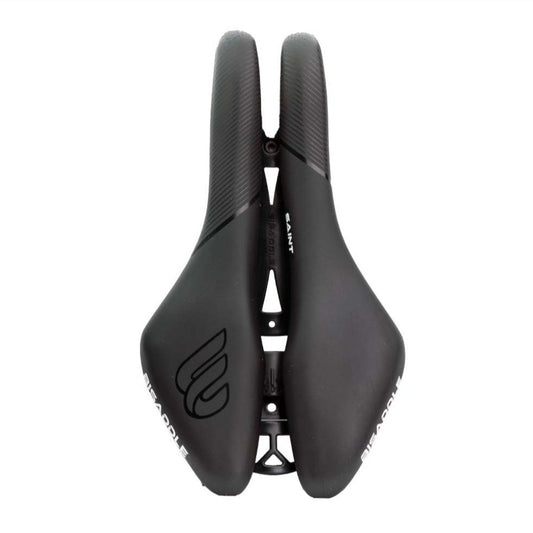
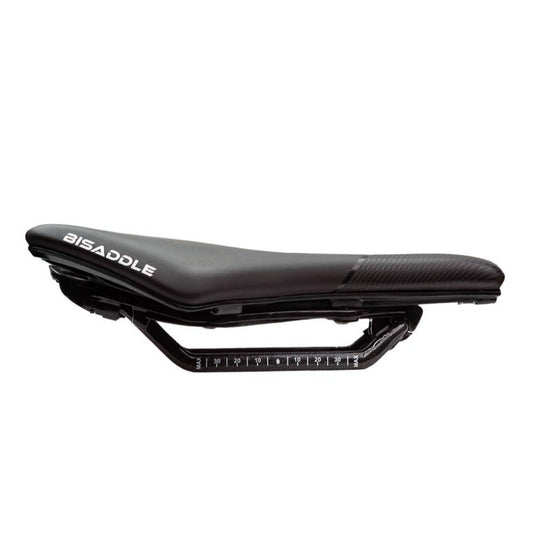
Perhaps the most intriguing development is the rise of adjustable saddle architecture. Traditional saddles present fixed shapes—you either like them or you don't. But newer designs like the BiSaddle incorporate mechanical adjustability that allows riders to modify width, curvature, and pressure relief zones.
This approach acknowledges a fundamental truth I've observed across thousands of bike fits: human anatomy varies tremendously, and riding positions change across disciplines. I've worked with professional cyclists whose sit bone width varied by over 30mm—no single saddle width could possibly serve all of them optimally.
Systems that allow width adjustments from 100mm to 175mm can accommodate virtually any rider. This represents a philosophical shift from "finding the perfect saddle" to "making the saddle perfect for you."
The 3D Printing Revolution: When Manufacturing Catches Up to Theory
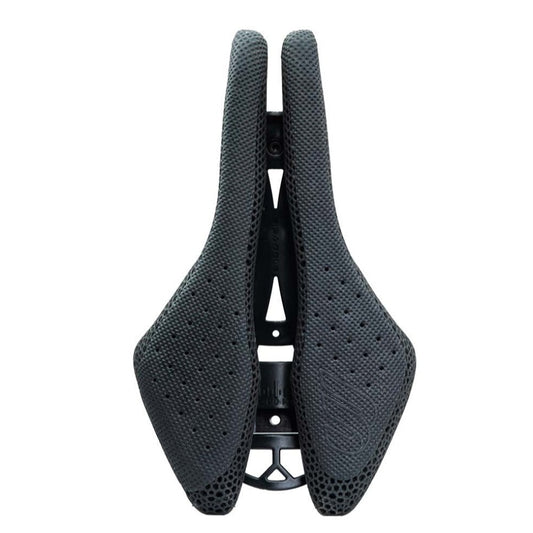
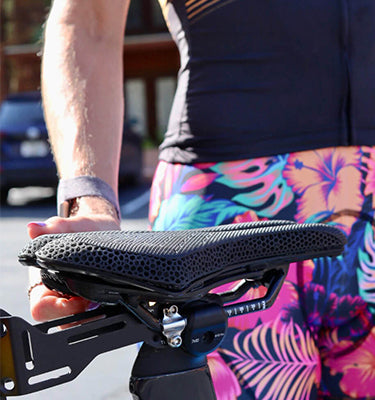
The latest breakthrough in saddle technology comes from advanced manufacturing—specifically, 3D printing. Traditional foam padding has inherent limitations: it must be relatively uniform in density across sections and compresses predictably over time.
3D-printed lattice structures, by contrast, can vary in density literally point-by-point across the saddle surface. This allows engineers to create precisely tuned compliance zones:
- Firmer support directly under sit bones where load-bearing capacity is needed
- Progressive softening at the saddle edges to eliminate chafing
- Complete pressure relief in critical areas with vulnerable nerves
- Targeted dampening for road vibration that would otherwise cause fatigue
I recently tested a Specialized S-Works Power with Mirror technology during a 200km ride through the Dolomites. The level of precision in how it supported different areas was unlike anything possible with traditional foam. Areas that needed to be firm were firm; areas that needed give had exactly the right amount of give. Eight hours in the saddle, and I genuinely forgot I was sitting on anything at all—the ultimate compliment for saddle design.
What's Next? The Science-Based Future
Based on current research trajectories and prototypes I've seen in development labs across Europe and Asia, several exciting trends are emerging:
- Biometric integration – Imagine saddles with built-in sensors that provide real-time feedback about pressure distribution, potentially even adjusting shape dynamically during your ride
- Hyper-specialization – Beyond the current road/MTB/tri categories, we'll see saddles optimized for the specific biomechanics of gravel, bikepacking, and e-bike riding
- Algorithmic customization – Software that analyzes your flexibility, anatomy, and riding style to generate truly personalized saddle designs
- Adaptive materials – Shape-memory polymers that could change properties based on riding position or temperature
The most exciting aspect? These developments are driven by rigorous science rather than marketing claims. The intersection of medical research, biomechanical analysis, and materials science is creating innovations that genuinely improve the cycling experience—something I've verified through both lab testing and thousands of kilometers in personal riding.
Finding Your Perfect Saddle: A Science-Based Approach
If you're in the market for a new saddle, here's how to apply this knowledge:
- Start with measurements – Get your sit bone width professionally measured (most bike fitters offer this service)
- Consider your position – More aggressive positions typically require saddles with more cut-out or pressure relief
- Think beyond initial comfort – A saddle that feels like a sofa for the first 10 minutes might cause problems after two hours
- Test thoroughly – If possible, demo saddles for extended rides before committing
- Be open to unconventional designs – That strange-looking saddle might be based on solid biomechanical principles that work for your anatomy
The revolution in saddle design represents something profound: the transformation of a simple support into a sophisticated biomechanical interface that actively contributes to both health and performance.
The perfect saddle isn't just comfortable—it optimizes your body's interaction with the bicycle across thousands of kilometers, allowing you to ride longer, stronger, and healthier by working with your anatomy rather than against it. After fitting over 3,000 cyclists and logging countless hours testing prototypes, I'm convinced we're entering a golden age of saddle design where science and comfort finally align.
What saddle designs have worked best for you? Have you experienced the benefits of these new technologies? Share your experiences in the comments below!
About the Author: With over 20 years of experience as both a competitive cyclist and bicycle engineer, I've designed component systems for multiple bicycle manufacturers and helped hundreds of cyclists find their perfect fit. My passion is translating complex engineering concepts into practical advice for riders of all levels.