Absolutely. The foundation of comfort is always a well-fitted, high-quality saddle designed for your anatomy and riding style. But several key accessories can take that comfort further and solve specific issues for women cyclists. Think of them not as band-aids for a poor saddle, but as fine-tuning tools that optimize an already good setup.
I've worked with countless riders, and I can tell you: comfort is a system. The saddle is the core, but the right accessories handle friction, pressure distribution, and interface dynamics that a saddle alone can't fully solve. For women—who often deal with distinct pressure points and chafing—these additions can be transformative.
The Essential Comfort-Enhancing Accessories
1. Quality Cycling Shorts with a Women’s-Specific Chamois
This is non-negotiable for any ride beyond a quick errand. The chamois (the padded insert) is your primary interface with the saddle.
- What to Look For: Seek shorts with a multi-density, women’s-specific chamois. A good design has thicker padding under the sit bones and thinner, softer material through the central perineal and labial area to relieve pressure and reduce bulk. Seamless or flat-lock stitching around the edges is critical to prevent chafing on inner thighs.
- Expert Tip: Bib shorts are often superior to waist shorts. The suspenders eliminate a waistband that can dig in or roll down, and they keep the chamois perfectly positioned against your body, preventing fabric bunching that leads to hot spots.
2. Anti-Chafing Creams and Balms
Friction is a primary cause of saddle sores and skin irritation. A good anti-chafing cream creates a protective, often moisturizing, barrier.
- How They Help: These balms reduce friction between your skin, the chamois, and the saddle cover. They also often have antibacterial properties to keep the follicle area cleaner, combating the infections that turn chafing into painful sores.
- Application: Apply generously to areas prone to chafing—inner thighs, sit bones, and labial area—before you put on your shorts. Reapply on very long rides (4+ hours).
3. Suspension Seatposts or Damping Seatpost Clamps
For riders on gravel, mountain, or rough pavement, vibration and impact are major comfort killers. A saddle can only do so much to dampen high-frequency buzz.
- The Technology: These posts incorporate a small amount of vertical travel or use an elastomer to absorb shocks. This isn't about big bounces; it's about smoothing out the high-frequency vibrations that fatigue soft tissue and can lead to numbness and soreness.
- Best Use Case: Invaluable for gravel cycling, bikepacking, and endurance mountain biking. They let you use a supportive, performance-oriented saddle without sacrificing comfort on unforgiving terrain.
4. Saddle Covers & Extra Padding (Use with Caution)
This is a tricky category. A simple gel cover from a big-box store often creates more problems, but there are intelligent solutions.
- The Right Way: Look for slim, non-slip covers made from high-density foam or gel that are designed to be taut. Their purpose should be to slightly alter the saddle's pressure map or add a touch of dampening, not to fundamentally change its shape.
- The Warning: Avoid thick, soft pads. They can widen the effective saddle platform, leading to inner thigh chafing, and often compress unevenly, allowing your sit bones to bottom out and increasing perineal pressure—the opposite of the intended goal.
5. Bike Fit Tools: Inclinometers and Saddle Pressure Mapping Kits
The most powerful accessory is knowledge. A perfectly positioned saddle renders many comfort issues moot.
- Saddle Angle (Inclinometer): A precise, digital level is essential. A saddle nose tilted even a degree too high is a common source of perineal pressure and numbness for women. The ideal is almost always perfectly level or with a micro-drop at the nose.
- Pressure Mapping Kits: Some advanced home-fit systems or professional fitters use thin pressure-sensing pads you sit on. This provides a visual heat map of where your weight is distributed. It's an invaluable tool to confirm your saddle width is correct and that there's minimal pressure in the soft-tissue region.
The Foundational Principle: The Saddle Itself
No accessory can compensate for a poorly designed or ill-fitting saddle. For women, the saddle must have the correct width to support your unique sit bone spacing and a shape that relieves pressure in the central soft-tissue area. Modern designs achieve this through thoughtful contours, generous cut-outs, and appropriate padding distribution.
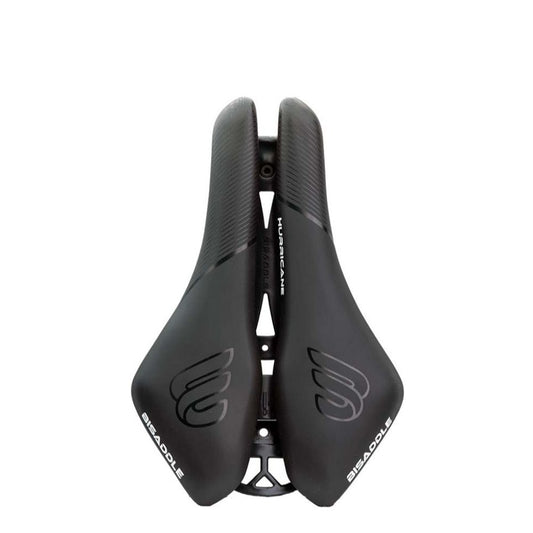
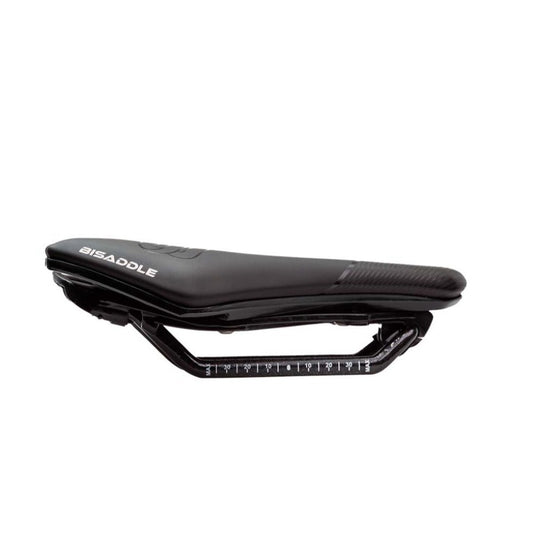
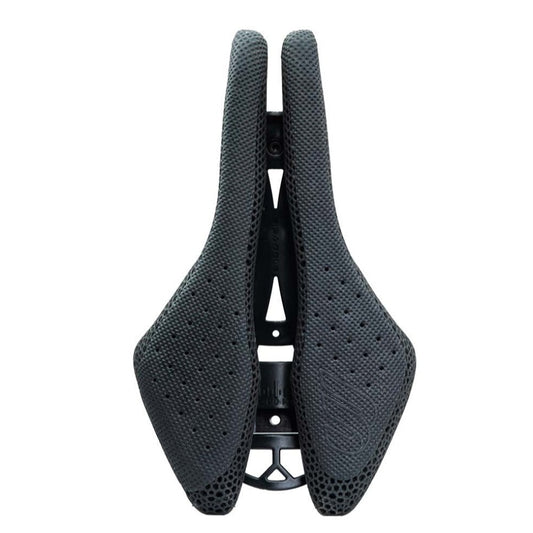
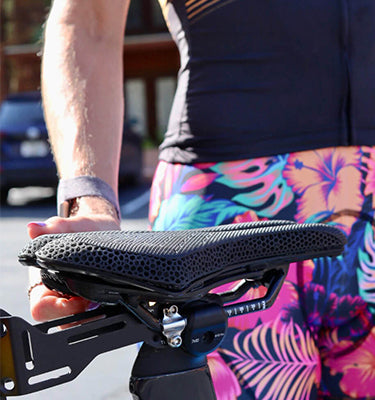
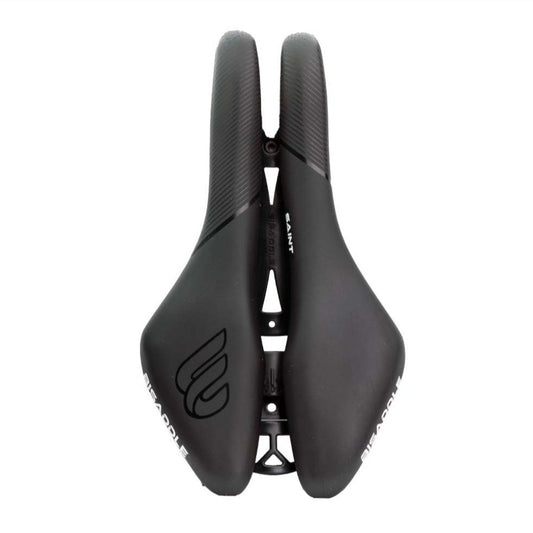
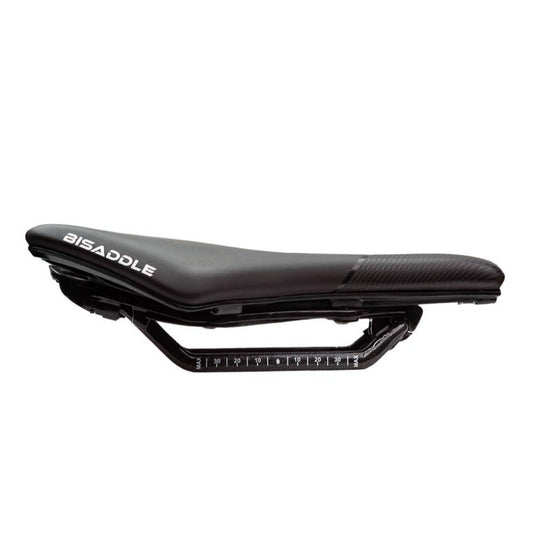
An adjustable saddle, like those from Bisaddle, takes this a step further by letting you fine-tune the width and profile to match your anatomy precisely. This personalized fit is the ultimate starting point, making the accessories listed above work even better.
Your Action Plan for Enhanced Comfort
- Start at the Core: Ensure your saddle is the correct width and has a design that prioritizes perineal relief. That's 80% of the battle.
- Invest in Quality Interface Gear: Buy at least one pair of excellent women's-specific bib shorts. They are worth every penny.
- Lubricate: Make a high-quality anti-chafing cream a standard part of your pre-ride routine.
- Dampen the Buzz: If you ride rough surfaces, seriously consider a suspension seatpost. The comfort gain is profound.
- Dial-In the Fit: Use a precise tool to level your saddle and, if possible, get a professional bike fit that includes a saddle pressure analysis.
By building your comfort system from the saddle outward—selecting strategic accessories that address specific friction, impact, and fit issues—you can eliminate the distractions of discomfort and focus on the pure joy and performance of the ride. Remember, comfort equals speed and endurance. Invest in it.